
TL;DR:
- An interior buildout transforms a raw commercial space into a fully operational, tenant-specific environment through comprehensive construction and finishings. The process involves assessment, design development, permitting, construction, and inspections, with costs ranging from $240 to $870 per square foot depending on scope and location. Effective planning, early contractor engagement, and understanding permit requirements are essential for timely, budget-conscious project completion.
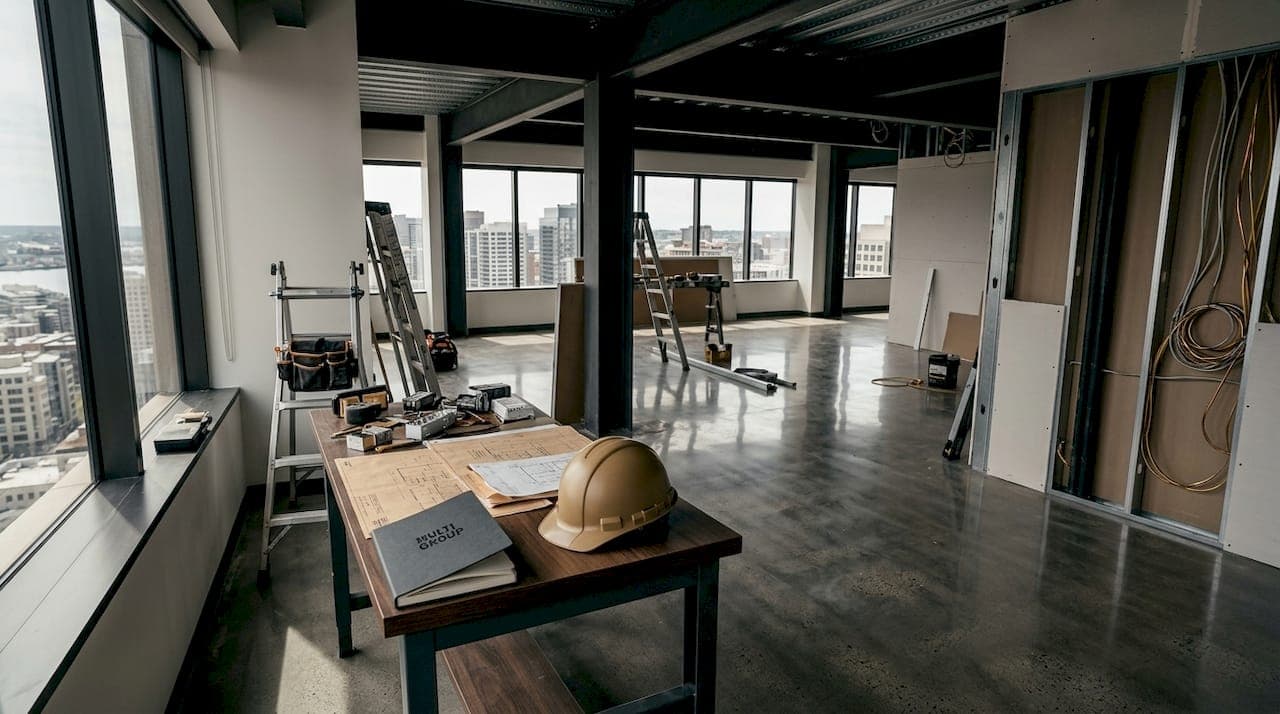
An interior buildout is defined as the construction process that converts a raw, unfinished commercial space into a fully functional, tenant-specific environment. Known in the industry as a tenant improvement or fit-out, this work covers everything from framing interior walls and installing HVAC systems to adding electrical wiring, plumbing, flooring, and custom finishes. Whether you are leasing a shell unit in a Burnaby office tower or preparing a retail space in Richmond for your first store, understanding what interior buildout involves will directly shape your budget, timeline, and lease negotiations. The scope ranges from minor cosmetic updates to complete ground-up interior construction, and the distinction matters before you sign anything.
What is interior buildout and what does the process involve?
An interior buildout begins the moment a tenant or property owner decides to transform a raw or "white box" space into something usable. The white box standard typically means the landlord has delivered a space with concrete floors, exposed ceilings, basic electrical panels, and rough plumbing stubs. Everything beyond that is the buildout.
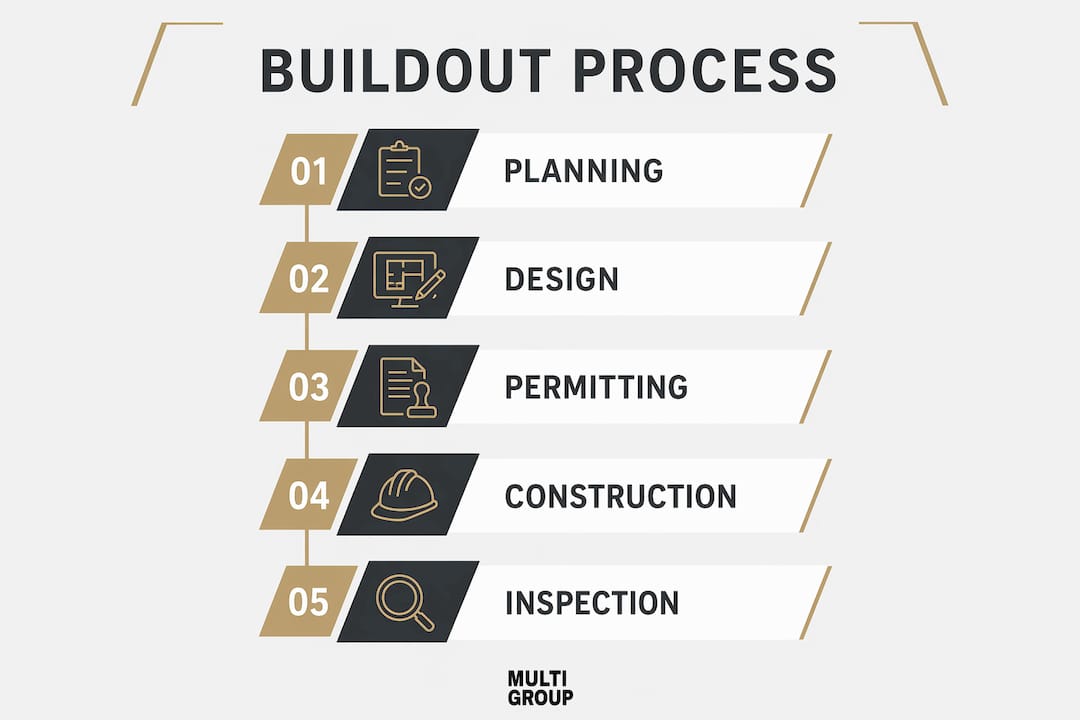
The process follows a clear sequence:
- Space assessment. The contractor and design team evaluate the existing conditions, including ceiling height, structural elements, existing MEP (mechanical, electrical, plumbing) rough-ins, and any landlord-provided base building work.
- Design development. An architect or interior designer produces drawings that reflect the tenant's operational needs. This is where space planning happens: determining where walls, workstations, restrooms, and service areas will go.
- Permit application. Drawings are submitted to the local authority. In Metro Vancouver, this means the City of Vancouver, City of Burnaby, or the relevant municipality depending on the project address.
- Construction. Framing, MEP rough-in, insulation, drywall, ceilings, flooring, millwork, and fixtures are installed in sequence.
- Inspections and closeout. Municipal inspectors review completed work at defined stages before the space receives occupancy approval.
Tenant improvement construction includes interior walls, finishes, HVAC distribution, plumbing fixtures, and specialty installations specific to the tenant's use, all distinct from base building construction. This distinction matters because it defines who pays for what in a lease agreement.
Two delivery models exist: landlord-controlled (turnkey) and tenant-controlled buildouts. Turnkey interior projects cover end-to-end design, procurement, construction, and installation under one contract, giving tenants a finished space with minimal coordination burden. Tenant-controlled buildouts give the occupant more design freedom but require direct management of contractors, designers, and permit submissions.
Pro Tip: Clarify in your lease whether the landlord's turnkey allowance covers permit fees. In Surrey and Coquitlam, permit costs for MEP work can add several thousand dollars to a project budget that tenants assume is already covered.
How interior buildout differs from renovation and other construction types
The terms renovation, fit-out, retrofit, and buildout are often used interchangeably, but they describe different scopes of work. Getting the terminology right protects you in lease negotiations and contractor bids.
| Term | Starting condition | Typical scope | Who controls it |
|---|---|---|---|
| Interior buildout | Raw or white box shell | Full interior construction from scratch | Tenant or landlord (turnkey) |
| Renovation | Existing finished space | Updating or modifying existing finishes and systems | Owner or tenant |
| Cat A fit-out | Shell and core complete | Base infrastructure: raised floors, suspended ceilings, basic MEP | Landlord |
| Cat B fit-out | Cat A complete | Tenant-specific finishes, partitions, furniture, branding | Tenant |
| Shell and core | Structural frame only | Exterior envelope, lobbies, common areas, base MEP to floor | Developer/landlord |
Cat A and Cat B fit-outs define different stages of office interior buildouts. Cat A includes base infrastructure ready for occupancy, while Cat B adds tailored finishes and furnishings specific to the tenant. In North American commercial real estate, particularly in Metro Vancouver, Cat B is roughly equivalent to what most leases describe as a tenant improvement buildout.
A renovation, by contrast, starts with a space that already has finishes in place. A coffee shop in North Vancouver converting a former retail unit is doing a renovation with buildout elements. A tech company taking a raw floor in a new Coquitlam office building is doing a full interior buildout. The difference between buildout and renovation affects permit requirements, construction timelines, and cost per square foot.
Healthcare and laboratory spaces add another layer. These buildouts require specialized MEP systems, infection control measures, and compliance with additional codes beyond standard commercial construction. They consistently sit at the top of the cost range regardless of region.
What does an interior buildout cost per square foot?
Cost is the question every business owner asks first, and the honest answer is that the range is wide. Average national buildout costs in 2025 run between $240 and $870 per square foot depending on space type, finish level, and location. That spread reflects the difference between a basic warehouse conversion and a fully fitted medical clinic.
The primary cost drivers are:
- Labor rates. Union labor markets on the West Coast, including Metro Vancouver, Seattle, and Portland, push costs toward the higher end of national averages.
- MEP complexity. Spaces requiring significant HVAC zoning, commercial kitchen exhaust, or specialized plumbing cost substantially more than open-plan offices.
- Finish level. Standard commercial finishes (carpet tile, drop ceilings, painted drywall) cost far less than high-end millwork, polished concrete, or custom lighting systems.
- Building height and access. High-rise projects in downtown Vancouver face logistics costs that ground-floor suburban units do not.
- Permitting and regulatory fees. These vary by municipality and project scope but are a real line item in every budget.
Geography significantly influences buildout costs. The South tends to have lower average pricing due to favorable labor rates, while the East and West coasts carry higher costs due to union labor and seismic standards. Metro Vancouver sits firmly in the higher-cost category, which means projects here regularly exceed the national midpoint.
Pro Tip: Request a detailed scope-of-work breakdown from your contractor before comparing bids. Two bids for a Richmond retail buildout can differ by 30% simply because one includes millwork and the other does not.
A practical cost reference by space type:
- Office (standard finish): $150 to $300 per square foot in many U.S. markets; Metro Vancouver typically runs higher.
- Retail: $100 to $250 per square foot for standard fit-out; specialty retail with custom fixtures runs higher.
- Healthcare/medical: $300 to $500+ per square foot due to MEP complexity and code requirements.
- Warehouse with office component: $80 to $180 per square foot depending on the ratio of improved to unimproved space.
What permits and regulatory requirements affect an interior buildout?
Permitting is not a formality. It is often the single greatest schedule driver in any interior buildout project. Permitting strategy determines whether a project opens on time or sits idle for weeks waiting for approvals.
In Metro Vancouver, building permits are required for any work that involves structural changes, new or relocated MEP systems, or changes to occupancy classification. Minor cosmetic work such as repainting walls or replacing flooring in kind may be permit-exempt, but the moment you touch electrical panels, add HVAC ducts, or move plumbing, permits are required.
The International Existing Building Code (IEBC) classifies alteration work into three tiers:
- Level 1: Minor alterations affecting less than 50% of the building area. Compliance obligations are limited.
- Level 2: Alterations affecting a larger portion of the space. Additional code compliance is triggered, including accessibility upgrades.
- Level 3: Work affecting more than 50% of the building area. Full compliance with current building codes is required across the affected areas.
Alteration levels under the IEBC increase compliance obligations as work affects more building area. This tiered system means a tenant who plans a modest renovation can inadvertently trigger full ADA or accessibility compliance requirements simply by expanding the scope of work.
Permit timelines in Metro Vancouver typically run four to eight weeks for standard commercial tenant improvement projects. Complex projects involving structural changes or occupancy reclassification can take significantly longer. Factor this into your lease commencement date negotiations.
For a practical reference on navigating Vancouver-specific permit requirements, the Vancouver tenant improvement permit guide covers current requirements and common approval timelines.
Best practices for planning and executing a successful interior buildout
A well-planned interior buildout delivers a functional, code-compliant space on time and within budget. The projects that go sideways almost always share the same root causes: unclear scope, late permit submissions, and misaligned expectations between landlord and tenant.
Follow these practices to avoid the most common problems:
- Engage your contractor before signing the lease. A general contractor can review the space and identify hidden costs such as asbestos remediation, inadequate electrical service, or structural limitations before you are legally committed.
- Define scope in the lease. Specify exactly what the landlord's tenant improvement allowance covers, including permit fees, design costs, and construction management.
- Submit permits early. Permit-required MEP work includes electrical, HVAC, and plumbing alterations in virtually every jurisdiction. Starting the permit process at design completion, not construction start, saves weeks.
- Choose the right fit-out category. A Cat A space is not move-in ready for most tenants. Confirm what the landlord is delivering and budget for the gap.
- Build in contingency. A 10 to 15 percent contingency on the construction budget is standard practice for commercial buildouts in Metro Vancouver.
- Plan for scalability. If your business may grow within the lease term, design the initial buildout with future expansion in mind. Adding a demising wall later costs far more than roughing in the infrastructure now.
Pro Tip: For office buildouts in Burnaby or Surrey, confirm with your contractor whether the building's existing HVAC system has capacity for your planned layout. Undersized base building systems are a frequent source of change orders and budget overruns.
For a detailed walkthrough of the five phases of a commercial buildout specific to Vancouver tenants, Multigroup has published a practical reference covering each stage from lease review to occupancy.
Key takeaways
A successful interior buildout requires early contractor engagement, clear lease scope definition, and permit submissions that run parallel to design, not after it.
| Point | Details |
|---|---|
| Interior buildout definition | It is the process of converting a raw commercial shell into a finished, tenant-specific space. |
| Cost range | National averages run $240 to $870 per square foot; Metro Vancouver sits at the higher end. |
| Permit strategy | MEP work always requires permits; submit applications at design completion to protect your schedule. |
| Fit-out categories | Cat A delivers base infrastructure; Cat B adds tenant-specific finishes. Know which one your lease provides. |
| Compliance tiers | IEBC Level 1, 2, and 3 alterations carry escalating code compliance obligations based on scope. |
What I have learned from interior buildouts in Metro Vancouver
After working on commercial interior buildout projects across Burnaby, Richmond, North Vancouver, and Surrey, the pattern I see most often is this: tenants underestimate how much the regulatory environment shapes their project. Metro Vancouver municipalities each have slightly different permit intake processes, fee structures, and inspection scheduling practices. A project in Coquitlam does not move through the system the same way a project in the City of Vancouver does.
The other consistent lesson is that the turnkey versus tenant-controlled decision deserves more thought than most tenants give it. Turnkey arrangements look attractive because they simplify coordination. But landlord-controlled buildouts sometimes use standard-grade finishes and systems that do not match the tenant's operational needs. I have seen healthcare tenants accept turnkey buildouts that required significant modification within the first year because the base MEP systems were sized for general office use.
The businesses that get the best outcomes are the ones that treat the buildout as a strategic decision, not just a construction task. They engage their contractor during lease negotiation, not after. They ask hard questions about permit timelines and code compliance before committing to an opening date. And they budget honestly, including contingency, design fees, and permit costs, rather than anchoring to a per-square-foot number they found online.
Metro Vancouver's commercial real estate market is competitive. A well-executed interior buildout is one of the clearest ways a business can create a space that supports long-term operations and holds its value through a full lease term.
— Momo
Work with Multigroup on your next interior buildout

Multigroup is a licensed and insured general contractor based in Vancouver, BC, with direct experience in commercial tenant improvements, retail buildouts, warehouse renovations, and coffee shop fit-outs across Metro Vancouver. The team manages permits, scheduling, and construction coordination from first assessment through occupancy, serving clients in Burnaby, Richmond, Surrey, Coquitlam, North Vancouver, as well as Seattle, WA, and Portland, OR. If you are planning a commercial interior buildout and want a contractor who understands local permit requirements and delivers on schedule, contact Multigroup directly. Visit multigroup.ca, call 778-819-5933, or email info@multigroup.ca to discuss your project.
FAQ
What is the interior buildout definition in commercial real estate?
An interior buildout is the construction process that converts a raw or white box commercial space into a finished, functional environment tailored to a specific tenant's needs. It includes framing, MEP systems, finishes, and fixtures, and is also referred to as a tenant improvement or fit-out.
How long does an interior buildout typically take?
Timeline depends on scope and permit approval speed. A straightforward office buildout of 2,000 to 4,000 square feet typically takes eight to sixteen weeks from permit approval to occupancy. Projects with complex MEP work or structural changes take longer, and permit intake in Metro Vancouver adds four to eight weeks before construction begins.
What is the difference between Cat A and Cat B fit-out?
Cat A fit-out delivers base infrastructure including raised floors, suspended ceilings, and basic MEP systems, typically completed by the landlord. Cat B adds tenant-specific finishes, partitions, branding, and furniture, and is the tenant's responsibility.
Do all interior buildout projects require permits in Metro Vancouver?
Cosmetic work such as repainting or replacing flooring in kind may be permit-exempt, but any work involving electrical, HVAC, or plumbing changes requires a building permit in Metro Vancouver municipalities. Structural modifications and occupancy changes always require permits regardless of scope.
What is space planning and how does it relate to interior buildout?
Space planning is the process of organizing interior areas to support a tenant's specific workflow, headcount, and operational requirements. It is a core component of the design phase in any interior buildout, determining wall placement, circulation paths, and the location of workstations, restrooms, and service areas before construction begins.