
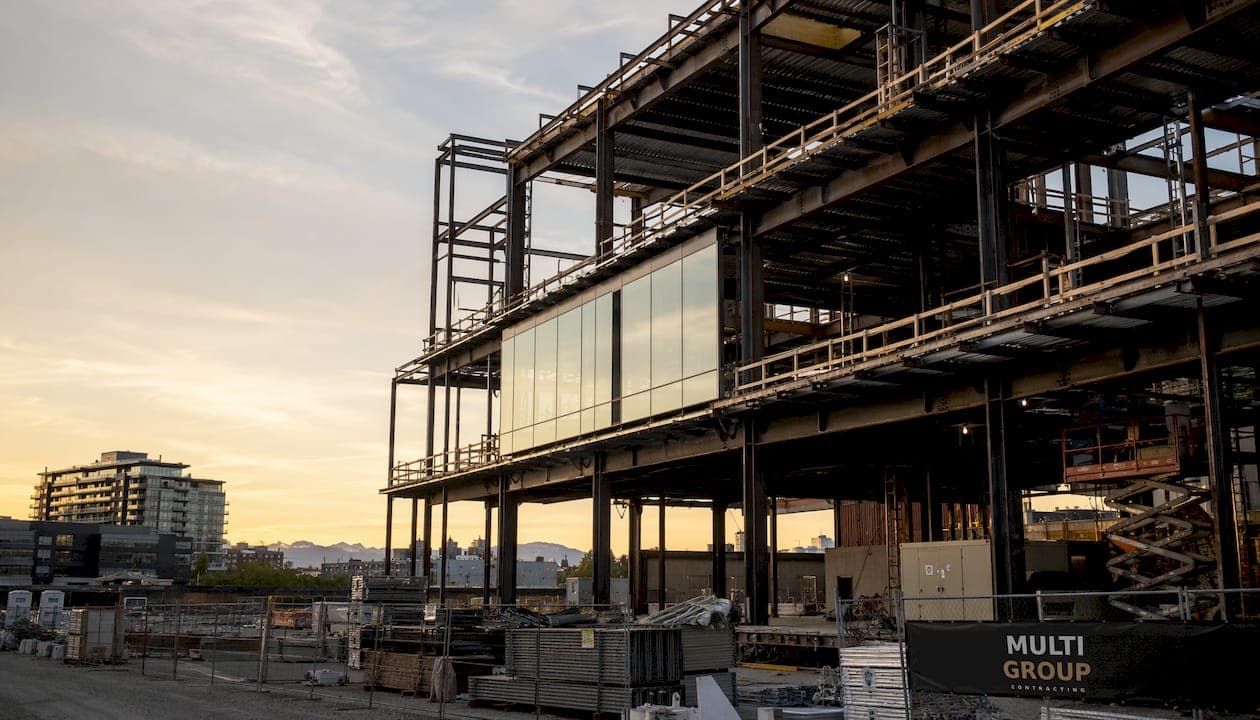
TL;DR:
- Monitoring construction trends in 2026 helps Canadian firms manage risks, control costs, and stay competitive.
- Adapting to labour shortages, material volatility, and new sustainability standards is essential for successful project delivery.
Tracking construction trends in 2026 is not optional for Canadian professionals who want to protect margins, win bids, and plan projects that actually finish on time. The industry is navigating cost inflation, a deepening labour shortage, shifting buyer behaviour, and a wave of technology adoption that is changing how projects get built and managed. Firms that monitor these developments make better procurement decisions, price risk accurately, and position themselves ahead of competitors who are still reacting. Those that ignore them absorb the consequences in budget overruns and missed opportunities.
Key trend categories every construction professional should monitor in 2026:
- Market and economic conditions: public vs. private sector investment splits, regional demand, and financing conditions
- Labour market: workforce retirements, wage pressures, and recruitment pipelines
- Material costs and supply chains: input price inflation, trade policy changes, and procurement risk
- Technology adoption: AI, Building Information Modelling (BIM), digital twins, and prefabrication
- Regulatory and sustainability requirements: BC Building Code compliance, green building standards, and environmental mandates
- Housing demand: buyer behaviour shifts and the residential supply gap
Multigroup Contracting, a licensed Vancouver general contractor serving Metro Vancouver and beyond, tracks these trends as a core part of project planning and client advisory work. The sections below break down each category with the data and context you need.
What the 2026 Canadian construction market actually looks like
The Canadian construction sector is not growing uniformly. Public infrastructure projects are proceeding at a strong pace while private-sector development faces delays tied to financing costs and uncertain demand. That split creates real consequences for how firms price work, staff projects, and manage cash flow.
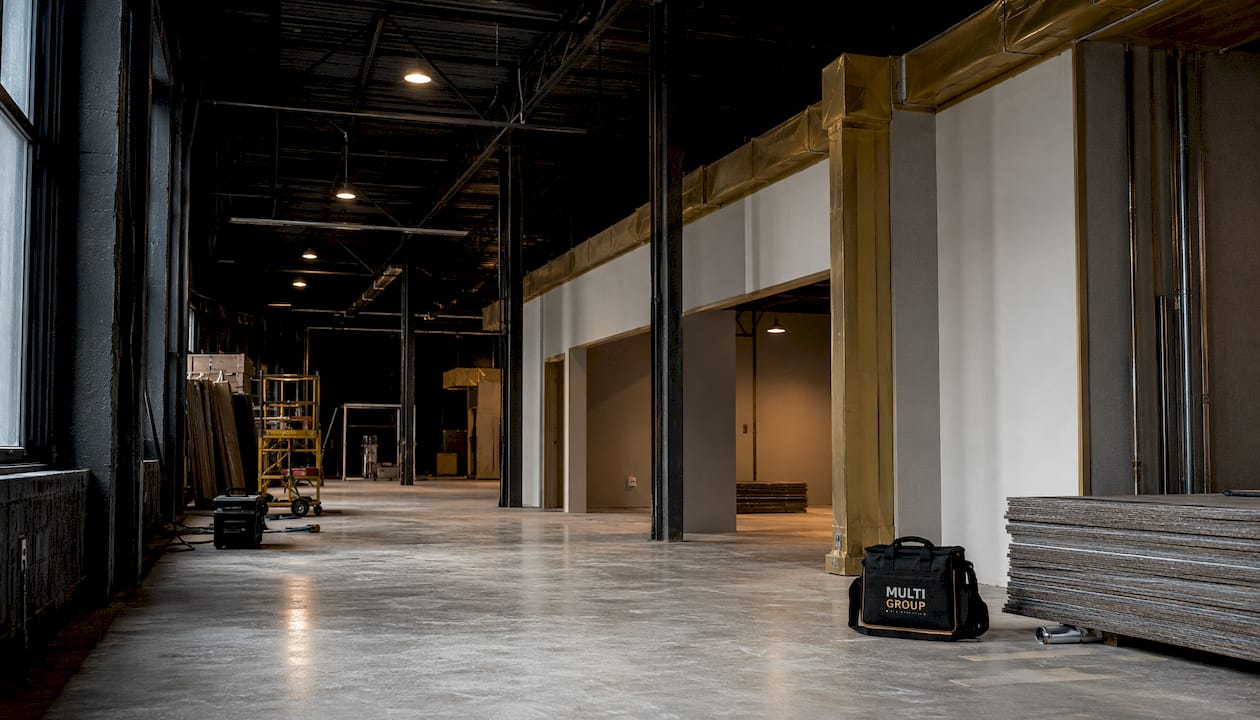
Regional differences are pronounced. Metro Vancouver, the Greater Toronto Area, and Alberta's energy corridor are seeing the highest activity levels, driven by infrastructure investment, population growth, and industrial expansion. British Columbia's public capital programme, supported by federal commitments through the Investing in Canada Plan, continues to fund transit, housing, and community infrastructure across the province.
| Region | Primary growth driver | Key project types |
|---|---|---|
| Metro Vancouver / BC | Transit, housing, industrial | Tenant improvements, warehouse, residential |
| Ontario (GTA) | Population growth, transit | High-rise residential, commercial |
| Alberta | Energy sector recovery | Industrial, infrastructure |
| Atlantic Canada | Federal transfers | Municipal infrastructure |
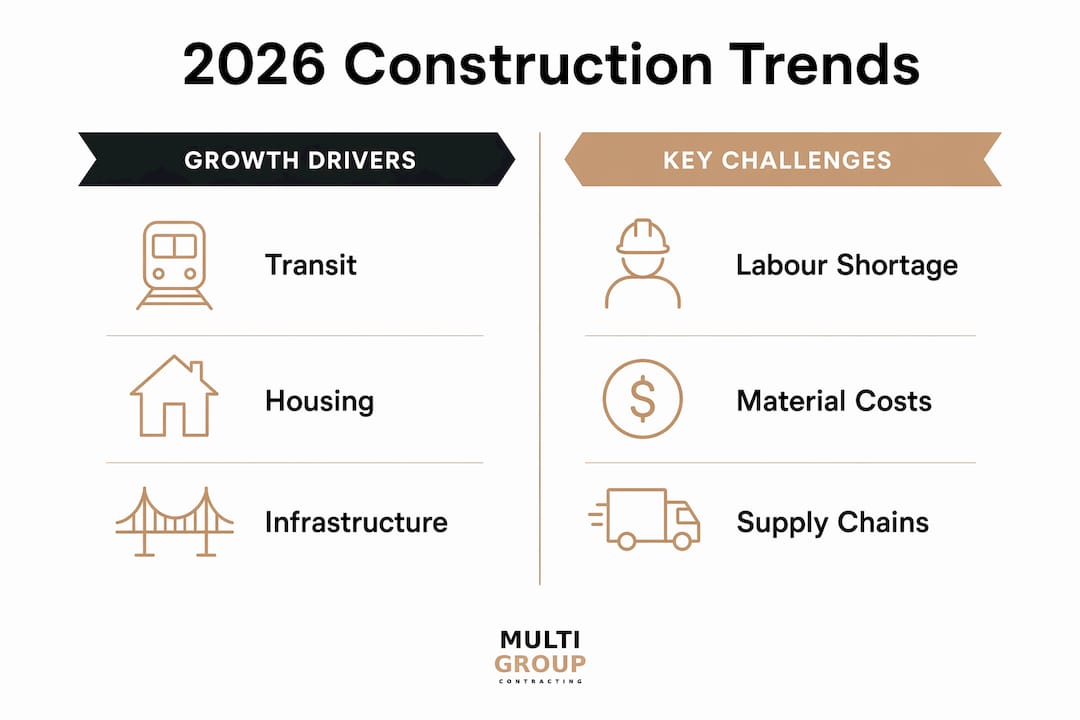
Private developers in Metro Vancouver are recalibrating timelines on multi-family and commercial projects as borrowing costs remain elevated. For tenant improvement contractors and retail buildout specialists, this means a more competitive bidding environment and clients who scrutinise budgets more closely than they did two years ago.
How severe is the labour shortage in Canadian construction?
BuildForce Canada estimates approximately 270,000 experienced tradespeople will retire over the next decade, and the industry will need more than 380,000 new workers by 2034 to maintain current activity levels. That gap does not close on its own.
Statistic: Labour costs currently represent 20–40% of total construction budgets, with double-digit wage growth expected in specialty trades due to skill shortages.
The practical effect on project delivery is direct. Scheduling a commercial renovation in Burnaby or a warehouse renovation in Surrey now requires earlier subcontractor commitments and longer lead times for specialty trades like electrical, mechanical, and glazing. Firms that track workforce availability data can build realistic schedules; those that assume 2019-era labour availability are setting up projects for delays.
Key workforce challenges in 2026:
- Retirement rates outpacing new entrant volumes in trades like carpentry, ironwork, and pipefitting
- Double-digit wage escalation in specialty trades compresses margins on fixed-price contracts.
- Apprenticeship programme capacity constrained by journeyperson availability for supervision
- Recruitment competition from infrastructure megaprojects pulling workers from commercial renovation pools
- Underrepresentation of women and Indigenous workers leaving talent pools underutilised
Firms building resilience are investing in apprenticeship sponsorships, partnering with trade schools, and diversifying their recruitment to reach underrepresented groups. Multigroup's project management approach accounts for labour availability at the scheduling stage, not after a contract is signed.
Material costs, supply chains, and trade policy in 2026
Supply chain volatility and material cost inflation continue to affect project budgets and timelines, particularly in warehouse renovations and commercial projects across Metro Vancouver. Steel, lumber, concrete, and mechanical components have all seen price variability tied to both domestic demand and cross-border trade conditions.
Canada's trade relationship with the United States under CUSMA provides a baseline framework, but tariff uncertainty on specific product categories creates procurement risk that project managers cannot ignore. A retail buildout in Richmond or an office renovation in Coquitlam that was budgeted six months ago may face different material costs at the time of purchase.
Procurement risk management tactics for 2026:
- Lock in material pricing early with supplier agreements before project start
- Specify alternative materials with equivalent performance to reduce single-source dependency
- Build contingency lines of 10–15% into budgets for volatile categories like steel and lumber
- Track commodity indices monthly and adjust project cost forecasts accordingly
- Prioritise domestic and regional suppliers where lead times and tariff exposure are lower
Pro Tip: For warehouse renovations and tenant improvements in Metro Vancouver, Multigroup recommends reviewing material pricing at the pre-construction phase and again at permit issuance, since lead times between design approval and construction start can span several months.
How technology is changing construction project delivery
About 90% of Canadian construction leaders view AI, BIM, digital twins, and automation as essential to addressing labour shortages and improving productivity, and 81% report measurable productivity gains from technology adoption. Those numbers reflect a genuine shift in how projects are planned and executed, not just aspirational interest.

Digital project management platforms that integrate estimating, job costing, scheduling, and client communication are becoming a baseline requirement for competitive builders in 2026. Firms still managing projects through disconnected spreadsheets and email chains are slower to respond to changes and more exposed to cost overruns.
Key technology trends reshaping construction in 2026:
- BIM and digital twins: 3D modelling that reduces design conflicts before construction starts, cutting costly site changes
- AI-assisted estimating: pattern recognition across historical project data to improve bid accuracy
- Prefabrication and modular construction: off-site assembly that reduces on-site labour hours and improves quality control
- Drone and sensor-based site monitoring: real-time progress tracking without additional site supervision hours
- Cloud-based scheduling tools: shared visibility for owners, contractors, and subcontractors on project timelines
For commercial renovation contractors in Metro Vancouver, the practical entry point is usually a digital project management platform that connects the office and the field. Multigroup uses integrated scheduling and communication tools to keep clients informed at every project stage, from permit submission through to final walkthrough.
How housing demand and sustainability requirements are reshaping construction
Canada's housing shortage of approximately 1.5 million homes creates sustained residential construction demand, but it also pushes builders toward more efficient and sustainable methods to deliver at scale. Buyers and tenants increasingly expect energy-efficient buildings, and regulators are codifying those expectations into law.
BC Building Code compliance now incorporates requirements for energy efficiency, resilience measures, and sustainable materials that affect design decisions on everything from residential custom builds to commercial tenant improvements. Ignoring these requirements does not just create compliance risk; it affects project timelines when permit reviewers flag non-conforming specifications.
Buyer behaviour and sustainability shifts relevant to developers and renovators:
- Demand for energy-efficient mechanical systems, better insulation, and EV charging infrastructure in new builds and renovations
- Preference for low-VOC materials and healthier indoor environments in office and retail spaces
- Growing interest in LEED and other third-party green building certifications for commercial properties
- Pressure from institutional tenants and property managers to meet ESG reporting requirements
- BC Step Code requirements pushing new residential construction toward higher energy performance tiers
For residential construction trends in Greater Vancouver, sustainability is no longer a premium add-on. It is a baseline expectation from buyers, tenants, and the permitting authority.
Strategic planning for construction firms in Canada's 2026 market
Proactive risk management focused on labour costs, supply chain exposure, and regulatory compliance is the clearest path to maintaining margins in 2026. Firms that wait for problems to surface in the field absorb costs that could have been priced or avoided at the planning stage.
Progressive design-build and integrated project delivery models are gaining traction in complex infrastructure and commercial renovation projects because they improve schedule and cost certainty by aligning owner, designer, and contractor incentives earlier. For a tenant improvement contractor or office renovation specialist in Metro Vancouver, this means earlier engagement with clients on scope definition and budget validation.
Strategic steps for growth and resilience in Metro Vancouver's market:
- Track labour cost trends monthly and build wage escalation assumptions into multi-month project bids
- Use construction budgeting guides to align client expectations with current market realities before contract execution
- Engage permit and regulatory consultants early to avoid BC Building Code compliance delays
- Diversify project types across residential, commercial, and industrial to reduce exposure to any single sector's downturn
- Invest in technology that improves scheduling accuracy and client communication
Multigroup's Metro Vancouver project portfolio spans tenant improvements, warehouse renovations, retail buildouts, and residential custom builds across Burnaby, Richmond, Surrey, Coquitlam, and North Vancouver. That breadth provides direct visibility into how market conditions vary by project type and municipality, which informs both pricing and scheduling decisions.
What skills will the construction workforce need by 2026 and beyond?
The trades workforce of 2030 will need a different skill set than the one that built Metro Vancouver's last construction cycle. Digital literacy is now a practical requirement on commercial job sites, not a specialisation. Workers who can read BIM models, operate drone-based survey tools, and use cloud-based scheduling platforms are more productive and more employable.
Formal training programmes are adapting, but slowly. The 2026 construction industry outlook points to growing demand for workers who combine traditional trade skills with data interpretation and technology operation. Firms that invest in upskilling their existing workforce retain experienced workers and reduce the cost of recruiting externally.
Training priorities for construction firms in 2026 include BIM software operation, digital estimating tools, prefabrication assembly techniques, and safety management systems. Apprenticeship programmes that integrate these skills alongside traditional trade training will produce workers ready for the job sites of the next decade.
How urbanisation and infrastructure investment are driving construction demand
Canada's urban population continues to concentrate in a handful of metropolitan areas, and Metro Vancouver is one of the most constrained. Population growth, transit-oriented development, and federal infrastructure commitments are all converging to sustain construction demand even as private financing conditions tighten.
Federal programmes including the Housing Accelerator Fund are directing capital toward municipalities that commit to zoning reform and faster permitting. For contractors in Metro Vancouver, this translates into a pipeline of mid-density residential and mixed-use projects that will require tenant improvement and leasehold improvement work as buildings come online. Infrastructure investment in transit, utilities, and community facilities also creates steady demand for commercial renovation and fit-out work adjacent to new transit nodes.
How to position your firm competitively in 2026's construction market
The competitive landscape in Metro Vancouver's construction market is consolidating around firms that can demonstrate reliable scheduling, BC Building Code compliance expertise, and transparent cost management. Clients, particularly property managers and institutional developers, are choosing contractors based on track record and communication quality, not just bid price.
Smaller general contractors can compete effectively by specialising. A firm known for cost control in construction and on-time delivery in tenant improvements or retail buildouts builds a reputation that generates referrals in a market where word-of-mouth still drives a large share of commercial renovation work. Multigroup's position across multiple project types and municipalities in Metro Vancouver reflects exactly this kind of deliberate market positioning.
Differentiators that matter to clients in 2026: permit management experience, integrated project scheduling, transparent change-order processes, and demonstrated familiarity with current material pricing. Firms that can articulate these capabilities clearly in their proposals win work at better margins than those competing purely on price.
Risk management strategies for emerging construction trends
Risk in construction is not new, but the sources of risk are shifting. In 2026, the most consequential risks for Canadian contractors are labour cost escalation, material price volatility, regulatory non-compliance, and technology adoption gaps. Each of these can be managed, but only if they are identified and priced before a contract is signed.
A practical risk register for a Metro Vancouver commercial renovation project should address: subcontractor availability and wage rates at the time of construction, not at bid date; material lead times and price lock-in options; permit timeline assumptions and BC Building Code compliance requirements; and client-driven scope changes and their cost implications. Firms that use construction scheduling checklists to build these assumptions into their project plans are less likely to absorb unplanned costs.
Technology adoption itself carries risk. Firms that invest in platforms their teams do not use effectively waste capital and create data gaps. The better approach is phased adoption, starting with the tools that address the highest-cost problems first, typically scheduling and cost tracking, before expanding to more advanced capabilities.
Key takeaways
Monitoring construction industry forecasts in 2026 is the single most reliable way for Canadian construction professionals to protect margins, plan accurately, and stay ahead of regulatory and market changes.
| Point | Details |
|---|---|
| Labour costs are a moving target | Labour costs currently represent 20–40% of total budgets, with double-digit wage growth in specialty trades expected due to skill shortages. |
| Workforce gap is structural | BuildForce Canada projects 270,000 retirements and a need for 380,000 new workers by 2034, requiring firms to build talent pipelines now. |
| Technology adoption is mainstream | 90% of Canadian construction leaders view AI, BIM, and automation as essential, with 81% reporting productivity gains. |
| Housing shortage sustains demand | Canada's gap of approximately 1.5 million homes keeps residential construction demand elevated despite financing headwinds. |
| BC Building Code shapes every project | Sustainability and energy efficiency requirements under the BC Building Code affect design, permitting, and material choices on all project types. |
FAQ
Why does tracking construction trends matter for 2026 specifically?
The 2026 Canadian construction market combines a structural labour shortage, material cost volatility, and new BC Building Code sustainability requirements simultaneously. Firms that monitor these conditions can price risk accurately and schedule projects realistically; those that do not absorb the costs in overruns and delays.
How do labour shortages affect commercial renovation projects in Metro Vancouver?
Specialty trade availability is tighter than it has been in years, which extends lead times and pushes wage rates higher. Contractors who track workforce data can secure subcontractors earlier and build realistic schedules, while those who do not often face mid-project delays.
What technology should construction firms prioritise in 2026?
Digital project management platforms that integrate estimating, scheduling, and client communication deliver the fastest return. BIM and AI-assisted estimating are the next tier, particularly for firms handling complex tenant improvements or multi-phase commercial renovations.
How does the BC Building Code affect construction planning in 2026?
BC Building Code compliance now mandates energy efficiency measures, sustainable materials, and resilience standards that must be incorporated at the design stage. Non-conforming specifications delay permits and add cost, making early regulatory review a standard part of project planning.
Where can I find reliable construction industry forecasts for Canada in 2026?
BuildForce Canada, the Canadian Design and Construction Report, and CMHC publish regular national and regional forecasts. For Metro Vancouver-specific context, Multigroup's blog covers local market conditions, budgeting, and scheduling trends relevant to commercial and residential construction.