

TL;DR:
- Remodelling a medical office is a strategic investment that enhances patient experience, operational efficiency, and regulatory compliance. It offers a 60 to 80% ROI by increasing patient volume and energy savings while supporting modern telehealth and technology integration. Phased renovations are essential to maintain clinic operations, protect revenue, and achieve long-term practice growth.
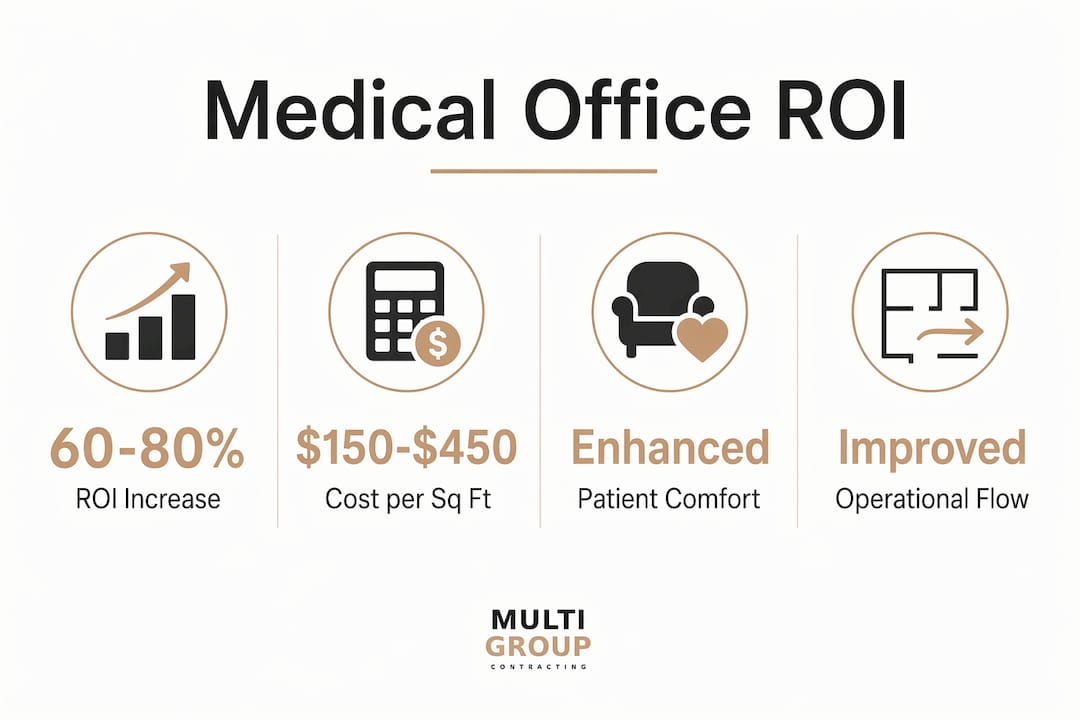
A medical office remodel is defined as a planned renovation of clinical and administrative spaces to improve patient outcomes, operational efficiency, and regulatory compliance. For clinic owners in Metro Vancouver, this is not a cosmetic decision. It is a strategic investment that directly affects patient retention, staff performance, and long-term revenue. Medical office renovation delivers a return on investment of 60 to 80%, driven by increased patient volume and higher reimbursement rates. Understanding why remodel a medical office starts with recognising that your physical environment is as much a clinical tool as any piece of equipment in it.
What are the key reasons to remodel a medical office?
The most compelling reasons to upgrade a medical office fall into five categories: patient experience, operational efficiency, regulatory compliance, technology integration, and energy performance. Each one carries measurable consequences for your practice.
Patient comfort and first impressions
Modernised environments correlate directly with higher patient experience scores, and patients who feel comfortable are more likely to return and refer others. Medical offices are transitioning away from institutional layouts toward flexible, spa-like, patient-centred designs that reduce anxiety and build trust before a patient even sees a clinician. Natural light, acoustic privacy, and calming colour palettes are no longer optional features. They are expectations.
Regulatory compliance
BC Building Code, ADA accessibility standards, and HIPAA acoustic privacy requirements all evolve over time. An older clinic that was compliant a decade ago may now carry liability. Medical-grade requirements include acoustic separation between consultation rooms and high-bandwidth data infrastructure to support electronic health records and telehealth platforms. Addressing these during a planned remodel is far less costly than responding to a compliance order.
Technology and telehealth readiness
Integrating telehealth infrastructure during a remodel allows flexible room design that accommodates both virtual and in-person visits. This is not a future consideration. It is a current operational need for most Metro Vancouver clinics.
Energy performance
Energy-efficient HVAC systems, LED lighting, and building automation can reduce utility costs by 15 to 40%. That reduction compounds over years and directly improves your operating margin.
- Enhanced patient comfort through calming, naturally lit reception and treatment areas
- Compliance with BC Building Code, ADA, and HIPAA acoustic standards
- Telehealth and smart building infrastructure integration
- Energy cost reductions of 15 to 40% through modern mechanical and electrical systems
- Competitive positioning in Metro Vancouver's growing healthcare market
Pro Tip: Before finalising your renovation scope, audit your current utility bills and patient satisfaction survey results. These two data points will anchor your ROI projections and help you prioritise which upgrades deliver the fastest payback.
How does remodelling improve operational efficiency and staff experience?
Older medical office layouts often reach a hard limit in efficiency that only a physical redesign can resolve. Adding staff without redesigning layout causes bottlenecks in reception, sterilisation, and patient intake that no hiring decision can fix. The layout itself becomes the constraint.

A well-planned remodel addresses this by redesigning patient flow from entry to discharge. Reception desks repositioned closer to entry points reduce wait-time perception. Sterilisation rooms placed adjacent to procedure rooms cut staff travel time. Separate entry and exit paths eliminate the awkward congestion that frustrates both patients and clinicians.
Staff morale is a direct beneficiary of thoughtful design. Improved natural light, ergonomic workstations, and dedicated staff rest areas reduce clinician burnout. 72% of healthcare organisations see modernisation as critical for scaling operations and integrating AI-assisted tools. A clinic that retains experienced staff avoids the significant cost of recruitment and onboarding.
Here is a practical sequence for planning an efficiency-focused remodel:
- Map your current patient flow from arrival to discharge and identify every point where delays occur.
- Audit staff movement patterns during a typical clinical day to locate unnecessary travel between zones.
- Identify which rooms are underutilised and which are consistently over-capacity.
- Redesign the floor plan to co-locate related functions, such as sterilisation adjacent to procedure rooms.
- Build in flexible, scalable spaces that can be reconfigured as your practice grows or service mix changes.
Pro Tip: Involve your clinical staff in the layout planning process. They will identify bottlenecks that are invisible on a floor plan but obvious in daily practice. Their input also increases buy-in for the disruption that comes with any renovation.
Smart building technologies, including automated lighting, occupancy sensors, and integrated scheduling displays, add another layer of efficiency without requiring additional staff. These systems pay for themselves within three to five years in most Metro Vancouver commercial renovations.
What are the costs and ROI of medical office remodelling?
The cost of remodelling medical facilities in Metro Vancouver varies significantly based on scope, existing infrastructure condition, and the level of medical-grade finishing required. A general tenant improvement in a commercial space runs from $150 to $250 CAD per square foot. A full medical office fitout with specialised mechanical, electrical, and acoustic work typically ranges from $250 to $450 CAD per square foot, depending on the complexity of the clinical programme.
Hidden costs are the most common source of budget overruns. Seismic, HVAC, and acoustic upgrades are frequently underestimated because they are not visible in the existing space. Older buildings in Burnaby, New Westminster, and Surrey often require seismic tie-ins and full HVAC replacement to meet current BC Building Code requirements. These are not optional. They are permit conditions.
| Cost factor | What to expect |
|---|---|
| Base tenant improvement | $150 to $250 CAD per square foot for standard commercial fitout |
| Medical-grade fitout | $250 to $450 CAD per square foot including specialised mechanical and electrical |
| HVAC and seismic upgrades | $30,000 to $150,000 CAD depending on building age and size |
| Telehealth and data infrastructure | $15,000 to $50,000 CAD for structured cabling and AV systems |
| Permit and project management | 10 to 15% of total construction cost |
The financial return is well documented. Medical office renovation yields an ROI of 60 to 80% through increased patient volume, improved retention, and the ability to attract higher-value services. Energy savings of 15 to 40% reduce operating costs annually. Practices that modernise their environments also report stronger ability to recruit specialist physicians, which directly expands billable capacity.
The key to linking renovation goals to measurable outcomes is setting baseline metrics before construction begins. Track patient volume, no-show rates, staff turnover, and utility costs for three months prior to the remodel. Compare those figures six months after completion. The data will confirm your investment and support future capital planning.
How to plan a medical office remodel with minimal disruption
The single most important planning decision in any medical office renovation is whether to use a phased approach. Phased project execution allows portions of the clinic to remain operational while other sections are under construction. This protects your revenue stream and prevents the patient retention loss that comes from extended closures.
The alternative, a single large-scope project completed all at once, is sometimes called the "Big Bang" approach. Big Bang projects consistently produce higher rates of staff burnout and patient complaints during construction. They are appropriate only when the existing space is completely non-functional or when a full closure is operationally feasible. For most active clinics, phased renovation is the correct strategy.
A practical execution plan follows this sequence:
- Define the renovation scope in discrete phases, each of which can be completed in two to four weeks without shutting down the entire clinic.
- Communicate the renovation timeline to patients at least four weeks in advance through email, your patient portal, and signage at reception.
- Select a contractor with documented experience in healthcare fitouts and phased commercial construction. Ask for references from medical clinic projects specifically.
- Confirm that your contractor will manage all permit applications with the City of Vancouver or the relevant Metro Vancouver municipality. Permit delays are the most common cause of project overruns.
- Schedule noisy or disruptive work during off-hours or on days when clinical volume is lowest.
Pro Tip: Request a construction phasing plan in writing from your contractor before signing any agreement. A credible contractor will provide a week-by-week schedule showing which areas are active, which are closed, and how patient access is maintained throughout.
Regulatory compliance during construction is non-negotiable. BC Building Code requires permits for any work affecting structural elements, mechanical systems, or occupancy classification. Working with a licensed contractor BC who understands healthcare fitout requirements prevents costly stop-work orders and ensures your renovation passes inspection on the first submission.
For a detailed walkthrough of the renovation process specific to Metro Vancouver clinics, the step-by-step renovation guide from Multigroup covers compliance, phasing, and technology integration in practical terms.
Key takeaways
Medical office remodelling is a direct investment in patient retention, operational capacity, and long-term practice revenue, not a discretionary upgrade.
| Point | Details |
|---|---|
| ROI is well established | Medical office renovation delivers 60 to 80% ROI through patient volume growth and energy savings. |
| Phased execution protects revenue | Sectional renovations keep the clinic operational and prevent patient retention loss during construction. |
| Hidden costs require early budgeting | Seismic, HVAC, and acoustic upgrades are permit conditions, not optional line items. |
| Operational efficiency has a layout ceiling | Redesigning patient flow and staff zones resolves bottlenecks that additional hiring cannot fix. |
| Compliance is time-sensitive | BC Building Code, ADA, and HIPAA standards evolve, and older clinics carry growing liability without updates. |
What we have learned from medical office renovations in Metro Vancouver
From Multigroup's experience delivering tenant improvements and healthcare fitouts across Metro Vancouver, the clinics that get the most from a remodel are the ones that treat it as a clinical decision, not a construction project. The owners who come to us with a clear picture of their patient flow problems, their compliance gaps, and their five-year growth plan consistently end up with spaces that perform better and cost less to maintain.
The most common mistake we see is underestimating infrastructure. A clinic in a 1990s building in Burnaby may look structurally sound, but once we open the walls, the HVAC is undersized, the data cabling is Category 3, and the acoustic separation between rooms does not meet current HIPAA standards. None of that is visible in a walkthrough. It shows up in the permit drawings and the structural engineer's report. Owners who budget only for finishes are consistently surprised by what the building actually requires.
The second mistake is attempting too much at once. We have seen practices try to renovate their entire clinic over a single long weekend. The result is almost always a delayed opening, stressed staff, and patients who have already found another provider. Phased construction is slower on paper but faster in practice because it does not create the operational crisis that forces you to stop and recover.
Our recommendation for any clinic owner considering a remodel: start with a commercial space assessment that identifies your compliance gaps and efficiency constraints before you engage a designer or contractor. That assessment will define your scope, protect your budget, and give you a renovation that actually solves the problems your practice faces.
— MultigroupTeam
How Multigroup supports medical office remodels in Metro Vancouver
Multigroup is a licensed Vancouver general contractor with direct experience in medical office tenant improvements, healthcare fitouts, and phased commercial renovations across Metro Vancouver, including Burnaby, Richmond, Surrey, Coquitlam, and North Vancouver.

We manage the full project scope from permit applications and BC Building Code compliance to construction scheduling and final inspection. Our team understands the specific requirements of medical-grade construction, including acoustic privacy, HVAC capacity, and data infrastructure. We plan every project to keep your clinic operational during construction, protecting your patient relationships and your revenue. Contact Multigroup to discuss your clinic renovation and receive a project assessment tailored to your space and timeline.
FAQ
Why remodel a medical office rather than relocate?
Remodelling an existing medical office preserves your established patient base, avoids the cost and disruption of a full relocation, and typically delivers a 60 to 80% ROI through improved patient volume and operational efficiency. Relocation carries higher upfront costs and the risk of losing patients who do not follow you to a new address.
How much does a medical office renovation cost in Metro Vancouver?
A medical-grade fitout in Metro Vancouver typically ranges from $250 to $450 CAD per square foot, depending on the scope of mechanical, electrical, and acoustic work required. Budget an additional 10 to 15% for permits and project management.
How do you renovate a clinic without closing it?
Phased renovation divides the project into sections so that part of the clinic remains operational throughout construction. This approach protects revenue, reduces patient disruption, and is the standard best practice for active medical practices.
What compliance requirements apply to medical office renovations in BC?
Medical office renovations in BC must comply with the BC Building Code, ADA accessibility standards, and HIPAA acoustic privacy requirements. Permits are required for any work affecting structural elements, mechanical systems, or occupancy classification, and must be obtained before construction begins.
How long does a medical office remodel take?
A phased medical office renovation for a 2,000 to 4,000 square foot clinic typically takes three to six months from permit approval to final inspection, depending on the scope of infrastructure upgrades and the number of phases required to keep the clinic operational.