

TL;DR:
- Engaging construction experts early in a project prevents costly mistakes by identifying risks before design completion. These professionals provide independent inspections, verify compliance, and deliver confidential assessments that protect the owner's interests throughout construction. Early collaboration with qualified consultants ensures schedule certainty, budget control, and effective project oversight, ultimately saving time and money.
Consulting construction experts means bringing independent, specialized oversight into your project to protect quality, budget, and regulatory compliance from day one. These professionals, formally known as construction consultants or project assurance specialists, do far more than answer technical questions. They map risks before design begins, verify work against approved plans, and give owners the objective data needed to make confident decisions. Whether you are planning a tenant improvement in Burnaby, a retail buildout in Richmond, or a residential renovation in North Vancouver, the case for expert consultation is the same: prevention costs far less than correction.
Why consult construction experts before design even starts
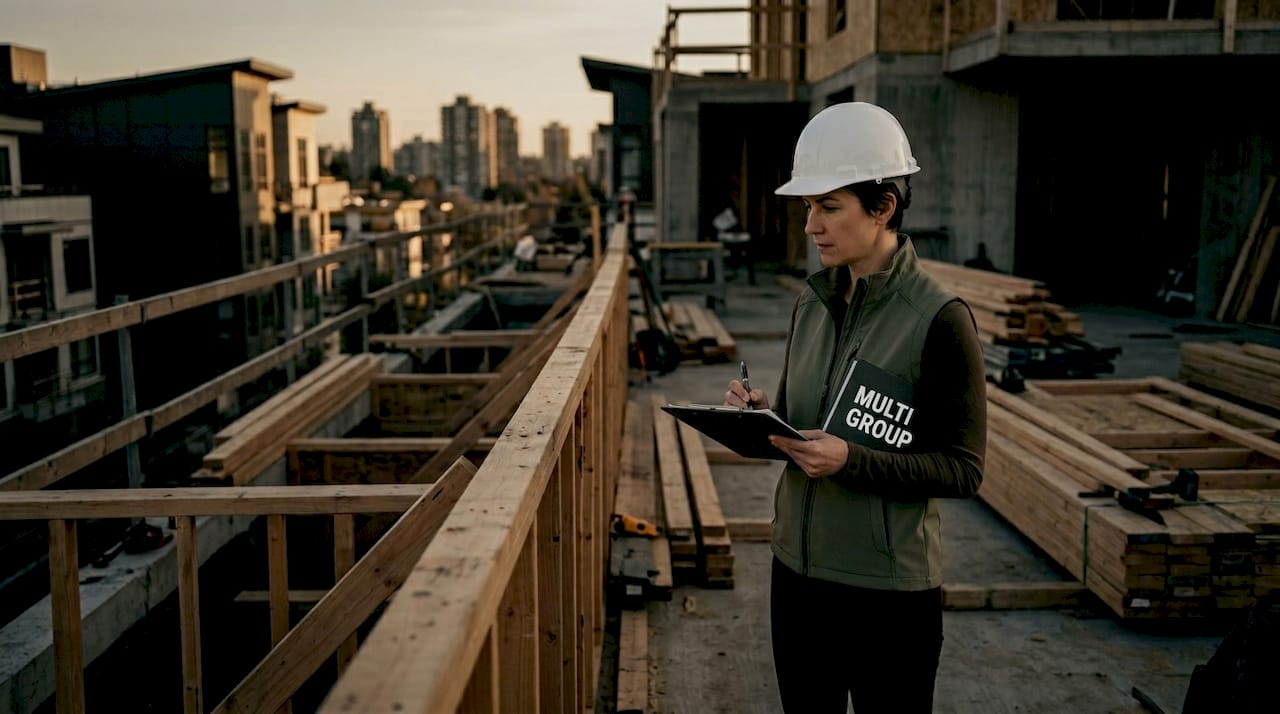
The single greatest value a construction consultant delivers is early risk prevention, not technical answers after problems appear. The ICAC describes this as the shift from technician to trusted advisor, where experts apply pattern recognition and trade-off clarity to de-risk decisions before they become commitments. Most owners engage consultants too late, after contracts are signed and budgets are locked. That sequence is backward.
Early engagement produces three concrete benefits:
- Permitting due diligence: Milrose evaluates zoning, code, and regulatory constraints before design begins, identifying approval pathway risks that would otherwise surface mid-project and compress your schedule.
- Credible project documentation: NASBP confirms that early expert involvement builds a favorable technical record that either prevents disputes or resolves them efficiently when they do arise.
- Owner's representation: Moran Consultants documents that front-end scope validation reduces change orders and aligns milestones with procurement timelines. This protects both budget certainty and financing conditions.
The practical implication is direct: a consultant hired before design locks in your scope will cost a fraction of what a single unresolved change order costs during construction. For a commercial build in Surrey or Coquitlam, where permit timelines are already tight, that front-end investment is not optional. It is the difference between a project that finishes on schedule and one that stalls.
Pro Tip: Ask your consultant to deliver a written permitting due diligence report before your architect finalizes drawings. That single document can eliminate weeks of redesign and resubmission.
How independent inspections protect quality and compliance
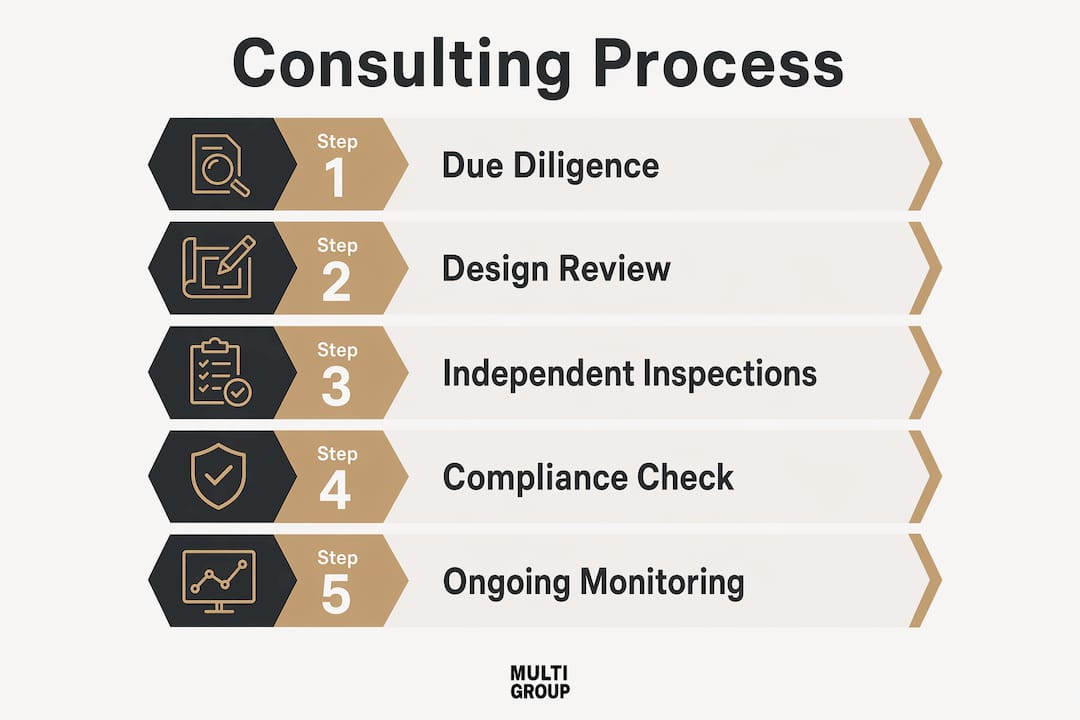
Independent progress inspections are the mechanism that keeps construction quality verifiable throughout the build, not just at final sign-off. Milrose schedules inspections at key milestones to maintain code compliance and project momentum, reducing costly rework and delays. This staged verification approach covers structural work, fire safety systems, and energy code compliance at defined handoff points.
Here is how a typical inspection sequence works on a commercial renovation project:
- Pre-construction review: Consultant confirms that approved drawings, permits, and specifications are on site and that the contractor's plan matches the permit set.
- Structural and framing inspection: Verifies load-bearing elements, connections, and rough-in work before walls are closed. Catching a framing error here costs hours. Catching it after drywall costs days.
- Mechanical, electrical, and plumbing rough-in: Confirms systems are installed per code before concealment. This is the phase most often skipped by owners who trust the contractor's self-reporting.
- Fire and life safety systems: Validates sprinkler layouts, egress paths, and fire-rated assemblies against the approved fire protection plan.
- Final inspection and occupancy readiness: Confirms all deficiencies from prior inspections are resolved and the space is ready for authority sign-off.
| Inspection phase | Primary risk caught |
|---|---|
| Framing and structural | Incorrect spans, missing connections, code deviations |
| MEP rough-in | Code violations before concealment |
| Fire and life safety | Non-compliant egress, missing rated assemblies |
| Final walkthrough | Outstanding deficiencies blocking occupancy permit |
Each inspection phase produces a written report. That documentation protects the owner if a contractor disputes the scope of deficiencies or if a warranty claim arises later. For retail buildouts in Metro Vancouver, where occupancy timelines directly affect lease commencement, this paper trail is operationally critical.
What construction consultants actually review and monitor
Construction assurance is the formal term for what most people call "construction oversight." Kiwa USA defines this as independent oversight that is not influenced by contractors, giving owners objective data to support timely decisions. The scope of that oversight is broader than most owners realize.
A qualified construction consultant monitors the following on an active project:
- Design intent verification: Confirms that what is being built matches the approved drawings and the owner's stated requirements. Contractors sometimes substitute materials or methods without formal approval.
- Contract compliance: Reviews contractor submittals, shop drawings, and material certifications against contract specifications. A non-conforming submittal approved without review becomes a permanent defect.
- Schedule and cost risk controls: Tracks progress against the baseline schedule and flags variances before they compound. A two-week slip in framing can become a six-week slip at handover if not addressed immediately.
- Transparent reporting: Delivers written progress reports directly to the owner, not filtered through the general contractor. This is the mechanism that keeps owners in control of their own projects.
Pro Tip: Request that your consultant's reports be delivered directly to you and your lender simultaneously. Lenders on construction financing often require this, and it creates a clean audit trail for draw requests.
The benefits of construction expertise compound when the consultant has prior experience with the specific project type. A consultant who has overseen 20 warehouse renovations in Burnaby will recognize a schedule risk in week two that a generalist might miss until week eight.
Consulting experts vs. testifying experts: what is the difference?
This distinction matters more than most owners know, and it directly affects how you should structure your expert relationships. RIMKUS explains that testifying experts have their work product become discoverable under Federal Rule 26 once designated for litigation. Consulting experts operate under a different standard. Their assessments remain confidential and can be used to stress-test assumptions without creating discoverable records.
| Role | Primary function | Discoverability | Best used |
|---|---|---|---|
| Consulting expert | Candid technical assessment, risk analysis | Protected, confidential | Pre-litigation, project planning |
| Testifying expert | Formal opinions for legal proceedings | Discoverable under Rule 26 | Active litigation or arbitration |
The strategic implication is clear. Engage a consulting expert early to get honest, unfiltered technical analysis of your project risks. If a dispute later escalates to litigation, you can then designate a testifying expert whose formal opinions are built on a solid foundation. Trying to use a testifying expert from the start means every preliminary analysis becomes part of the legal record, which limits candor and increases cost.
For owners in Metro Vancouver managing complex commercial builds or tenant improvements, this distinction is worth discussing with your legal counsel before you engage any expert.
Practical steps to engage construction experts effectively
Engaging the right consultant is not complicated, but it requires structure. Forensis Group recommends structured initial consultations to assess expertise and define engagement scope before any deeper commitment. Apply that same discipline when hiring a project consultant.
- Define your scope before the first call. Know whether you need permitting due diligence, full construction assurance, or targeted inspections at specific phases. Consultants price and staff engagements differently based on scope.
- Verify credentials and project-type experience. A consultant with direct experience in coffee shop renovations in Vancouver will know the specific health authority and building code requirements that a generalist may not. Ask for references from comparable projects.
- Ask about reporting format and frequency. Weekly written reports are the standard for active construction phases. Confirm that reports go directly to you, not through the contractor.
- Clarify the communication protocol. Who does the consultant contact when they identify a deficiency? What is the escalation path if the contractor disputes the finding? These questions belong in the engagement letter, not in a verbal agreement.
- Integrate the consultant into your project team early. Introduce them to your architect, contractor, and permit coordinator before construction starts. A consultant who attends the pre-construction meeting has context that one who arrives at framing inspection will never fully recover.
Reviewing questions to ask contractors before you hire also applies directly to vetting consultants. The same due diligence that protects you when selecting a general contractor protects you when selecting the expert who will oversee that contractor's work.
Key takeaways
Consulting construction experts early, before design locks in scope and budget, is the single most cost-effective risk management decision an owner can make on any project.
| Point | Details |
|---|---|
| Engage experts before design | Permitting due diligence before drawings are finalized prevents mid-project schedule collapses. |
| Use staged inspections | Inspections at framing, MEP rough-in, and fire safety phases catch defects before they are concealed. |
| Independent reporting matters | Consultant reports delivered directly to owners, not filtered through contractors, keep owners in control. |
| Consulting vs. testifying experts | Consulting experts provide confidential analysis; testifying experts create discoverable records for litigation. |
| Structure the engagement | Define scope, verify credentials, and confirm reporting protocols before signing any consulting agreement. |
What I have seen go wrong without early expert involvement
I have watched owners in Coquitlam and Surrey start construction with full confidence in their contractor, only to discover at the final inspection that fire-rated assemblies were installed incorrectly throughout an entire floor. The contractor was competent. The problem was that no one was verifying work against the approved fire protection plan at the rough-in stage. By the time the issue surfaced, the walls were closed and the remediation cost exceeded the original consulting fee by a factor of twelve.
The pattern repeats. Owners skip the consulting expert to save money upfront, then spend multiples of that savings fixing problems that an independent set of eyes would have caught in week three. The math is not subtle.
What I find most underused is the combination of owner's representation at the front end and third-party inspections during construction. These two services work together. The owner's rep validates scope and budget before commitments are made. The inspection program verifies execution against that validated scope. Without both, you have gaps.
The other thing worth saying plainly: transparent communication between the owner and the consultant is not optional. If you are not reading the weekly reports and asking questions about flagged items, you are not getting the value you are paying for. The report is not the product. The informed decision you make because of the report is the product.
Engage licensed professionals. In British Columbia, that means verifying credentials with the appropriate professional associations before signing any engagement letter. Peace of mind on a construction project is not a feeling. It is a documented, verified outcome.
— Momo
How Multigroup supports your project from day one
Multigroup Contracting works with property owners, developers, and business owners across Burnaby, Richmond, Surrey, North Vancouver, and Coquitlam on tenant improvements, retail buildouts, warehouse renovations, and coffee shop renovations. Part of what Multigroup brings to every project is coordination of the expert consulting and inspection process from the earliest planning stages, so clients are not managing those relationships alone.
Multigroup is licensed and insured in British Columbia and manages permit handling, scheduling, and contractor coordination as part of every engagement. If you are planning a commercial build or renovation in Metro Vancouver and want a team that integrates expert project oversight from the start, contact Multigroup Contracting at 778-819-5933, info@multigroup.ca, or visit multigroup.ca.
FAQ
Why should you consult construction experts before design begins?
Consulting experts before design begins allows permitting due diligence to identify zoning and code constraints early, preventing schedule delays and costly redesigns. Early engagement also builds a credible technical record that reduces dispute risk throughout the project.
What do independent construction inspections cover?
Independent inspections cover structural framing, mechanical and electrical rough-in, fire and life safety systems, and final occupancy readiness, each at defined construction milestones. These inspections verify compliance with approved plans and building codes before work is concealed.
What is the difference between a consulting expert and a testifying expert?
A consulting expert provides confidential technical assessments that are not discoverable in litigation, while a testifying expert's work product becomes part of the legal record once designated. Use consulting experts for project planning and risk analysis, and testifying experts only when litigation is active.
How do construction consultants help control project costs?
Construction consultants monitor schedule variances, review contractor submittals for contract compliance, and flag non-conforming materials before installation. Catching a single framing deviation or material substitution early typically saves multiples of the consulting fee in rework costs.
How do you select a qualified construction consultant?
Define your scope first, then verify the consultant's credentials and direct experience with your project type. Confirm that reports will be delivered directly to you, and establish a clear escalation protocol for deficiencies before signing the engagement letter.