
TL;DR:
- Construction quality ensures buildings meet safety, design, and performance standards, affecting durability and investment value. Effective proactive measures reduce rework costs, safety risks, and long-term repair expenses, whereas poor quality damages reputation and workforce morale. Proper material selection, skilled workmanship, and integrated quality assurance processes are essential for sustainable construction success.
Construction quality is defined as the degree to which a building meets its design specifications, safety standards, and long-term performance requirements. For property owners and developers in Metro Vancouver, this definition carries real financial weight. Rework alone accounts for 2%–20% of total project budgets as of 2026 industry data. That figure means a $2 million commercial build could absorb up to $400,000 in preventable corrections. Understanding why construction quality matters is the first step toward protecting your investment, your occupants, and your reputation.
Why construction quality matters for safety and durability
Construction quality directly determines whether a building protects the people inside it. Rigorous quality inspections reduce site fatalities by 30%, a figure that reflects how much preventable harm occurs when standards slip. That reduction is not accidental. It comes from consistent inspection protocols, trained tradespeople, and materials that meet or exceed code requirements under the BC Building Code.
Premium materials extend a building's functional life in measurable ways. Investing in quality roofing can save over $20,000 for a typical 2,000 sq ft home over 50 years compared to standard alternatives. That saving applies equally to commercial properties, where roofing, windows, and HVAC systems represent major long-term operating costs. Choosing materials that meet ASTM standards from the start reduces replacement cycles and maintenance budgets significantly.
Structural defects are the most severe quality failures a property owner can face. Structural failures carry severe financial consequences despite occurring less frequently than finish defects. A single foundation or framing failure can render a building uninhabitable and trigger legal liability. BC Building Code compliance, enforced through permit inspections, exists precisely to catch these risks before they compound.
Beyond structural concerns, quality construction prevents a range of hazards that accumulate over time:
- Moisture infiltration from poorly sealed envelopes leads to mould, rot, and air quality problems
- Electrical and mechanical failures from substandard installations create fire and safety risks
- Settlement and movement from inadequate soil preparation or framing cause cracking and structural drift
- Thermal performance gaps from non-compliant insulation drive up energy costs year over year
Pro Tip: Ask your contractor to provide a written inspection schedule tied to project milestones before work begins. Visible, verifiable inspections at framing, rough-in, and envelope stages catch problems when they are still inexpensive to correct.
What does poor construction quality actually cost?
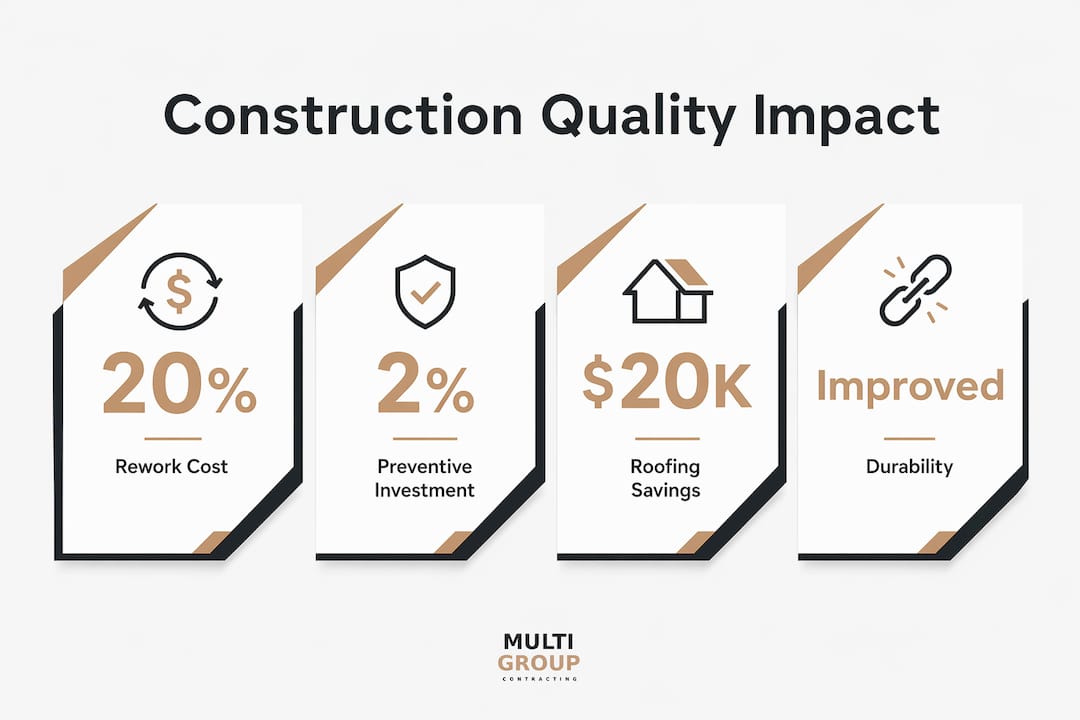
The financial case for high construction standards is straightforward once you account for the full cost of failure. Rework costs between 2% and 20% of project budgets represent direct, measurable losses. On a $500,000 tenant improvement in Burnaby or Richmond, that range translates to $10,000–$100,000 in avoidable expense. Most of that rework is traceable to decisions made in the first 20% of a project.
Preventive quality assurance strategies deliver better financial returns than reactive quality control measures. An analysis of 180 nonconformance reports from 2019–2024 confirms this finding. The logic is simple: fixing a problem in the design or procurement phase costs a fraction of fixing it after concrete is poured or drywall is hung.
The indirect costs are equally damaging. Poor quality work erodes workforce morale and harms public reputation. Subcontractors who work on poorly managed sites disengage, make more errors, and leave projects. Developers who deliver substandard buildings lose repeat clients and referrals, which in Metro Vancouver's competitive market is a significant long-term cost.
The table below compares the cost profile of proactive quality assurance against reactive quality control:
| Approach | When It Acts | Typical Cost Impact | Example |
|---|---|---|---|
| Quality Assurance (QA) | Before and during work | Low cost, prevents defects | Pre-approved material submittals, inspection plans |
| Quality Control (QC) | After work is completed | Higher cost, corrects defects | Punch lists, rework orders, re-inspections |
| No formal QA or QC | After occupancy or handover | Highest cost, legal exposure | Warranty claims, litigation, building closures |
Pro Tip: Build a construction budget that includes a dedicated quality assurance line item. Even 1%–2% of project value allocated to inspections and material verification can prevent losses ten times that size.
What is the difference between quality assurance and quality control?
Quality assurance (QA) and quality control (QC) are related but distinct disciplines in construction management. QA is a proactive system that establishes the processes, standards, and protocols required to prevent defects from occurring. QC is a reactive process that verifies completed work against those standards and identifies corrections needed. Both are necessary. Neither replaces the other.
Effective QA transforms quality control from a reactive checklist into a preventive process that mitigates risks like material failures and budget overruns. A contractor who only performs QC is always catching up to problems. A contractor who builds QA into preconstruction planning, procurement, and scheduling prevents most of those problems from arising.
The most effective projects integrate both approaches into a "Right First Time" culture. This means subcontractors understand quality expectations before they start work, not after they finish. It means material submittals are reviewed and approved before delivery, not after installation. It means site visibility is maintained throughout the project so project managers can identify deviations in real time rather than discovering them at substantial completion.
For property owners and developers, the practical implication is clear. When evaluating a general contractor, ask specifically how they manage QA during preconstruction and procurement. A contractor who can only describe their punch list process is operating reactively. A contractor who describes their submittal review process, inspection hold points, and subcontractor qualification criteria is operating preventively.
How materials and workmanship define construction standards
The quality of a finished building is the sum of two inputs: the materials used and the skill of the people who install them. Neither compensates for deficiencies in the other. Premium materials installed incorrectly fail prematurely. Skilled tradespeople working with substandard materials produce work that meets appearance standards but not performance standards.
Materials compliance in BC is governed by the BC Building Code, which references ASTM International standards for structural steel, concrete, and cladding systems, as well as CSA Group standards for electrical, plumbing, and mechanical systems. Specifying materials that meet these standards is not optional. It is a condition of permit approval and occupancy sign-off.
The benefits of hiring licensed contractors extend beyond compliance. Licensed general contractors in BC carry liability insurance, hold valid trade licences, and are accountable to the BC Housing Licensing and Consumer Services registry. That accountability structure protects property owners from uninsured defects and abandoned projects.
Key factors that define workmanship quality on a Metro Vancouver construction project include:
- Framing precision: Walls, floors, and roofs built to tight tolerances reduce finish costs and prevent long-term movement
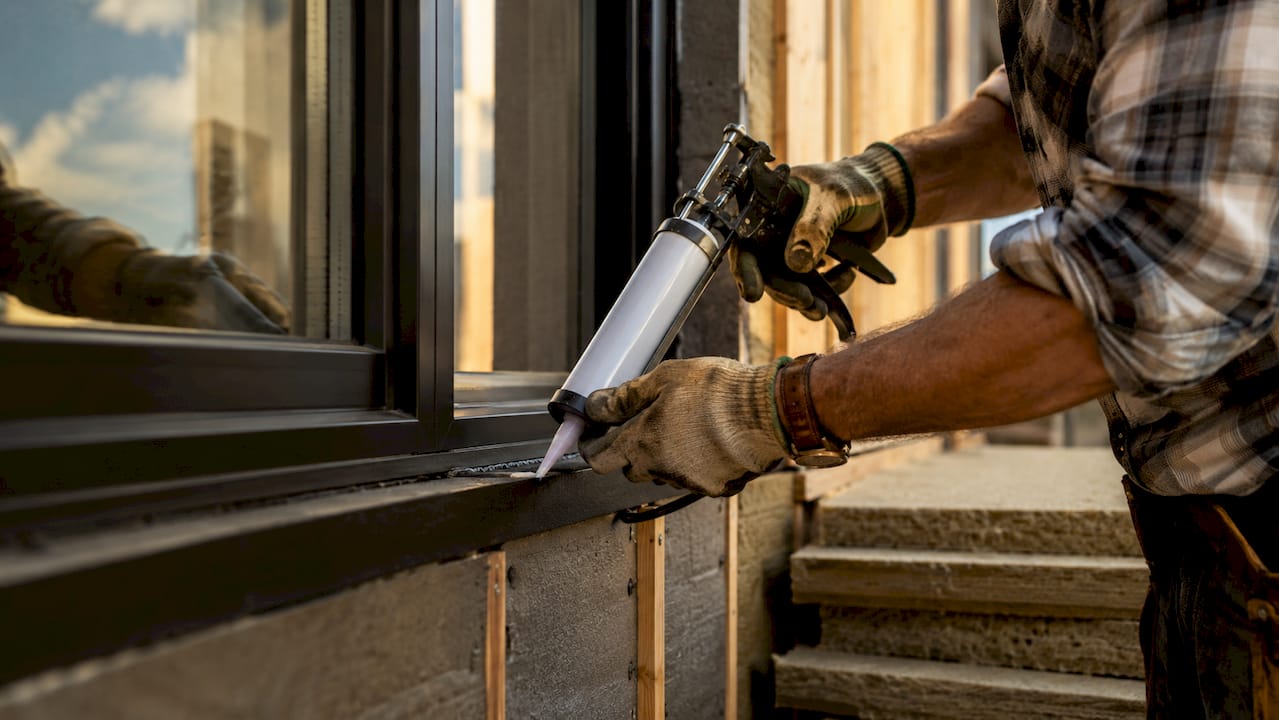
- Envelope detailing: Proper flashing, vapour barriers, and sealant application at penetrations prevent moisture damage
- Mechanical and electrical rough-in: Correct sizing and routing of systems reduces operational costs and future retrofit expenses
- Concrete placement and curing: Proper mix design and curing protocols prevent cracking and surface deterioration
- Millwork and finish carpentry: Tight joinery and correct substrate preparation determine the longevity of interior finishes
Experienced builders bring knowledge of local conditions, supplier relationships, and code interpretation that directly reduces defect rates. In Metro Vancouver, where seismic requirements, rain screen cladding standards, and energy code compliance add complexity to every project, that local expertise is a measurable asset.
Key takeaways
Construction quality is the single most important factor determining whether a building delivers long-term safety, durability, and financial value to its owner.
| Point | Details |
|---|---|
| Rework is preventable and costly | Rework costs 2%–20% of project budgets; proactive QA prevents most of it before work begins. |
| Safety outcomes depend on quality | Rigorous inspections reduce site fatalities by 30% and prevent structural and hazard failures. |
| QA outperforms QC financially | Preventive quality assurance delivers better ROI than reactive quality control across all project types. |
| Materials and workmanship both matter | BC Building Code compliance requires both ASTM-standard materials and licensed, skilled installation. |
| Indirect costs are real | Poor quality damages workforce morale, client trust, and long-term project reputation. |
What working on vancouver projects taught me about quality
Most property owners ask about quality after something goes wrong. That timing is the core problem. By the time a defect is visible, the cost to fix it has multiplied several times over compared to what it would have cost to prevent it.
The misconception I encounter most often is that quality assurance is a paperwork exercise. Clients sometimes assume that having a specification document or a building permit means quality is managed. It does not. Quality failures most often trace back to lack of site visibility, not lack of standards. The standards exist. What fails is the consistent verification that work actually meets them.
The projects I have seen succeed long-term share one characteristic: the owner was engaged early and asked hard questions about process, not just price. They asked how submittals were reviewed, who performed inspections, and what happened when a subcontractor's work did not meet the standard. Those questions signal to a contractor that quality is non-negotiable, and that signal changes how a project is managed from day one.
Pre-construction planning is where quality is either built into a project or left out of it. Owners who invest time in that phase consistently get better outcomes. The ones who skip it to save time at the start spend far more time and money correcting problems later.
— MultigroupTeam
Build with confidence: Multigroup delivers quality you can verify
Multigroup is a licensed BC general contractor serving Metro Vancouver, including Burnaby, Richmond, Surrey, Coquitlam, and North Vancouver. Every project Multigroup delivers includes a structured QA process covering material submittals, permit management, and milestone inspections. Whether you are planning a commercial renovation in Vancouver, a tenant improvement in a retail or office space, or a warehouse renovation in the Lower Mainland, Multigroup brings the compliance knowledge and workmanship standards your investment requires.
Contact Multigroup to discuss your project and learn how a structured quality management approach protects your budget and your building from the first day of construction.
FAQ
What is construction quality and why does it matter?
Construction quality is the degree to which a building meets its design specifications, safety standards, and performance requirements. It matters because poor quality leads to structural defects, safety hazards, and rework costs that can consume up to 20% of a project budget.
How does poor construction quality affect project costs?
Rework from poor quality accounts for 2%–20% of total project budgets. Beyond direct rework costs, poor quality also damages contractor reputation, reduces resale value, and increases long-term maintenance expenses.
What is the difference between quality assurance and quality control in construction?
Quality assurance is a proactive system that prevents defects through planning, standards, and process controls. Quality control is a reactive process that identifies and corrects defects after work is completed. Both are required for effective construction quality management.
How do i know if a contractor meets BC construction quality standards?
Verify that the contractor holds a valid BC Housing licence, carries liability insurance, and can demonstrate a formal QA process including material submittals and inspection hold points. BC Building Code compliance and permit adherence are the minimum legal requirements for any licensed contractor BC.
Does construction quality affect property resale value?
Yes. Buildings constructed with premium materials, proper envelope detailing, and code-compliant systems command higher resale values and lower operating costs. Structural defects and deferred maintenance from poor quality work reduce market value and complicate future financing or sale transactions.