
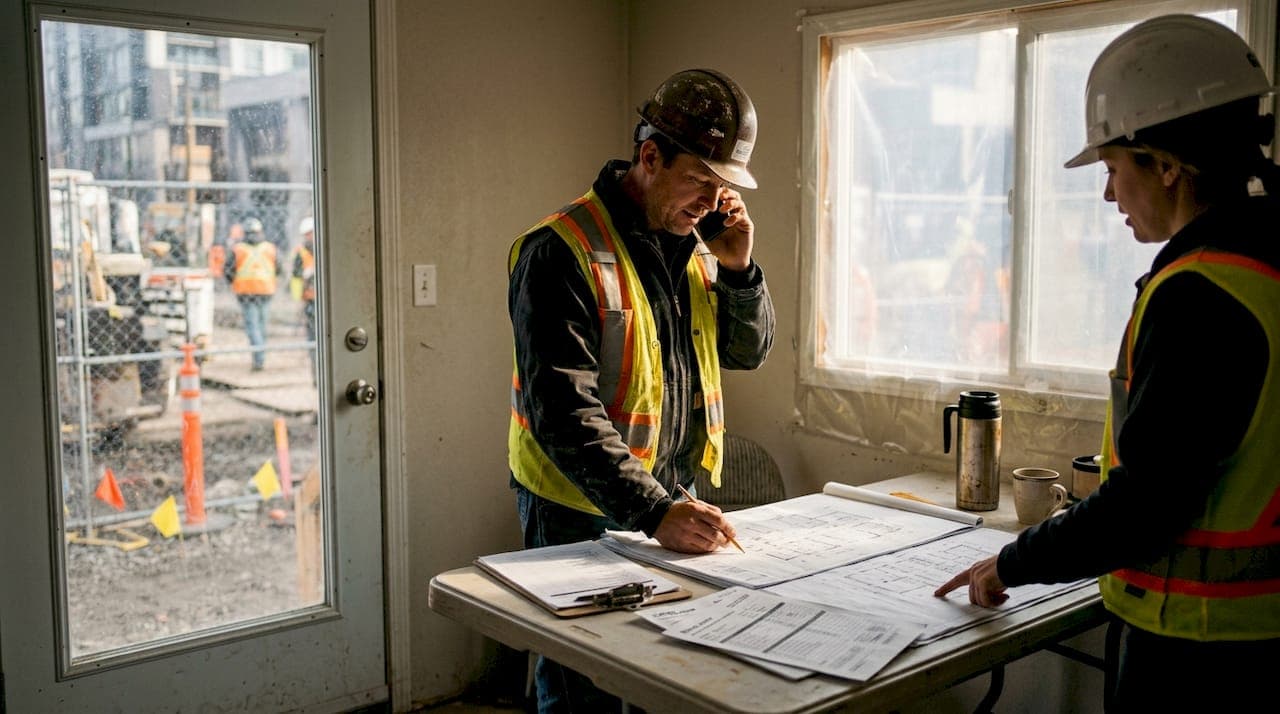
TL;DR:
- A general contractor oversees the entire construction process, ensuring coordination, permits, and compliance.
- They hold the prime contract, assume liability, and manage multiple trades and project schedules.
- Hiring a GC is essential for projects involving multiple trades, structural changes, or building permits in Vancouver.
Many property owners in Metro Vancouver assume the person swinging a hammer or laying tile is the one running the show. That misconception leads to real problems: missed permits, scheduling chaos, and no single person to call when things go wrong. A general contractor (GC) is the professional who actually holds the project together, from the first planning meeting to the final walkthrough. This guide breaks down exactly what a GC does, how they differ from subcontractors, how they get paid, and when you genuinely need one for your Vancouver project.
Table of Contents
- What is a general contractor and what do they really do?
- General contractor vs. subcontractor: Key differences
- How does a general contractor operate? Process, payment models, and markups explained
- When do you need a general contractor? Metro Vancouver rules, edge cases, and common mistakes
- The real value of a general contractor: What most owners don't realize
- Let us help with your next Metro Vancouver project
- Frequently asked questions
Key Takeaways
| Point | Details |
|---|---|
| Definition of GC | A general contractor is the main entity managing your project from planning to completion, ensuring coordination, compliance, and accountability. |
| GC vs Subcontractor | GCs hold the prime contract and supervise all specialized subcontractors on your construction. |
| Operational workflow | GCs oversee bidding, scheduling, hiring, and final project delivery, often adding a 10-20% markup for overhead and risk. |
| When GCs are needed | GCs are essential for any project involving multiple trades, complex permits, or significant structural work in Metro Vancouver. |
| Expert advantage | A reputable general contractor protects your investment, avoids costly missteps, and ensures legal and safety compliance. |
What is a general contractor and what do they really do?
A GC is not just a construction worker with a bigger truck. According to industry standards, a general contractor is hired by property owners or developers to oversee and execute construction projects from preconstruction to closeout, acting as the single point of contact for coordinating subcontractors, materials, schedules, budgets, permits, safety, and compliance.
That is a wide scope of responsibility. Think about a commercial tenant improvement project in Vancouver: the GC manages the timeline, hires the electricians and plumbers, orders materials, pulls the permits from the City, and ensures every trade shows up in the right sequence. Without that coordination, work stalls and costs spiral.
Core GC responsibilities span the full project lifecycle:
- Preconstruction planning: Reviewing drawings, estimating costs, and identifying permit requirements before a single nail is driven
- Subcontractor hiring and supervision: Sourcing qualified tradespeople for electrical, plumbing, HVAC, framing, and finishing work
- Material procurement: Ordering supplies on schedule to avoid costly delays
- Permit management: Submitting applications and coordinating inspections with local authorities
- Budget and schedule control: Tracking costs weekly and adjusting plans to stay on target
- Safety and code compliance: Enforcing WorkSafeBC regulations and meeting BC Building Code standards on site
- Project closeout: Completing punch lists, releasing liens, and managing warranty documentation
"The GC's role is to be the single accountable party. When something goes wrong, there is no finger-pointing between trades. The GC owns the outcome."
Key responsibilities include bidding, hiring and supervising subcontractors, procuring materials, managing schedules and budgets, securing permits, ensuring building code and WorkSafeBC compliance, quality control, safety enforcement, and project closeout. For large or multi-trade projects, this level of oversight is not optional. It is what keeps a project legally sound and financially on track. You can explore how this plays out locally by reading about construction companies in Vancouver.
General contractor vs. subcontractor: Key differences
Now that you know what a GC does, it is vital to understand how they differ from the other professionals on your job site. Confusing the two is one of the most common mistakes property owners make, and it has real consequences.
A GC holds the prime contract with you, the owner. That means full legal and financial liability sits with them. A subcontractor, by contrast, has a contract only with the GC. You may never sign a single document with the electrician or the drywaller. They report to the GC, not to you.
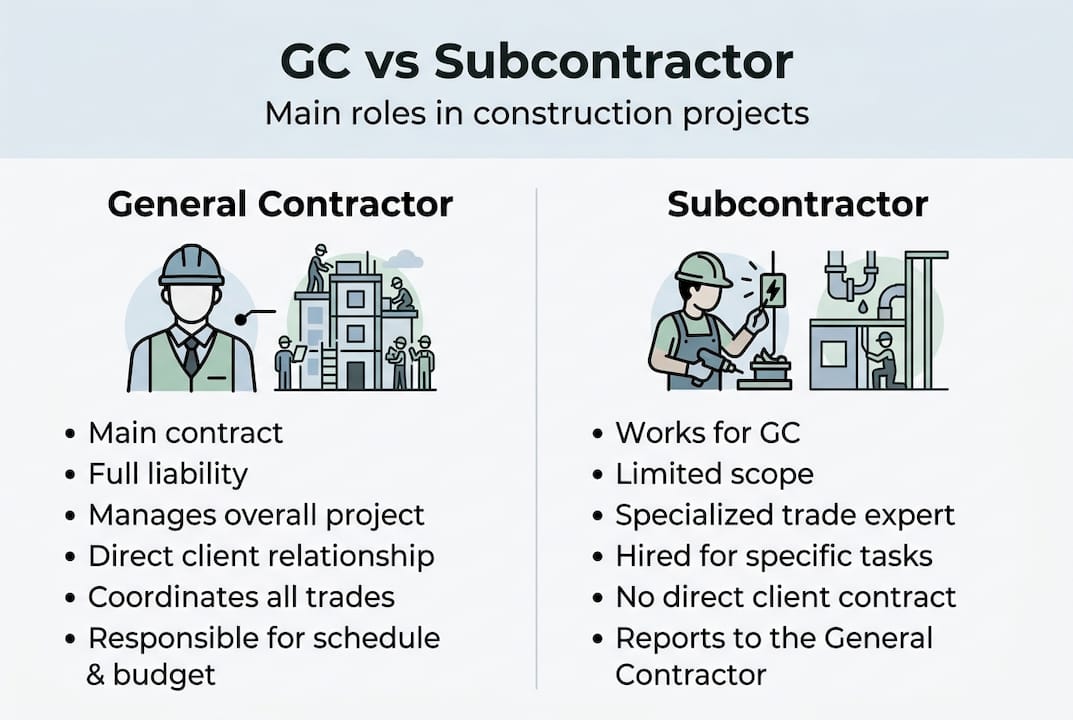
| Factor | General contractor | Subcontractor |
|---|---|---|
| Contract with owner | Yes, prime contract | No, contracts with GC only |
| Project liability | Full liability | Limited to their trade scope |
| Permit responsibility | Yes | No |
| Scope of work | Entire project | Single specialized trade |
| Safety enforcement role | Controlling employer | Worker on site |
| Payment flow | Paid directly by owner | Paid by GC |
The GC holds the prime contract with the owner and carries full liability and safety responsibility as the controlling employer, while subcontractors report only to the GC. This structure matters enormously for insurance and dispute resolution. If a subcontractor causes water damage, your claim goes through the GC, not directly to the plumber.
Pro Tip: Always verify that your GC carries general liability insurance and WorkSafeBC coverage before signing a contract. Ask for certificates, not just verbal confirmation.
For commercial construction in Vancouver, this distinction becomes even more critical. A retail buildout or warehouse renovation may involve eight or more trades working simultaneously. Without a GC holding accountability, the project quickly becomes unmanageable.
How does a general contractor operate? Process, payment models, and markups explained
Understanding the people involved is crucial, but let's look closer at how general contractors actually operate in practice, from pricing to project delivery.
A typical GC project follows this sequence:
- Bidding and estimating: The GC reviews drawings, solicits sub-bids, and prepares a project cost estimate
- Contract execution: Owner and GC sign the prime contract, locking in scope, price, and schedule
- Mobilization: Site setup, permits pulled, subcontractors scheduled, materials ordered
- Construction phase: Trades work in sequence; GC supervises daily, tracks budget, and manages inspections
- Project closeout: Punch list items completed, final inspections passed, documents handed over
GCs self-perform roughly 15 to 20% of work on commercial projects, subcontracting the rest, and they apply a 10 to 20% markup on subcontracted work to cover overhead, profit, and risk. That markup is not padding. It covers the GC's project management staff, insurance, bonding, and the risk they carry if a sub underperforms.
| Payment model | How it works | Best for |
|---|---|---|
| Lump-sum | Fixed price for defined scope | Well-documented projects |
| Cost-plus-fee | Actual costs plus GC fee | Renovations with unknowns |
| Guaranteed maximum price (GMP) | Cost-plus with a cost ceiling | Larger commercial projects |
Payment models include lump-sum (fixed price), cost-plus-fee, or guaranteed maximum price (GMP), with the GC bearing performance risk under the prime contract. Each model shifts risk differently between owner and contractor. A lump-sum contract protects you from cost overruns but requires very clear drawings upfront. Cost-plus gives flexibility but requires trust and transparency.
Understanding renovation costs in Vancouver before you receive bids helps you evaluate whether a proposal is realistic or inflated.
When do you need a general contractor? Metro Vancouver rules, edge cases, and common mistakes
Knowing how the GC operates is essential, but when are they actually required by law or project complexity, especially in Metro Vancouver?
The short answer: not always, but more often than most owners expect. Here is a clear breakdown:
You likely do NOT need a GC for:
- Replacing a faucet or fixing a single plumbing fixture
- Painting interior rooms
- Simple flooring replacement with no subfloor work
- Minor electrical repairs handled by a licensed electrician directly
You almost certainly DO need a GC for:
- Any project involving multiple trades (electrical, plumbing, framing, finishing)
- Structural changes such as removing walls or adding a mezzanine
- New builds or additions
- Commercial tenant improvements or retail buildouts
- Projects requiring a building permit in Metro Vancouver
Single-trade repairs do not require a GC, but owner-builders in BC face real liability and insurance risks, and Vancouver enforces stricter permit rules for items like decks over two feet high or any structural changes. Skipping a permit in Vancouver is not just a paperwork issue. It can void your home insurance, trigger stop-work orders, and create problems when you sell the property.
Pro Tip: If your project touches the building envelope, structural elements, or requires more than one trade, pull a permit and hire a licensed GC. The cost of compliance is always less than the cost of fixing unpermitted work.
Owner-builders sometimes believe they can save money by acting as their own GC. In practice, coordinating multiple trades, managing inspections, and tracking compliance while also running a business or household is extremely difficult. Mistakes in scheduling alone can add weeks and thousands of dollars to a project.
For projects involving renovation permits in Vancouver, the permit process itself requires documentation and follow-through that an experienced GC handles routinely. You can also explore how green construction in Vancouver intersects with permit requirements for energy-efficient upgrades.
The real value of a general contractor: What most owners don't realize
These guidelines help you know when a GC is required, but it is worth sharing, from direct experience, why this role matters more than most people realize until something goes wrong.
Property owners who attempt to manage their own projects often underestimate one thing: the cost of coordination failures. A plumber who finishes two days late pushes back the drywaller, who pushes back the painter, who pushes back your move-in date. Each delay compounds. What looks like a two-week buffer disappears fast.

The GC's markup is not just overhead. It is the price of having one person who is professionally and legally accountable for the entire outcome. That accountability changes behavior on site. Subcontractors perform differently when they know a GC is watching, scheduling, and holding back payment until work meets standard.
We also see owners focus heavily on getting the lowest bid. But a low bid from a poorly organized GC costs far more than a fair bid from a reliable one. Budget overruns, failed inspections, and redo work are expensive. Staying current with renovation trends in Vancouver also helps owners understand what realistic scopes and timelines look like before entering negotiations.
The right GC does not just build your project. They protect your investment from the risks you did not know to plan for.
Let us help with your next Metro Vancouver project
Choosing the right general contractor is one of the most important decisions you will make for any construction project. It affects your timeline, your budget, your compliance with local regulations, and the long-term quality of the finished space.

Multigroup Contracting is a trusted Metro Vancouver general contractor with deep experience in both residential and commercial construction. From high-end residential interiors to warehouse renovations and retail buildouts, our team manages every detail so you do not have to. We handle permits, coordinate trades, and keep your project on schedule and on budget. Contact us today for a consultation or project quote, and let's get your build started the right way.
Frequently asked questions
Do I need a general contractor for small renovations in Vancouver?
Small, single-trade repairs do not require a GC, but anything involving multiple trades, structural changes, or building permits in Vancouver typically does.
What is the typical markup a GC adds to subcontractors' work?
Most GCs apply a 10 to 20% markup on subcontracted work to cover their overhead, profit, and the risk they carry under the prime contract.
Can I act as my own general contractor in BC?
Yes, but owner-builders in BC face significant legal, insurance, and permit complications that can void protections if not managed carefully.
How is a general contractor paid?
GCs are typically paid through lump-sum, cost-plus-fee, or GMP contracts, with the payment structure agreed upon before construction begins.
Recommended
- Multigroup Contracting | Vancouver General Contractor – Commercial & Residential Construction
- Multigroup Contracting | Vancouver General Contractor – Commercial & Residential Construction
- Multigroup Contracting | Vancouver General Contractor – Commercial & Residential Construction
- Multigroup Contracting | Vancouver General Contractor – Commercial & Residential Construction