

TL;DR:
- Vancouver homeowners should distinguish between renovations and remodels due to permit requirements and project scope.
- High ROI projects include basement suites, laneway homes, and kitchen upgrades, with properties like basement suites offering up to 180%.
- Regulatory energy requirements impact large renovations over $150,000, requiring energy upgrades or evaluations in Vancouver.
Choosing the right renovation for your Vancouver home is one of the most consequential decisions you can make as a homeowner. The city's real estate market creates unique opportunities, particularly for basement suites, laneway homes, and kitchen upgrades, where remodeling ROI can far exceed what you might see in other Canadian cities. At the same time, Vancouver's regulatory environment adds layers of planning that can catch unprepared homeowners off guard. This guide walks you through the key renovation types, their returns, the compliance steps you need to know, and how to find the right team to get the job done right.
Table of Contents
- Understanding renovation versus remodel
- Major home renovation types and their ROI in Vancouver
- Compliance and energy requirements for large renovations
- Planning your renovation: Choosing the right team and process
- Our expert take: Why function and trust matter more than resale
- Start your renovation journey with expert help
- Frequently asked questions
Key Takeaways
| Point | Details |
|---|---|
| Renovation vs. remodel | Renovations update spaces without major layout changes, while remodels require permits for structural alterations. |
| Highest ROI renovation types | Basement suites, laneway homes, and kitchen upgrades deliver the best returns for Vancouver homeowners. |
| Compliance for large projects | Major renovations in Vancouver require energy upgrades and careful permitting based on project size. |
| Choose reputable contractors | Qualified, trustworthy contractors are essential for renovation success and peace of mind. |
| Leverage planning tools | Using project management tools and AI simplifies renovation planning and ensures better outcomes. |
Understanding renovation versus remodel
The terms "renovation" and "remodel" are often used interchangeably, but they mean different things in the construction world. Knowing the distinction helps you plan your project accurately and avoid unexpected costs or delays.
A renovation updates or restores existing elements without changing the layout. Repainting walls, replacing flooring, upgrading fixtures, and refinishing cabinets all fall under renovation. These projects typically work within the existing footprint of your home. According to the renovation versus remodel guide, renovation updates surfaces or finishes without a layout change and often requires no permit, while a remodel alters the layout or structure and needs permits and sometimes engineering sign-off.
A remodel involves structural changes. Moving walls, converting a basement into a legal suite, adding a bathroom where none existed, or reconfiguring a floor plan all count as remodeling. These projects require building permits from the City of Vancouver, and in some cases, you will need drawings from a licensed architect or structural engineer.
So when does your project cross the line? Here are the clearest signs:
- You want to move or remove a wall (especially a load-bearing one)
- You plan to add or relocate plumbing (new bathroom, kitchen island sink)
- You need new electrical panels or circuits beyond simple fixture swaps
- You are changing the use of a space (garage to living room, basement to suite)
- You want to add square footage through an addition or laneway home
If any of these apply, you are looking at a remodel, not a renovation. That distinction matters because it determines your permit requirements, your timeline, and the qualifications your contractor needs to hold.
Working with a professional contractor makes a real difference here. Professionals know which projects trigger permit requirements and can manage the application process on your behalf. Understanding licensed contractor requirements in Vancouver is especially important when structural or mechanical work is involved, because unlicensed work can void your home insurance and create liability issues at resale.
"The permit process is not just red tape. It protects homeowners from substandard work and ensures the finished project adds real, insurable value to the property."
Major home renovation types and their ROI in Vancouver
With the definitions clear, let's examine the main types of renovations and what each could mean for your Vancouver home.
Vancouver's housing market makes certain renovation types particularly attractive. The Harvard JCHS Remodeling Report confirms that kitchens and bathrooms are the most common renovation projects by volume, and Vancouver-specific data shows the highest ROI for basement suites, laneway homes, and kitchen upgrades.
Here is a breakdown of the major renovation types:
| Renovation type | Complexity | Estimated ROI (Vancouver) |
|---|---|---|
| Kitchen renovation | Moderate | 65-85% |
| Bathroom renovation | Low to moderate | 55-75% |
| Basement suite conversion | High | 120-180% |
| Laneway home addition | High | 90-140% |
| Attic conversion | Moderate to high | 60-90% |
| Whole-home remodel | High | 70-110% |
Kitchen and bathroom renovations are the most popular entry points. They improve daily livability and appeal strongly to buyers. A well-planned kitchen renovation can return 65 to 85 cents on every dollar spent in Vancouver's market.
Basement suite conversions stand out as the strongest financial performers. Vancouver's rental demand is consistently high, and a legal basement suite can generate monthly rental income while boosting your assessed home value. Understanding the value of renovations shows why this investment makes sense for long-term owners and sellers alike.
Laneway homes and additions are increasingly popular across East Vancouver and other single-family neighborhoods. These projects require more planning and higher budgets, but the return range of 90 to 140% reflects their dual benefit: new living space and rental income potential.
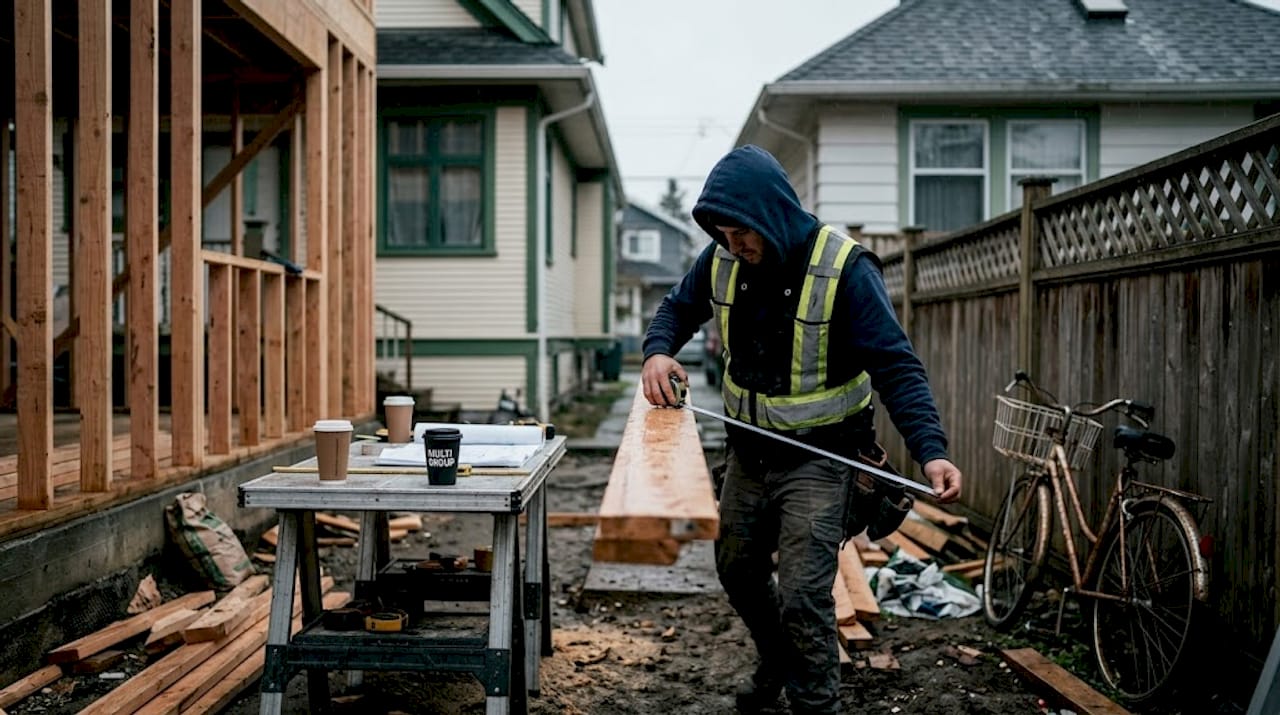
Staying current on renovation trends in 2026 can also guide your choices. Open-concept layouts, energy-efficient upgrades, and multigenerational living spaces are all trending upward this year.
Pro Tip: If you are weighing options, a basement suite is often the smartest first move for Vancouver homeowners. The rental income alone can offset renovation costs within a few years, and demand from renters in the city remains very strong.
Good renovation project management is what separates a smooth process from a stressful one, regardless of which type you choose.
Compliance and energy requirements for large renovations
After seeing the main types and their value, it's crucial to understand regulatory steps before launching a major project.
Vancouver has specific energy requirements tied to renovation budget thresholds. These rules come from the Vancouver Building By-law (VBBL) and are designed to improve the city's overall energy performance as homes are updated. Ignoring them can result in failed inspections, stop-work orders, or costly retrofits after the fact.
The City of Vancouver energy requirements are structured around two key thresholds: renovations over $150,000 require mandatory energy upgrades, and renovations over $250,000 require both an EnerGuide evaluation and the completion of at least two energy upgrades.
Here is how the thresholds break down:
| Project budget | Requirement |
|---|---|
| Under $150,000 | Standard permits only |
| $150,001 to $250,000 | Mandatory energy upgrade(s) |
| Over $250,000 | EnerGuide evaluation + two energy upgrades |
Common qualifying energy upgrades include:
- Upgrading insulation in walls, attic, or basement
- Installing high-efficiency windows and exterior doors
- Replacing heating systems with heat pumps or high-efficiency furnaces
- Adding mechanical heat recovery ventilation (HRV) systems
Here are the key compliance steps to follow for a major renovation:
- Determine your project budget accurately before applying for permits
- Consult with your contractor about whether energy thresholds apply
- Book an EnerGuide evaluation if your project exceeds $250,000
- Select your energy upgrades in coordination with your contractor and evaluator
- Submit your permit application with all required documentation
- Schedule inspections at key milestones (framing, mechanical, final)
These steps align with broader residential construction trends in Greater Vancouver, where energy efficiency is increasingly built into the renovation process from day one rather than added as an afterthought.
Planning your renovation: Choosing the right team and process
With the regulatory frameworks handled, homeowners need a clear plan and team for executing renovations flawlessly.
Finding a reliable contractor remains the single biggest challenge for Vancouver homeowners. 30% of homeowners identify finding trustworthy contractors as their top barrier to starting a renovation, and the same report notes that AI planning adoption has reached 24% among homeowners actively renovating.
Here is how to build a solid plan:
- Verify licensing: Confirm your contractor holds a valid BC business license and relevant trade certifications
- Check references: Ask for at least three recent project references and follow up on them
- Review portfolios: Look for projects similar in scope and budget to yours
- Get multiple quotes: Aim for at least two to three detailed written estimates
- Clarify contracts: A clear contract should cover scope, timeline, payment schedule, and change order procedures
- Ask about permits: Your contractor should be willing and able to manage permit applications
Understanding licensed contractor standards in Vancouver protects you legally and financially. Unlicensed work can affect your home's insurability and create problems when you sell.
New planning tools are also worth using. AI-powered apps can help you visualize layouts, estimate budgets, and build realistic timelines before you commit to a scope. They do not replace professional expertise, but they make the early planning conversations with your contractor much more productive. Learning to manage renovation projects effectively means combining good tools with the right people.
Pro Tip: When interviewing contractors in Vancouver, ask specifically whether they have experience pulling permits with the City of Vancouver. This is a real differentiator. Contractors who do it regularly move faster and make fewer costly mistakes on the paperwork.
Our expert take: Why function and trust matter more than resale
Most renovation guides center the conversation on ROI percentages and market value. We understand why. But after working on residential projects across Metro Vancouver, we have seen a consistent pattern worth naming: homeowners who renovate for their own comfort and functionality tend to be more satisfied, more financially sound, and less likely to redo the work later.
Chasing market trends often leads to generic choices. The homeowner who converts their basement to a suite because they want rental income and multigenerational space will almost always make better decisions than the one who is designing for a hypothetical future buyer.
Trust plays the same role. The stress of a poorly managed renovation is real, and it often costs more than the savings from choosing the lowest bid. Choosing a team based on lasting comfort and value rather than just price leads to better outcomes consistently.
Pro Tip: Before finalizing your renovation scope, write down how you actually live in your home. Which rooms feel too small? What would you change if cost were no object? That exercise often reveals a clearer priority list than any ROI table.
Start your renovation journey with expert help
Knowing your options is the first step. Acting on them with the right support is what produces results you will be proud of for years.

Multigroup Contracting works with Vancouver homeowners on kitchens, basement conversions, laneway homes, additions, and whole-home remodels. Our team handles permit applications, project scheduling, and every phase of construction so you do not have to coordinate it alone. We bring the craftsmanship and project management structure that complex renovations demand. If you are ready to plan your next project, connect with the Vancouver renovation contractors at Multigroup Contracting for a consultation tailored to your home and your goals.
Frequently asked questions
What types of home renovations offer the highest ROI in Vancouver?
Basement suites deliver ROI of 120 to 180%, laneway homes 90 to 140%, and kitchen renovations 65 to 85% in Vancouver's market. These figures reflect both resale value and rental income potential.
When is a permit required for renovations in Vancouver?
Permits are required when your project alters structure, plumbing, or electrical systems. Basic cosmetic renovations that do not change the layout or structure typically do not require a permit.
What are Vancouver's energy upgrade requirements for large renovations?
For renovations over $150,000, energy upgrades are mandatory under the VBBL. Projects over $250,000 also require an EnerGuide evaluation and completion of at least two qualifying upgrades.
How do I choose the right contractor for my renovation?
Screen for licensing, active references, and relevant project experience. Since 30% of homeowners name finding trustworthy contractors as their biggest barrier, taking time to vet candidates properly is well worth the effort.
How can homeowners use AI and new tools for renovation planning?
AI tools help homeowners visualize layouts, model budgets, and build timelines before work begins. With 24% adoption among renovators, these tools are becoming a practical first step before engaging a contractor.