

TL;DR:
- Tenant improvements customize commercial space for operational and branding needs, increasing efficiency and value.
- The TI process involves lease negotiation, design, permits, construction, inspections, and occupancy, typically taking 8-16 weeks.
- Funding models include turnkey, allowance, and tenant-funded, with negotiations affecting costs and control.
Signing a commercial lease in Metro Vancouver is a significant commitment, and many business owners assume the space they see is the space they get. That assumption can cost you. Tenant improvements give you the ability to customize a leased commercial property to fit your exact operational needs, brand standards, and workflow requirements. The process is structured and negotiable, and understanding how it works puts you in a much stronger position at the negotiating table. This guide breaks down everything you need to know about tenant improvements in Metro Vancouver, from definitions to funding models to compliance requirements.
Table of Contents
- Defining tenant improvements: What they are and why they matter
- How the tenant improvement process works in Metro Vancouver
- Common types and methods of tenant improvement funding
- Key legal, permit, and compliance considerations in Metro Vancouver
- What most tenants miss about tenant improvements
- Ready to upgrade your space? Work with Metro Vancouver TI experts
- Frequently asked questions
Key Takeaways
| Point | Details |
|---|---|
| What is TI | Tenant improvements are custom changes to leased spaces to fit a tenant's needs. |
| Metro Vancouver process | TIs in Metro Vancouver require structured steps, permits, and adherence to the BC Building Code. |
| Funding options | TI can be funded by the landlord, through an allowance, or by the tenant, and is always negotiable. |
| Compliance matters | Missing required permits or landlord approval can cause serious delays or compliance issues. |
| Pro strategies | Early expert involvement and clear documentation make for smoother, more valuable tenant improvements. |
Defining tenant improvements: What they are and why they matter
Tenant improvements (TI) are not the same as general repairs or routine maintenance. They are purposeful modifications that transform a raw or previously occupied commercial space into one that works specifically for your business. According to the real estate industry, TI modifications include partitions, electrical and plumbing work, HVAC changes, flooring, lighting, and specialized fixtures tailored to a tenant's operational needs.
The scope of what qualifies as a tenant improvement is broad, and that breadth is intentional. Whether you're opening a dental clinic that needs specialized plumbing or a tech office that needs server room cooling, TIs cover the infrastructure changes that make it possible. Understanding the full range of what counts as a TI helps you negotiate more effectively and avoid paying out of pocket for improvements that could have been included in your lease agreement.
Common tenant improvements include:
- Interior partitions and demising walls to separate workspaces, private offices, or client areas
- Lighting upgrades including energy-efficient LED systems, task lighting, or specialized retail display lighting
- HVAC modifications to add zones, increase capacity, or meet industry-specific requirements
- Electrical panel upgrades and additional outlets for equipment-heavy operations
- Plumbing additions for kitchens, washrooms, or clinical spaces
- Flooring installation including polished concrete, hardwood, carpet tile, or epoxy coatings
- Millwork and built-ins such as reception desks, shelving systems, and custom cabinetry
- Ceiling work including suspended grid ceilings, exposed industrial finishes, or acoustic panels
"Tenant improvements are one of the most impactful investments a business can make in a leased space. Done well, they improve employee productivity, client experience, and operational efficiency."
TIs also carry long-term financial value. A well-designed space reduces operational inefficiencies, supports employee retention, and strengthens your brand's visual identity. Reviewing the buildout phases for Vancouver tenants gives you a clearer picture of how each phase contributes to the final result.
How the tenant improvement process works in Metro Vancouver
With the fundamentals explained, let's move to how TIs play out step-by-step in Metro Vancouver. The process involves more than just hiring a contractor and starting construction. It follows a defined sequence that protects both tenant and landlord while ensuring the finished space meets all safety and code requirements.
TI projects follow a structured process that begins with lease negotiation to establish a TI allowance, then moves through design, permitting under the BC Building Code, construction (including demolition, mechanical, electrical, and plumbing installs, and finishes), inspections, and finally an occupancy permit.
Here's how the stages break down in practical terms:
- Lease negotiation. Before any design work begins, you negotiate the terms of your TI allowance with the landlord. This is the most financially significant stage, and the outcome affects everything that follows.
- Concept design and planning. An architect or designer develops the floor plan and specifications based on your business needs, local zoning, and building constraints.
- Permit application. You or your contractor submit construction drawings to the relevant municipality for review. In Vancouver, the TIPs (Tenant Improvement Permits) program offers expedited review.
- Construction. The actual build begins. This typically follows a sequence: demolition of existing finishes, rough-in of mechanical and electrical systems, framing, insulation, drywall, and then finishes.
- Inspections. Municipal inspectors review the work at key stages, including rough-in and final inspection.
- Occupancy permit. Once final inspection is passed, you receive authorization to occupy the space and open for business.
In Metro Vancouver, BC Building Code compliance is required for all TI projects. Permits are processed through municipal channels, with cities like Surrey offering a dedicated tenant and landlord improvement building permit stream. Vancouver's TIPs program can expedite permit review to as little as two to three weeks for qualifying projects. Most TI projects in the region take between 8 and 16 weeks from permit approval to occupancy.
| Stage | Typical duration | Key action |
|---|---|---|
| Lease negotiation | 1 to 4 weeks | Secure TI allowance in writing |
| Design and drawings | 2 to 4 weeks | Hire architect or designer |
| Permit review | 2 to 6 weeks | Submit complete drawings early |
| Construction | 4 to 10 weeks | Manage contractor schedule |
| Inspections and occupancy | 1 to 2 weeks | Confirm all sign-offs |
Pro Tip: Submit your permit application as soon as design drawings are finalized. Delays at the permit stage are the most common reason TI projects miss their target opening dates. If your municipality offers an expedited review program, use it. The small additional cost is almost always worth the time saved. Working with a contractor familiar with retail buildout services in Vancouver can significantly reduce permit delays because experienced contractors know exactly what reviewers look for.
For projects that require an understanding of permitting timelines and documentation, reviewing guidance on renovation permits in Vancouver is a practical starting point.
Common types and methods of tenant improvement funding
Understanding the steps is one thing. Knowing how TIs get paid for is just as critical. There are three primary models for funding tenant improvements, and each has distinct advantages and risks depending on your lease term, negotiating leverage, and cash flow situation.
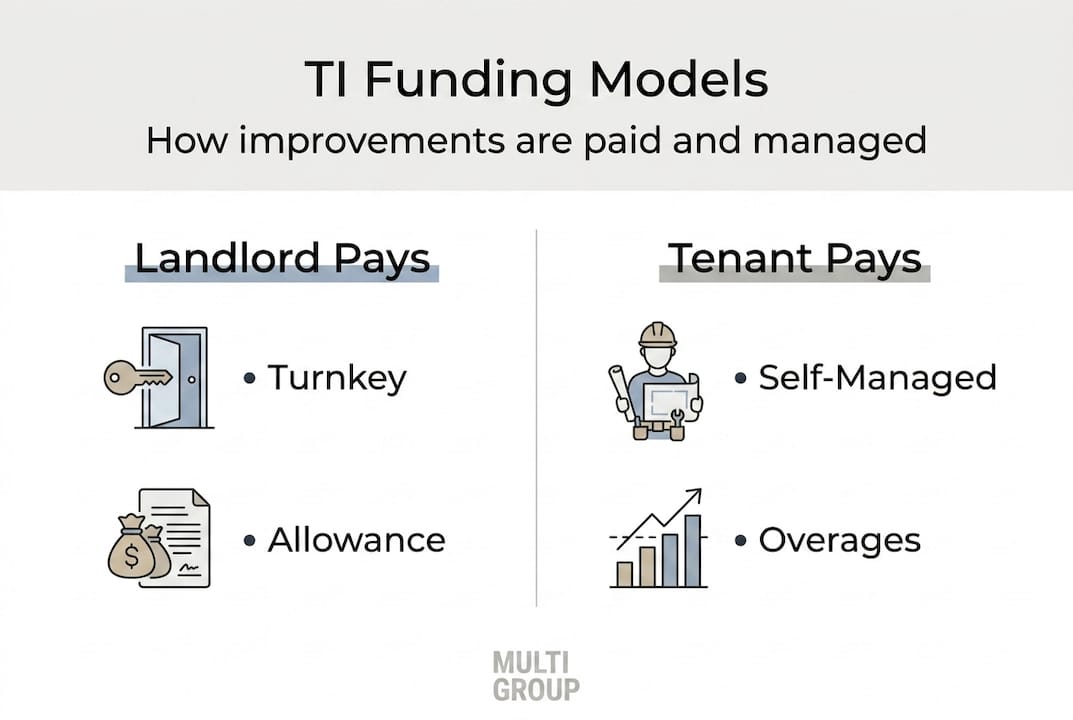
The three main TI funding methodologies are: turnkey (where the landlord manages and pays for all improvements), allowance (where the tenant manages construction and is reimbursed up to a fixed TI allowance), and tenant-funded (where the tenant pays all costs independently). Negotiating longer lease commitments often results in a higher TI allowance from the landlord.
Here's a direct comparison of the three models:
| Funding model | Who manages construction | Who controls design | Financial risk |
|---|---|---|---|
| Turnkey | Landlord | Landlord | Low for tenant |
| Allowance | Tenant | Tenant | Moderate, cost overruns are tenant's responsibility |
| Tenant-funded | Tenant | Tenant | High, all costs on tenant |
Turnkey is straightforward. The landlord hires the contractor, oversees the project, and delivers a finished space to the tenant. You have limited design input, but you also carry no construction risk. This model works well if your buildout needs are standard and you're comfortable with the landlord's vendor choices.
Allowance gives you far more control. The landlord agrees to reimburse you up to a fixed dollar amount per square foot, often written as "$X per square foot TI allowance." You hire your own contractor, select your own finishes, and manage the project. Anything over the allowance comes out of your budget. This is the most common model for tenants with specific brand or operational requirements.
Tenant-funded improvements give you complete control but carry full financial responsibility. This model is typically used when a tenant has a very short lease term, is taking over a build-ready space, or is making minor modifications that fall below permit thresholds.
Key negotiation strategies include:
- Leverage lease length. Landlords are more willing to increase TI allowances for five or ten year leases because they recover the cost over a longer period.
- Get multiple quotes. In allowance models, coming in under budget on construction gives you more flexibility on finishes or future phases.
- Negotiate timing of reimbursement. Some TI agreements reimburse costs on a monthly draw basis rather than lump sum at completion, which improves cash flow during construction.
- Tie the allowance to specific scope. Vague TI agreements lead to disputes. Define exactly what work is covered before signing.
Pro Tip: Keep detailed records of every invoice, change order, and payment during the construction phase. In allowance scenarios, landlords require complete documentation before releasing reimbursement funds. Missing paperwork can delay payments significantly. Consulting local construction companies who regularly work in TI environments means you're more likely to get organized, well-documented billing from the start.
Key legal, permit, and compliance considerations in Metro Vancouver
Once funding is sorted, it's essential to ensure you meet legal and compliance requirements. Many tenants underestimate how much regulatory oversight applies to commercial TI projects in BC. Getting this wrong can result in project shutdowns, fines, or an inability to obtain an occupancy permit.
BC Building Code and municipal permit requirements govern all TI projects in Metro Vancouver. Cities like Surrey have a specific tenant and landlord improvement building permit process, and Vancouver offers the TIPs program for projects that meet expedited review criteria. Timelines for permit approval vary by municipality and project complexity, but planning for two to six weeks is realistic.
Critical compliance areas every Metro Vancouver tenant should understand:
- BC Building Code. All structural, mechanical, electrical, plumbing, and fire protection work must comply with the current BC Building Code. Your contractor and design team are responsible for meeting these standards, but as the tenant, you share accountability.
- Accessibility requirements. Commercial spaces must meet accessibility standards under the BC Building Code, including requirements for barrier-free access, washroom dimensions, and door widths. Ignoring these requirements creates legal liability.
- Fire code compliance. Partition configurations, exit routes, and sprinkler coverage must all comply with the applicable fire code. Changes to walls or ceilings often trigger sprinkler recalculations.
- Electrical permits. Any electrical work beyond minor fixture swaps requires a separate electrical permit pulled by a licensed electrician.
- Mechanical permits. HVAC modifications, exhaust systems, and plumbing rough-ins each require their own trade permits in addition to the building permit.
"Failure to obtain required permits before starting construction is one of the most common and costly mistakes commercial tenants make. Unpermitted work can stop a project in its place, require demolition and reinstallation, and delay occupancy by months."
Beyond code compliance, lease obligations matter just as much. Your lease almost certainly requires written landlord approval before any work begins. Starting construction without that approval, even minor work, can put you in breach of your lease. Always get landlord consent documented in writing before hiring any contractor.
For a detailed walkthrough of compliance requirements, the buildout compliance guide covers the key checkpoints in sequence. And for permit-specific questions, the renovation permits in Vancouver resource provides current, local information.
What most tenants miss about tenant improvements
The essentials are important, but there are patterns we see repeatedly in Metro Vancouver TI projects that consistently lead to cost overruns, delays, or functional spaces that don't actually serve the business as well as they should.
The most common mistake is prioritizing aesthetics at the expense of operational flow. A beautiful office with the wrong electrical capacity, insufficient HVAC zones, or poorly placed plumbing rough-ins will create problems that expensive finishes can't fix. Functional infrastructure should always drive design, not the other way around.
A second mistake is treating the TI allowance as the ceiling for quality rather than a starting point for negotiation. Many tenants accept the first number a landlord offers without understanding how much room there typically is to negotiate, particularly when committing to a long lease term. The tenants who secure the best TI outcomes are those who come to negotiations prepared with contractor estimates, a clear scope of work, and a willingness to offer longer lease commitments in exchange for a higher allowance.
There is also a tendency to under-invest in future flexibility. The space you need on day one is rarely the space you'll need in year three. Planning partition systems that can be reconfigured, running conduit for future data or electrical needs, and selecting flooring that can be extended or matched later are small investments at buildout time that save significant money down the road. Thinking about future construction trends and how your space might need to adapt is worth doing before you finalize your design.
The most valuable thing a tenant can do is involve both a qualified general contractor and legal counsel early in the process. Too many tenants engage a contractor only after signing a lease with a fixed TI budget that doesn't reflect actual market construction costs. By that point, the negotiating window has closed.
Ready to upgrade your space? Work with Metro Vancouver TI experts
If you're planning a tenant improvement project in Metro Vancouver, having the right construction partner changes everything. Experienced TI contractors handle permit management, coordinate all trades, and keep projects on schedule within budget, reducing the risk of costly surprises.

Multigroup Contracting works with commercial tenants across Metro Vancouver on tenant improvement projects of all scales, from single-tenant office buildouts to multi-unit retail complexes. Our team manages the full scope of your project, from permit applications and design coordination to construction and final inspection. We understand the local permitting environment, the BC Building Code requirements, and what it takes to deliver a finished space that works for your business. If you're ready to move forward with a TI project, reach out to discuss your space, timeline, and budget.
Frequently asked questions
What is typically included in a tenant improvement?
Tenant improvement covers modifications like partitions, electrical work, HVAC, flooring, lighting, and specialty fixtures to tailor a commercial space for specific business needs. The scope varies by project and is typically defined in the lease agreement.
How long do tenant improvements take in Metro Vancouver?
Most TI projects in Metro Vancouver take between 8 and 16 weeks from permit approval to occupancy, depending on design complexity, trade availability, and the municipality's permitting timeline.
Who pays for tenant improvements, the landlord or tenant?
Payment depends on the lease negotiation. The three primary models are turnkey (landlord pays and manages), allowance (tenant manages and is reimbursed up to a set amount), and tenant-funded (tenant covers all costs independently).
Do tenant improvements increase lease rates?
Yes, in many cases. When landlords provide a significant TI allowance, the cost is often recovered through slightly higher base rent, longer required lease terms, or both. Always review the full financial picture when evaluating a TI-heavy lease offer.
Can I do my own tenant improvements in Vancouver?
Major modifications require municipal building permits and must comply with the BC Building Code. Written landlord approval is also required, and most structural, electrical, plumbing, and HVAC work must be performed by licensed tradespeople.
Recommended
- Commercial buildout guide: 5 phases Vancouver tenants need
- Multigroup Contracting | Vancouver General Contractor – Commercial & Residential Construction
- Multigroup Contracting | Vancouver General Contractor – Commercial & Residential Construction
- Multigroup Contracting | Vancouver General Contractor – Commercial & Residential Construction