
TL;DR:
- Safety in construction prevents injuries and ensures projects finish on time by managing hazards effectively. It involves clear responsibilities, regulatory compliance, physical hazard controls, mental health support, and digital management tools. Effective safety practices improve project outcomes, reduce costs, and protect workers and property owners alike.
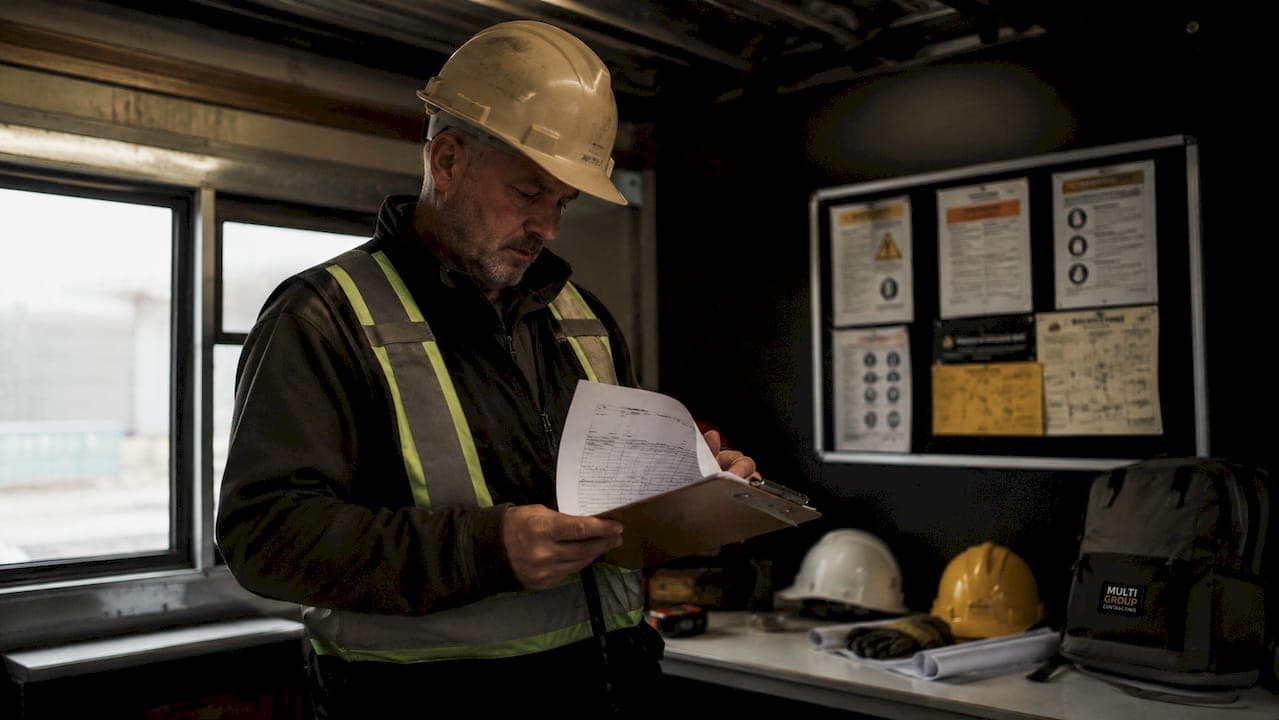
The role of safety in construction is to prevent injuries, protect workers, and ensure every project reaches completion without avoidable setbacks. On a Metro Vancouver job site, that means managing physical hazards like falls and chemical exposures, meeting BC Building Code requirements, and addressing the mental health pressures that affect crews daily. Safety is not a checkbox. It is the operational foundation that determines whether a project finishes on time, on budget, and without legal liability.
What is the role of safety in construction site management?
Construction site safety is defined as the systematic identification, control, and elimination of hazards across every phase of a project. The role of safety in construction projects extends well beyond hard hats and high-visibility vests. It covers documentation, training, regulatory compliance, and the clear assignment of responsibility across every party on site.
In British Columbia, WorkSafeBC sets the minimum standards every contractor must meet. The BC Building Code adds a second layer of compliance, particularly for structural work, fire separations, and occupancy requirements. Together, these frameworks create the legal baseline for safe construction in Metro Vancouver and across the province.
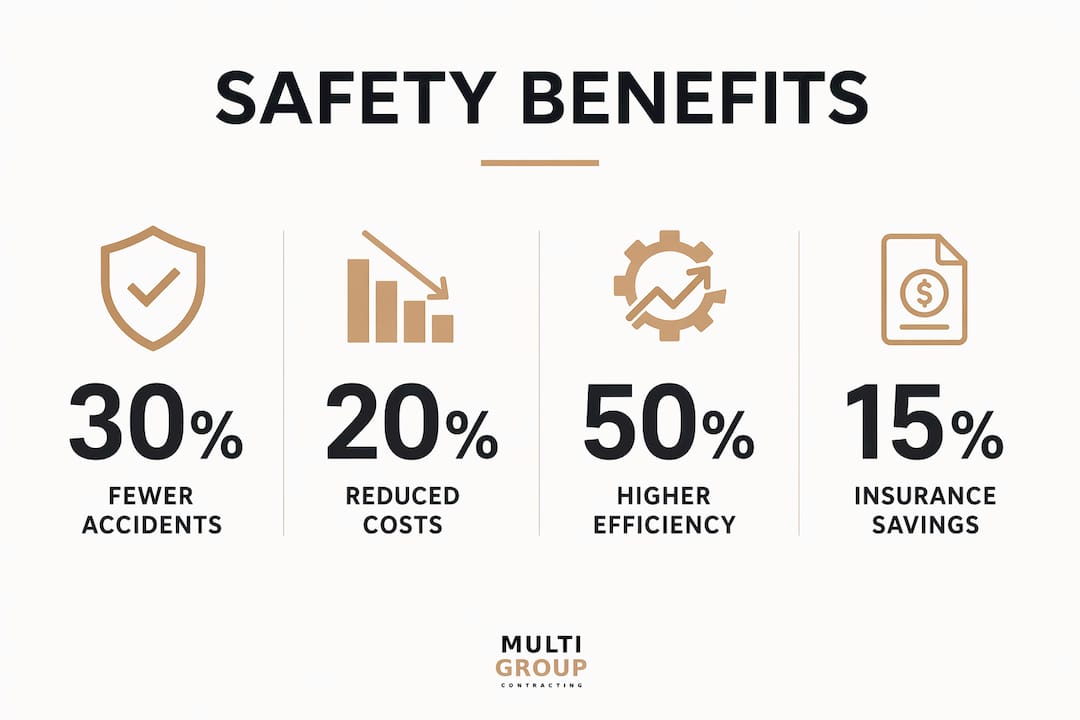
Safety also directly affects project outcomes. Sites with poor safety records face stop-work orders, insurance complications, and reputational damage that affects future bids. Sites with strong safety cultures finish faster because crews are not managing injuries, investigations, or rework caused by accidents.
Who is responsible for safety on a construction site?
General contractors hold enforcement authority to stop work and correct hazards. That authority makes them the controlling employer on any multi-trade site. Understanding the role of a general contractor clarifies why safety responsibility cannot be fully delegated, even when subcontractors are on site.
Each party carries distinct obligations:
- General contractor: Sets site safety standards, conducts inspections, enforces compliance, and holds the authority to remove unsafe workers or stop work entirely.
- Safety manager: Delivers training, maintains documentation, runs toolbox talks, and tracks incident reports. On larger sites, this is a dedicated role. On smaller sites, the site supervisor absorbs these duties.
- Subcontractors: Responsible for the safety of their own crews and the specific work areas they control. They must follow the general contractor's site safety plan and WorkSafeBC regulations.
- Property owners: Cannot outsource all safety responsibility to their contractor. Owners who select licensed contractors in BC reduce their exposure, but site access decisions and contractor vetting remain their obligation.
The chain of authority matters. When roles overlap without clear accountability, hazards go unreported and corrective action stalls.
Pro Tip: Document every safety instruction in writing. Verbal directions are unenforceable in a WorkSafeBC investigation. A simple daily log of safety communications protects every party.
How do physical safety practices protect workers and sites?
Physical hazard control is the most visible part of construction safety. Falls, hand injuries, and chemical exposures account for the majority of lost-time injuries on Canadian construction sites. Each hazard category requires a specific control hierarchy: elimination first, then substitution, engineering controls, administrative controls, and finally personal protective equipment.
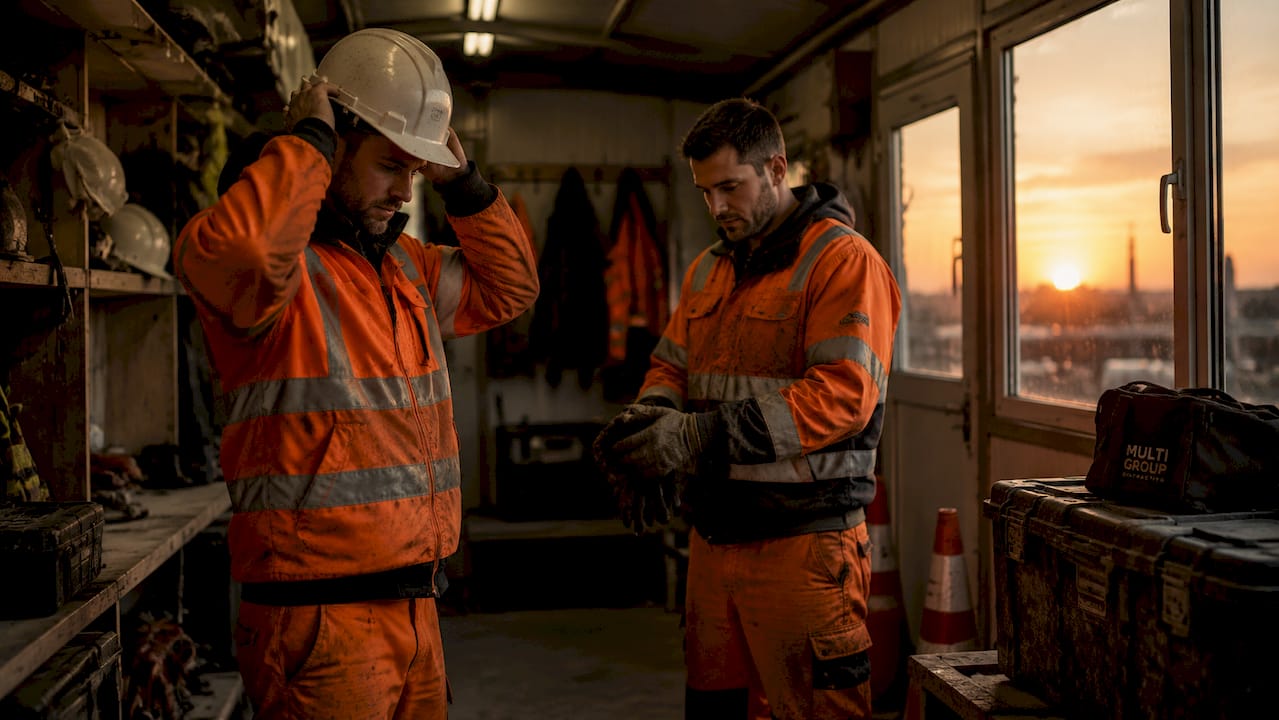
High-quality PPE reduces injury frequency by encouraging consistent use. Tradespeople abandon substandard gear mid-task because it is uncomfortable or poorly fitted. That gap between wearing PPE at the start of a shift and discarding it two hours later is where most injuries occur. Investing in quality gloves, respirators, and fall arrest systems is not a luxury. It is a direct injury prevention measure.
Regular toolbox talks tailored to the day's specific tasks improve hazard awareness across the crew. A generic weekly safety meeting does not prepare a carpenter for the specific risks of cutting fibre cement board in a confined space that afternoon. Task-specific briefings do.
Renovation projects carry a specific regulatory requirement that new builds do not. Buildings constructed before 1990 must be treated as containing asbestos until proven otherwise. In BC, licensed removal is required for more than 10 square metres of non-friable asbestos material. Skipping this step exposes workers to serious health risk and exposes the contractor to significant legal liability.
The table below compares standard safety measures across new construction and renovation projects:
| Safety measure | New construction | Renovation |
|---|---|---|
| Asbestos assessment | Not required | Required for pre-1990 buildings |
| Fall protection | Scaffolding, guardrails, harnesses | Temporary systems, stairwell protection |
| Hazard documentation | SWMS for high-risk work | SWMS plus hazardous materials register |
| Occupant exposure risk | None (unoccupied site) | High (occupied or adjacent spaces) |
| Toolbox talk frequency | Daily or weekly | Daily, task-specific |
Pro Tip: Before any demolition on a Metro Vancouver renovation, order a designated substance survey from a certified industrial hygienist. The report costs a fraction of what a WorkSafeBC stop-work order will cost in delays.
The core physical safety steps for any site follow a clear sequence:
- Conduct a site-specific hazard assessment before work begins.
- Produce a Safe Work Method Statement (SWMS) for all high-risk tasks.
- Verify PPE is correctly fitted and meets the task's protection requirements.
- Run a task-specific toolbox talk at the start of each shift.
- Inspect the site at the end of each day and correct any outstanding hazards before crews leave.
Why does mental health belong in a construction safety programme?
Mental health is now a core component of construction safety standards, not an optional add-on. Suicide rates among construction workers exceed national averages, and the 2026 Construction Safety Handbook identifies mental health and suicide prevention as priority areas for the industry. That statistic reframes the entire conversation about what safety means on a job site.
The physical demands of construction work, combined with job insecurity, long hours, and financial pressure, create conditions where mental health deteriorates quickly. A crew member managing anxiety or depression is more likely to take shortcuts, miss hazard signals, and make errors that cause accidents. Mental health and physical safety are not separate concerns. They are directly connected.
"A safety programme that ignores mental health is only doing half the job. The industry's injury statistics will not improve until we treat psychological wellbeing as seriously as fall protection."
Practical mental health initiatives that safety managers can implement include:
- Employee Assistance Programmes (EAPs): Confidential counselling services accessible to all crew members, not just salaried staff.
- Mental health first aid training: Equipping supervisors to recognise signs of distress and respond appropriately.
- Destigmatising conversations: Normalising mental health check-ins during toolbox talks, the same way physical fatigue is discussed.
- Workload monitoring: Tracking overtime hours and flagging crews working extended periods without adequate rest.
The return on these investments shows up in reduced absenteeism, lower turnover, and fewer accidents. A crew that feels supported performs better and stays safer.
Is safety a profit driver or a cost in construction projects?
Safety integrated with profitability and operational efficiency drives competitive advantage. Contractors who treat safety as a cost centre are measuring the wrong thing. The real costs sit in the incidents safety prevents: lost productivity, medical claims, legal fees, insurance premium increases, and project delays caused by investigations.
Digital safety management tools reduce the administrative burden of manual documentation. Tracking certifications, inspection records, and incident reports on paper creates gaps. Digital systems flag expired certifications before a worker arrives on site, generate inspection reports automatically, and give project managers real-time compliance visibility. That visibility supports faster, better decisions.
Embedding safety checks into daily scheduling creates measurable return on investment by reducing hidden costs. Lost training records and missed certification renewals are not dramatic failures. They are quiet, cumulative costs that erode project margins over time. A safety programme built into the project schedule eliminates them.
Pro Tip: Integrate safety milestones into your project schedule the same way you schedule concrete pours or inspections. A construction scheduling checklist that includes safety sign-offs prevents compliance gaps from appearing at the worst possible moment.
The competitive case for safety is straightforward. Contractors with strong safety records win more bids, retain experienced workers, and carry lower insurance costs. By 2030, contractors who treat safety as a strategic advantage will consistently outperform those who treat it as a compliance obligation.
Renovation vs. commercial construction: what are the key safety differences?
Residential renovation sites experience injury rates comparable to commercial construction, despite typically lacking dedicated safety officers or formal compliance oversight. That gap between risk level and oversight intensity is where most renovation injuries occur.
The table below outlines the key differences in safety challenges:
| Factor | Commercial construction | Residential renovation |
|---|---|---|
| Dedicated safety officer | Standard on larger sites | Rarely present |
| Occupant exposure | None | Frequent (occupied homes) |
| Hazardous materials risk | Managed through site assessment | Often discovered mid-project |
| Regulatory oversight | Regular WorkSafeBC inspections | Less frequent inspection visits |
| Subcontractor coordination | Formal safety plan required | Often informal arrangements |
Successful renovation safety relies on strict daily shutdown routines. Every evening, hazards must be isolated, debris cleared, and tools stored securely. This discipline protects both workers returning the next morning and any occupants of the building. It is the single most effective daily practice on a residential renovation site.
Property owners and managers can protect themselves by:
- Selecting contractors with documented safety programmes, not just verbal assurances.
- Requesting proof of WorkSafeBC clearance letters before work begins.
- Confirming that subcontractor coordination is managed by the general contractor, not left to individual trades.
- Asking for a site-specific safety plan before the project starts.
The misconception that renovation sites are lower risk than commercial sites costs workers their health and property owners their liability protection.
Key takeaways
Effective construction safety combines physical hazard control, regulatory compliance, mental health support, and digital management tools to protect workers and improve project outcomes.
| Point | Details |
|---|---|
| Safety is a profit driver | Contractors with strong safety records reduce insurance costs, win more bids, and finish projects faster. |
| General contractors hold authority | GCs are the controlling employer and cannot fully delegate safety responsibility to subcontractors or owners. |
| Renovations carry unique risks | Pre-1990 buildings require asbestos assessment, and daily shutdown routines are the most effective daily safety practice. |
| Mental health is a safety issue | Suicide rates in construction exceed national averages; mental health programmes reduce accidents and absenteeism. |
| Digital tools close compliance gaps | Embedding safety checks into scheduling and using digital documentation eliminates hidden costs and missed certifications. |
What I have learned about safety after years of building in Metro Vancouver
The industry's attitude toward safety has shifted noticeably over the past decade. When I started, safety was treated as a regulatory hurdle. Today, the contractors winning the best commercial renovation projects in Vancouver are the ones who have built safety into how they operate, not just what they report.
The biggest gap I still see is leadership. Safety programmes fail when site supervisors treat them as paperwork rather than practice. A toolbox talk delivered while crews are already picking up tools is not a safety briefing. It is theatre. Real safety leadership means stopping work when something is wrong, even when the schedule is tight.
Technology is closing the gap between intention and execution. Digital inspection tools and scheduling integrations mean safety checks happen because they are built into the workflow, not because someone remembered to do them. That shift from reactive to proactive is where the real gains are.
Property owners often underestimate their role. Selecting a licensed contractor is the single most protective decision an owner makes. After that, asking the right questions before work starts matters more than any site visit during construction.
— MultigroupTeam
Multigroup's approach to safety in commercial renovations
Multigroup operates as a licensed general contractor across Metro Vancouver, managing safety compliance as a core part of every project delivery, not an afterthought.

Every Multigroup project includes a site-specific safety plan, WorkSafeBC compliance documentation, and coordinated subcontractor management from day one. For tenant improvements and retail buildouts, that means hazard assessments, permit management, and daily site oversight built into the project schedule. Property owners and business operators across Burnaby, Richmond, Surrey, and the broader Metro Vancouver region work with Multigroup because safety and quality are managed together, not traded off against each other. Contact Multigroup to plan your next renovation with a team that treats safety as a project deliverable.
FAQ
What is the main role of safety in construction?
The role of safety in construction is to prevent injuries, protect workers, and keep projects on schedule by eliminating hazards before they cause incidents. Strong safety programmes also reduce legal liability and insurance costs for contractors and property owners.
Who is responsible for safety on a construction site in BC?
The general contractor holds primary enforcement authority as the controlling employer under WorkSafeBC regulations. Subcontractors are responsible for their own crews, and property owners retain obligations around contractor selection and site access.
Are renovation sites as dangerous as commercial construction sites?
Residential renovation sites experience injury rates comparable to commercial construction sites, but typically have less formal oversight and fewer dedicated safety officers. This gap makes daily hazard control routines and proper PPE use especially critical on renovation projects.
How does mental health fit into construction safety?
Mental health is a direct safety issue because psychological distress increases the likelihood of errors, shortcuts, and accidents on site. Suicide rates among construction workers exceed national averages, making mental health programmes a required part of any complete safety strategy in 2026.
How can property owners protect themselves during a renovation?
Property owners should request a WorkSafeBC clearance letter, a site-specific safety plan, and confirmation that the general contractor is managing all subcontractor coordination before work begins. Selecting a licensed general contractor is the most effective single step an owner can take.