
TL;DR:
- Thorough pre-construction planning is crucial for project success in Metro Vancouver.
- Local regulations and permit processes often cause more delays than construction issues.
- Engaged homeowners and experienced contractors reduce risks and ensure smoother projects.
Most homeowners assume the construction phase is the hardest part of any renovation or custom build. They picture noise, dust, and busy crews as the primary challenges. In reality, what happens before a single nail is driven is what most often determines whether a project succeeds or stalls. In Metro Vancouver, a region known for some of the most complex permitting and zoning requirements in Canada, regulatory hurdles routinely derail projects that were otherwise well funded and well intentioned. This guide breaks down every key phase of residential project planning, explains what makes Metro Vancouver unique, and gives you the practical knowledge to move forward with confidence.
Table of Contents
- What is residential project planning?
- The three key phases of residential projects
- Why Metro Vancouver homeowners face unique challenges
- Expert guidance: Planning for success
- Our take: What most guides ignore about residential project planning
- Connect with expert residential project planners in Metro Vancouver
- Frequently asked questions
Key Takeaways
| Point | Details |
|---|---|
| Planning matters most | Effective residential project planning is key to timely, budget-friendly results. |
| Regulatory risks in Vancouver | Permitting and compliance are the biggest hurdles for Metro Vancouver homeowners. |
| Know the phases | Understanding pre-construction, construction, and post-construction streamlines your project. |
| Expert advice pays off | Leveraging local expertise can help avoid delays, minimize stress, and protect your investment. |
What is residential project planning?
Residential project planning is not simply making a wish list and hiring a contractor. It is a structured process that covers everything from your first site walkthrough to the final inspection and handover. According to industry guidance, residential project planning is the comprehensive process of coordinating all phases of residential construction or renovation projects, from initial scoping and site analysis to final handover, ensuring compliance with local regulations, budget control, and timely execution.
For Metro Vancouver homeowners, this definition carries real weight. Local building codes, municipal permit requirements, and zoning bylaws add layers of complexity that most general planning guides simply do not address. Getting the planning right means fewer surprises, lower costs, and a smoother build.
Planning is not a step you complete and then move past. It is the foundation every subsequent phase depends on. Treat it as the most important investment you make before construction begins.
Here is what thorough residential project planning covers:
- Scope definition: What exactly are you building or renovating? What are the boundaries of the project?
- Site analysis: What are the site conditions, soil types, setback requirements, and existing utility connections?
- Feasibility assessment: Is the project financially and structurally achievable within your constraints?
- Budget development: Detailed cost estimates covering materials, labor, permits, contingencies, and professional fees.
- Permitting strategy: Identifying which permits are required, who applies for them, and how long approval will realistically take.
- Contractor selection: Vetting and engaging licensed professionals who understand Metro Vancouver's local requirements.
- Scheduling: Building a realistic timeline that accounts for permit processing, inspections, and potential weather or supply delays.
Homeowners who want to renovate on time and budget consistently cite early and thorough planning as the single biggest factor in their project's success. Skipping steps or rushing this phase to get to construction faster almost always creates expensive problems later.
The three key phases of residential projects
Now that you know what project planning is, let's see how it unfolds through its well-defined phases. Industry research confirms that key phases include: pre-construction covering scope definition, feasibility, budgeting, and permitting; construction covering scheduling, execution, and subcontractor coordination; and post-construction covering inspections, punch lists, and handover.
Understanding each phase helps you set expectations, allocate resources correctly, and avoid the most common mistakes Metro Vancouver homeowners make.
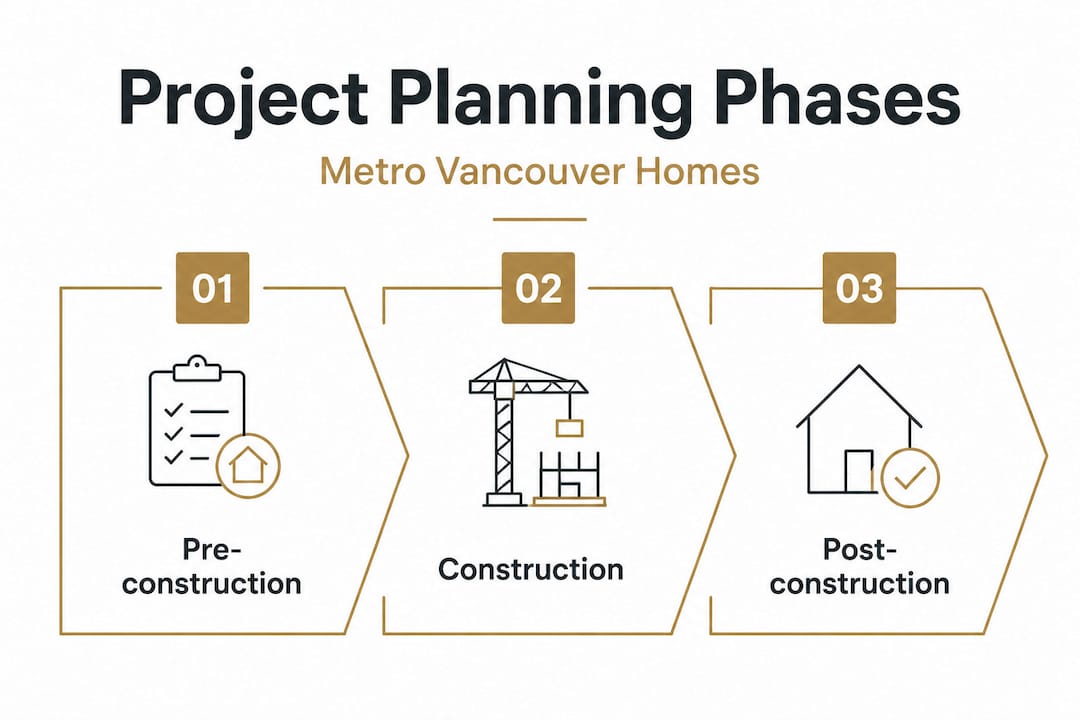
| Phase | Key Activities | Typical Duration in Metro Vancouver |
|---|---|---|
| Pre-construction | Scoping, design, permits, budgeting | 2 to 6 months (permits vary widely) |
| Construction | Site work, framing, mechanical, finishing | 3 to 12 months depending on scope |
| Post-construction | Inspections, punch list, final walkthrough | 2 to 6 weeks |
Phase 1: Pre-construction
This is where your project is truly built. You define the scope in precise terms, commission architectural or design drawings, conduct a feasibility study, and develop a detailed budget. Most critically, you identify every permit your project requires and submit applications as early as possible.
In Metro Vancouver, permit processing times vary significantly by municipality. A straightforward interior renovation in one city may take six weeks for approval, while a custom new build or secondary suite addition in another municipality can take four to six months or longer. Building this reality into your timeline from day one prevents the frustration of a ready crew sitting idle because paperwork is still pending.
- Define project scope in writing with your designer or contractor.
- Complete a site analysis to identify any restrictions or conditions.
- Develop a detailed budget with a minimum 10 to 15 percent contingency.
- Submit permit applications as early as possible, before finalizing contractor agreements.
- Confirm your contractor holds all required licenses and insurance for your municipality.
Phase 2: Construction
Once permits are in hand, construction begins. This phase requires active coordination between the general contractor, subcontractors (plumbing, electrical, HVAC, framing), and suppliers. A well-run construction phase depends almost entirely on the quality of pre-construction planning. When the scope is clear, permits are approved, and the budget is realistic, construction moves smoothly.
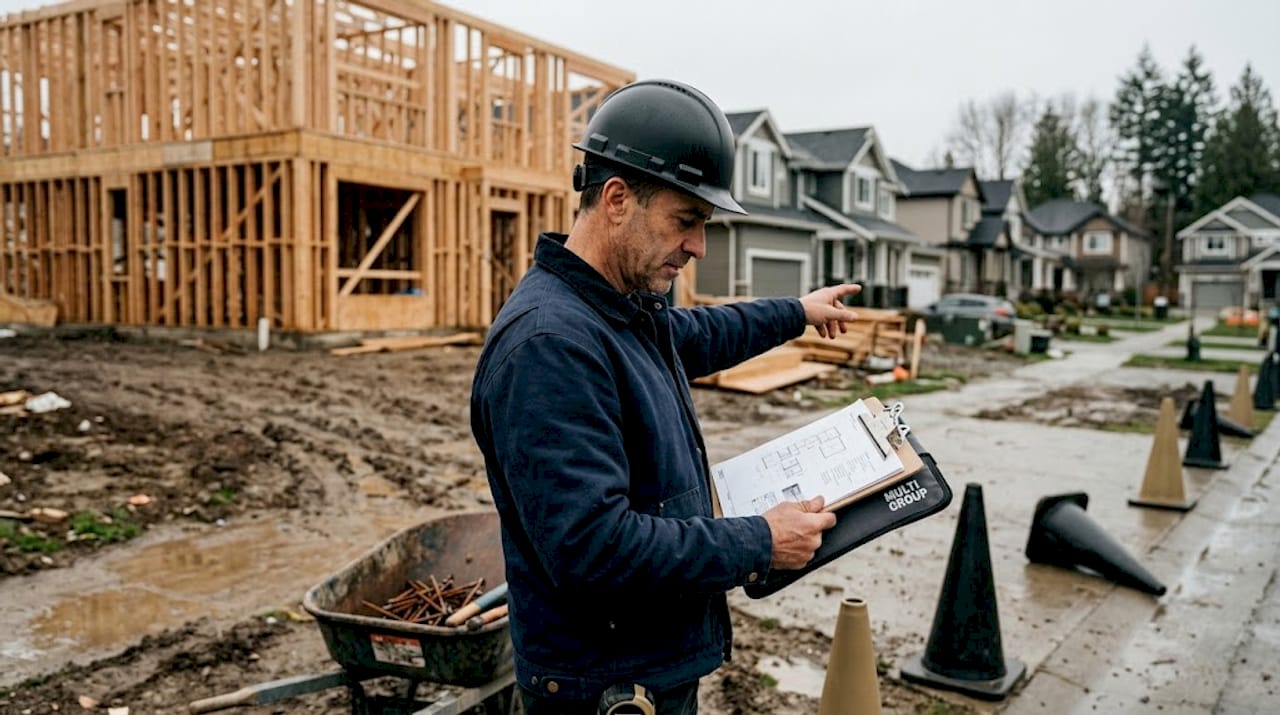
Good construction project management in Metro Vancouver also means keeping track of mandatory inspection milestones. Building officials must inspect specific stages of work, such as rough framing and rough-in plumbing, before you can proceed. Missing an inspection or failing to schedule one on time adds days or weeks to your project.
Phase 3: Post-construction
Post-construction is often underestimated. Once the main work is done, a formal punch list is completed. This is a detailed record of every unfinished item, deficiency, or correction needed before the project is considered complete. The general contractor then addresses each item, followed by a final inspection from the relevant municipal authority.
Pro Tip: Do not release final payment to your contractor until all punch list items are resolved and you have received the final occupancy permit or completion certificate in writing. This protects you and gives your contractor a clear incentive to finish every detail properly.
Why Metro Vancouver homeowners face unique challenges
Understanding each phase is helpful, but Metro Vancouver homeowners face hurdles that most guides overlook. What makes your project unique is not just the scale or the design. It is the regulatory environment you are working within.
Industry experts note that while general sources emphasize universal project phases, Vancouver-area specialists consistently identify regulatory hurdles including permits, zoning codes, and inspection requirements as the biggest risks, not the construction itself.
Here is a comparison that illustrates the gap between general Canadian project expectations and Metro Vancouver realities:
| Factor | General Canadian Average | Metro Vancouver Reality |
|---|---|---|
| Permit approval time | 4 to 8 weeks | 8 to 24+ weeks depending on municipality |
| Number of required inspections | 3 to 5 per project | 6 to 10+ per project depending on scope |
| Zoning complexity | Moderate | High (ALR, heritage overlays, flood plains, setbacks) |
| Contractor licensing requirements | Provincial standard | Municipal-specific requirements add additional checks |
The regulatory landscape in Metro Vancouver includes Agricultural Land Reserve restrictions, heritage property designations, floodplain bylaws, energy efficiency codes, and municipality-specific zoning overlays. A project that would proceed smoothly in most other Canadian cities can face months of additional review in this region.
Working with licensed contractors in Vancouver is not optional. Licensed professionals understand which permits apply to your specific address, how to prepare compliant drawings that satisfy building officials on the first submission, and how to navigate the inspection schedule without delays.
Key region-specific risks to watch for include:
- Secondary suite regulations: Each municipality has different rules about legal secondary suites, laneway houses, and basement suites. What is permitted in Burnaby may require a different application process in Surrey or North Vancouver.
- Energy step code compliance: British Columbia's Energy Step Code sets increasingly strict energy efficiency standards. New builds and significant renovations must meet specific steps, which affects insulation, windows, mechanical systems, and airtightness testing.
- Seismic requirements: Metro Vancouver sits in a seismically active zone. Structural requirements for new builds and additions are more rigorous than in many other Canadian regions.
- Heritage property rules: Homes in heritage-designated areas face additional review processes, and alterations to exterior features may require heritage commission approval before a standard building permit is issued.
Staying current on residential construction trends in Greater Vancouver also helps homeowners understand what to expect in terms of material costs, contractor availability, and code updates that may affect their specific project scope.
Expert guidance: Planning for success
Given these unique challenges, what can you do right now to ensure your project is a success? Here is what Vancouver-area construction experts consistently recommend.
The foundation of every successful residential project is a thorough planning process. As noted in construction management research, residential project planning coordinates all phases from initial scoping through final handover, ensuring regulatory compliance, budget control, and timely execution. The homeowners who experience the smoothest projects are those who respect every step of this process rather than rushing toward construction.
Critical planning tips for Metro Vancouver homeowners:
- Conduct a genuine feasibility assessment. Before you commit emotionally to a vision, confirm it is achievable under current zoning and within your actual budget. A qualified contractor or project manager can identify red flags early, saving you significant time and money.
- Build a realistic budget with proper contingency. In Metro Vancouver, construction costs run higher than national averages due to labor costs, material transportation, and local regulatory compliance expenses. Budget a minimum of 15 percent contingency for renovations and 20 percent for custom new builds.
- Apply for permits before hiring your crew. Many homeowners hire contractors and then wait for permits together. The smarter approach is to have your permit applications submitted and in review before your crew is scheduled to start. This eliminates the costly gap of paying for a ready team with nowhere to work.
- Vet contractors thoroughly. Check that your contractor holds a valid business license in the relevant municipality, carries WorkSafeBC coverage, and has general liability insurance with adequate limits. Ask for references from projects of similar scope in the same municipality.
- Develop a clear inspection schedule. Know in advance which inspections are required, at what stages they must be called in, and how much lead time the building department requires for scheduling. Some municipalities require 48 hours notice; others require more.
Your inspection checklist should cover:
- Foundation and footing inspection (new builds and additions)
- Rough framing inspection
- Rough-in plumbing and mechanical inspection
- Insulation and vapor barrier inspection
- Final electrical inspection
- Final building inspection and occupancy permit issuance
Pro Tip: Assign one person, either yourself or your general contractor, as the single point of contact with the municipal building department. Fragmented communication between multiple parties and city officials is one of the most common causes of inspection delays and permit misunderstandings.
Homeowners who prioritize project management from the earliest stages of planning consistently report fewer cost overruns, fewer schedule delays, and higher satisfaction with the finished result. The connection between good planning and good outcomes is direct and well documented.
Our take: What most guides ignore about residential project planning
You have learned the phases, the checklists, and the Metro Vancouver-specific challenges. Here is a perspective that most planning guides skip entirely.
The single most underestimated risk in Metro Vancouver residential projects is not contractor quality, not material costs, and not weather. It is homeowner disengagement during the planning phase. Time and again, projects run into serious problems not because the contractor made a mistake, but because the homeowner was not sufficiently involved when key decisions were being made.
Permit applications require detailed drawings and specifications. If the homeowner has not clearly defined the scope, the drawings will be incomplete or inaccurate. When building officials review an incomplete application, they issue correction notices, and the timeline extends by weeks or months. No amount of contractor experience can compensate for a homeowner who has not decided what they actually want before the permit process begins.
There is also a widespread misconception that complexity during construction signals a poorly planned project. In reality, visible complexity during the build phase often means the planning was thorough. When framing crews are working around detailed structural specifications, electrical plans, and pre-approved mechanical layouts, it looks complex from the outside. But that complexity is organized and intentional. The chaotic, expensive kind of complexity happens when decisions that should have been made in the planning phase are being made on the fly during construction.
We have seen projects in Metro Vancouver that stalled for six months not because of a construction defect, but because a permit was filed without the required energy compliance report. We have seen budgets overrun by 30 percent not because materials became expensive, but because scope changes were approved verbally during construction without a formal change order process. These are planning failures, not build failures.
The most successful projects we have observed and worked on share one consistent trait: the homeowner and the general contractor were aligned on scope, budget, and regulatory strategy before any physical work began. Success in Metro Vancouver residential construction is not a matter of luck. It is a direct result of how seriously the planning phase is treated.
Connect with expert residential project planners in Metro Vancouver
Navigating Metro Vancouver's regulatory environment, permit timelines, inspection requirements, and contractor landscape is a lot to manage on your own. The planning phase sets the entire trajectory of your project, and errors made early are the most expensive to correct.
Multigroup Contracting works with Metro Vancouver homeowners through every phase of residential project planning, from initial feasibility and permit strategy through construction management and final inspection. The team brings direct experience with local municipal requirements across the region, which means fewer surprises and a smoother path from concept to completion. Whether you are planning a full custom build, a major renovation, or a secondary suite addition, having an experienced planning partner on your side means your project starts right and finishes on time. Reach out to explore how Multigroup Contracting can support your next residential project.
Frequently asked questions
What does residential project planning include for Vancouver homeowners?
It covers scoping, site analysis, budgeting, permitting, scheduling, inspections, and compliance with local regulations, as outlined in residential construction management best practices. Every phase connects directly to project outcomes in terms of cost, timeline, and quality.
Why are permits and local codes more challenging in Metro Vancouver?
Metro Vancouver has stricter permitting, zoning, and inspection requirements than most Canadian regions, and Vancouver experts confirm that regulatory compliance consistently represents the biggest project risk, not the construction work itself.
How can I avoid delays in my residential project?
Start with thorough planning, a realistic budget with proper contingency, and submit permit applications as early as possible. Early planning coordination is the most effective strategy for minimizing schedule setbacks.
What is the role of contractors in the planning phase?
Qualified contractors support feasibility assessments, develop accurate budgets, advise on permit strategies, and help owners understand municipal requirements. According to residential construction phase guidance, contractor involvement in pre-construction directly improves scheduling accuracy and reduces costly surprises during the build.