

TL;DR:
- Good design begins with effective space planning that prioritizes traffic flow and sightlines before choosing decor. Layering lighting with ambient, task, and accent sources enhances room ambiance and function, while selecting furniture based on scale and sequence prevents costly mistakes. Incorporating accessibility features during construction adds value and ease of use without compromising style.
Most homeowners start renovations or new builds with a strong vision, then quickly realize that good-looking rooms on Pinterest rarely translate directly to livable, comfortable spaces. The gap between an inspiring image and a well-functioning home comes down to applying the right residential design tips before you start buying materials or furniture. This article covers the core principles that matter most: space planning, lighting, furniture selection, and accessibility features that add real value without sacrificing style.
Table of Contents
- Key takeaways
- 1. Start with residential design tips that address space and flow
- 2. Layer your lighting to transform any room
- 3. Choose and arrange furniture with scale in mind
- 4. Build in accessibility from the start
- 5. Apply color and material choices with intention
- 6. Plan for storage that disappears into the design
- My perspective on what actually creates lasting design satisfaction
- How Multigroup can help you put these tips into practice
- FAQ
Key takeaways
| Point | Details |
|---|---|
| Space planning comes first | Resolve traffic flow and clearances before choosing any decor or furniture. |
| Lighting needs layers | Every room should have ambient, task, and accent sources for function and feel. |
| Buy furniture in sequence | Anchor each room with large pieces first to avoid costly sizing mismatches. |
| Accessibility pays for itself | Building in accessible features during construction adds only 3 to 5% to costs versus expensive retrofits later. |
| Restraint beats excess | Fewer, well-chosen pieces in contrasting tones outperform rooms filled with safe, matching neutrals. |
1. Start with residential design tips that address space and flow
Before you pick a paint color or browse sofas, you need a plan for how people will actually move through your home. Good design prioritizes functional space planning that supports movement, sightlines, and daily routines before decor gets layered in. Skipping this step is the single most common reason a finished room feels off even when every individual piece looks fine on its own.
Traffic flow clearances you need to know:
- Primary living room walkways should have at least 36 inches of clearance for comfortable movement without feeling cramped
- Hallways require a minimum of 36 inches, with 42 to 48 inches preferred for main corridors and multi-user households
- Leave 18 to 24 inches between the edge of your sofa and the coffee table
- Keep 30 to 36 inches open between any two pieces of furniture that face each other
Sightlines matter too. The moment you walk into a room, your eye should land on a natural focal point, whether that is a fireplace, a large window, or a statement wall. Furniture placement should frame that focal point, not block it. Arranging seating so that the first view from the door is interrupted by the back of a chair is a subtle mistake that makes rooms feel cluttered even when they are not.
For residential space planning in an open-plan layout, define zones visually using rugs, pendant lighting, and furniture groupings rather than relying on walls. This keeps the space feeling connected while giving each area a clear purpose.
Pro Tip: Draw your floor plan to scale on paper or a free app before you move a single piece of furniture. Measure twice, place once. This 30-minute exercise prevents weeks of frustration.
Reviewing a detailed residential project planning guide before your next renovation gives you a structured starting point that professionals use on every new build.
2. Layer your lighting to transform any room
Most homes are dramatically under-lit. A single overhead fixture in the center of a room creates flat, shadow-heavy light that makes even beautiful finishes look dull. The fix is layering. Well-lit rooms require 3 to 5 light sources across ambient, task, and accent layers for the best results.
The three layers of residential lighting:
- Ambient lighting is your base layer: recessed lights, flush-mount fixtures, or a central chandelier that fills the room with general illumination
- Task lighting is specific and functional: under-cabinet lights in the kitchen, a reading lamp beside a chair, or a pendant over a desk
- Accent lighting adds depth and interest: LED strips in shelving, wall sconces flanking artwork, or up-lights behind plants
Color temperature matters more than most homeowners realize. Use 2700K bulbs in living rooms and bedrooms for warmth. Step up to 3000K in kitchens and work areas where clarity and color accuracy are more important. Mixing bulbs more than 300K apart in a single room creates a visually uncomfortable contrast that you will notice even if you cannot immediately identify the cause.
In open-plan spaces common in new Metro Vancouver builds, use pendant fixtures and floor lamps to define zones. A cluster of pendants over the dining area and a floor lamp in the reading corner communicate "these are separate spaces" without adding walls.
Pro Tip: Install dimmer switches on every ambient light circuit during the rough-in phase. Retrofitting dimmers after drywall is installed costs significantly more and requires an electrician's visit. Do it once, do it right.
3. Choose and arrange furniture with scale in mind
Furniture selection is where most homeowners spend the most money and make the most regrettable decisions. 70% of redesign regrets are linked to buying pieces before finalizing the room layout. The largest pieces should anchor your plan first, with every subsequent purchase evaluated against them.
The sequence that works:
- Identify and confirm your room's focal point
- Choose and place the largest anchor piece (sofa, bed, or dining table) first
- Select secondary pieces that leave proper clearances (see spacing rules in tip #1)
- Add rugs last, sized so that at minimum the front legs of all major seating sit on the rug
Rug sizing is consistently underestimated. A rug that is too small makes furniture look like it is floating. In a living room, a standard 8x10-foot rug is often too small for a sectional sofa arrangement. An optimal furniture layout also requires coffee tables to sit within 2 inches of the seated height of your sofa, typically 16 to 18 inches high.
Common mistakes vs. better choices:
| Mistake | Better approach |
|---|---|
| Buying all furniture the same tone | Mix light and dark pieces for visual contrast and depth |
| Oversized sectional in a small room | Choose a sofa with exposed legs to visually lighten the space |
| Rug too small for the seating group | Size up at least one rug size from your first instinct |
| Pushing all furniture to the walls | Float furniture toward the center to create conversation groupings |
| Safe all-white or all-gray palette | Add contrast with mushroom or greige tones for an expensive look |
Restraint is the real design skill. A room with six well-chosen, well-placed pieces will always look more considered than one with twelve pieces that individually look fine but collectively compete for attention.
4. Build in accessibility from the start
Accessibility is often treated as a specialty concern for aging homeowners or people with disabilities. That framing is outdated and costly. Building in accessibility features during new construction adds only 3 to 5% to total project costs. Retrofitting an inaccessible home after the fact can exceed $50,000.
If you are building or doing a major renovation in Burnaby, Richmond, Surrey, Coquitlam, or North Vancouver, now is the time to incorporate these features at the framing stage. The 2026 residential construction trends across Greater Vancouver show visitability standards are increasingly part of standard builds, not optional add-ons.
Features worth including during construction:
- Zero-step entrances at the primary entry point and at least one secondary door
- Doorways at least 36 inches wide throughout the main floor
- Curbless shower with proper waterproofing and blocking for future grab bars, built to ICC A117.1 clearance standards
- Blocking in bathroom framing for grab bars at toilet and shower, even if the bars are not installed immediately
- Lever-style door handles and rocker-style light switches throughout
- Smart home controls for lighting, thermostats, and locks that can be operated without fine motor movement
These features do not make your home look like a medical facility. A curbless shower is a premium design feature. Lever handles are a common specification in high-end custom homes. Wide doorways simply feel more generous. You get better livability now and significantly broader resale appeal for the future.
5. Apply color and material choices with intention
Color is where homeowners either gain or lose confidence quickly. The answer is not always more color. The most expensive-looking rooms use contrast, restraint, and intentionality often with soft tones like mushroom, warm greige, or muted sage rather than stark white walls paired with gray everything.
A workable formula: choose a dominant tone for 60% of the room (walls, large upholstery), a secondary tone for 30% (drapery, accent furniture, cabinetry), and a true accent for 10% (cushions, art, hardware). This ratio prevents rooms from feeling either monotonous or chaotic.
Material layering works the same way. A room with only smooth surfaces (painted walls, glass, polished floors) feels cold regardless of color. Add texture through linen drapes, a wool rug, raw wood shelving, or matte ceramic accessories. The contrast between matte and polished finishes reads as deliberate and high-end without requiring expensive materials.
For home interior design tips that address material choices specifically, consider how natural light will interact with your finishes throughout the day before committing. A warm-toned wood floor that looks rich in a showroom can read orange in direct afternoon sun. Always sample materials in the actual room at multiple times of day.
6. Plan for storage that disappears into the design
Storage is the most underplanned element in residential design ideas that homeowners bring to contractors. The result is a beautifully designed home that becomes visually cluttered within six months because there is simply nowhere to put daily-use items.
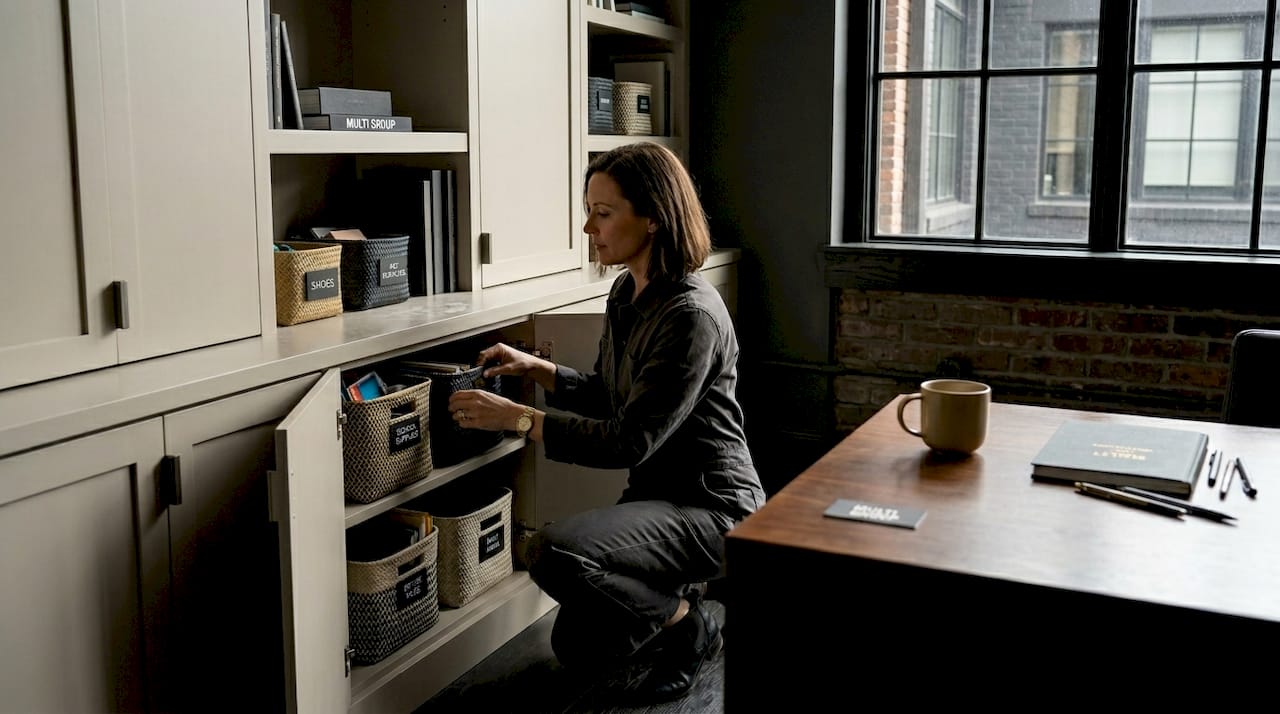
Built-in storage solves this without sacrificing aesthetics. Cabinetry built to ceiling height in a kitchen or library wall eliminates the visual noise of the gap above standard upper cabinets. A mudroom bench with integrated cubbies and overhead storage keeps coats, bags, and shoes contained. A bathroom vanity with drawer inserts and pull-out organizers reduces counter clutter to near zero.
The best practices for interiors that stand the test of time share one quality: every room has more dedicated storage than the homeowner originally asked for. When working with a contractor on a custom build or renovation, ask specifically about opportunities for built-ins at the framing stage. Adding a recessed niche in a shower wall costs very little during rough-in. Adding it after tile is set costs significantly more and may not be possible at all.
Pro Tip: When laying out a kitchen, apply the work triangle principle between sink, stove, and refrigerator. Each leg of the triangle should be between 4 and 9 feet. Shorter means cramped. Longer means unnecessary steps during cooking.
My perspective on what actually creates lasting design satisfaction
I have worked with enough homeowners through the full arc of a renovation to know where satisfaction comes from, and it is rarely from the decision they agonized over the longest.
What I have found is that the homeowners who are most satisfied with their finished spaces did one thing differently from the start: they slowed down. Slow decorating is linked to three times higher homeowner satisfaction versus rushed, piecemeal updates. That number is not surprising to me. Every rushed purchase I have seen in this work eventually becomes a regret.
The other pattern I keep seeing is homeowners who try to solve the look before solving the layout. They will spend weeks on paint samples while the sofa is in the wrong position and the main walkway is blocked. The room never quite clicks because the foundation is off. Resolve flow first. Always.
My honest take on color: stop defaulting to bright white walls because they feel safe. Safe is not the same as good. Contrast and restraint, a warm wall tone against darker millwork, a lighter ceiling against deep shelving, create rooms that feel designed rather than default. The rooms that photograph well and feel great to live in are almost never the ones where everything is the same shade of light gray.
Lighting gets the least budget and transforms spaces the most. I would always redirect funds from decorative accessories toward proper lighting circuits with dimmers before I would spend on artwork or cushions.
— Momo
How Multigroup can help you put these tips into practice

Knowing the principles is one thing. Executing them correctly during a build or renovation is where the details make or break the result. Multigroup is a licensed and insured general contractor serving homeowners across Metro Vancouver, including Burnaby, Richmond, Surrey, Coquitlam, and North Vancouver. The team specializes in high-end residential interiors and custom builds, with direct experience in space planning, accessibility compliance, millwork, and project coordination from permits through final walkthrough.
Whether you are planning a full custom build, a kitchen renovation, or a whole-home refresh, Multigroup handles the sequencing and craftsmanship that turns good design plans into finished spaces that actually work. If you are ready to move forward, get in touch directly.
Call: 778-819-5933 Email: info@multigroup.ca Website: multigroup.ca
FAQ
What is the most important residential design tip to follow first?
Resolve your space planning and traffic flow before making any purchasing decisions. Functional space planning that supports movement and sightlines is the foundation everything else builds on.
How many light sources does a living room need?
A living room typically needs 4 to 5 light sources spread across ambient, task, and accent layers. Using only one overhead fixture creates flat, unflattering light regardless of the fixture's quality.
Does building in accessibility features affect home style?
No. Features like curbless showers, wide doorways, and lever hardware are standard in high-end custom homes and add visual appeal. They also add only 3 to 5% to construction costs when included during the build rather than retrofitted later.
What size rug should I use in a living room?
Size up from your first instinct. At minimum, the front legs of all major seating pieces should sit on the rug. A rug that is too small makes furniture appear to float and makes the room feel smaller, not larger.
When should I buy furniture for a renovation?
Buy large anchor pieces only after your floor plan is finalized. Purchasing before the layout is set is the leading cause of furniture regret and wasted budget in residential redesigns.