
TL;DR:
- A residential build planning guide organizes each project phase, from planning to inspections, to reduce costly mistakes. In Metro Vancouver, early goal setting, thorough budgeting, and assembling a vetted team are crucial for project success. Proper documentation, clear communication, and understanding construction timelines help homeowners stay on track and within budget.
A residential build planning guide is a structured roadmap that organizes every phase of a construction or renovation project, from initial goal setting through final inspections, into a manageable sequence of decisions and actions. In Metro Vancouver, where City of Vancouver, Burnaby, and Surrey each enforce distinct zoning bylaws and building codes, skipping this roadmap costs homeowners time, money, and significant stress. This guide covers the full home construction process: prerequisites, team assembly, construction phases, budget management, and post-build accountability. Follow it and you will enter your project with clear expectations, a realistic budget, and the right professionals in place before a single shovel hits the ground.
What does a residential build planning guide actually require before you start?
The most expensive mistakes in residential construction happen before construction begins. Pre-construction alignment on vision, budget, and key requirements minimizes costly changes once work is underway. That means defining your non-negotiables first: number of bedrooms, accessibility requirements, suite potential, and any design features that are fixed regardless of cost pressure.
Your budget must account for more than the construction contract itself. Permits, site surveys, soil tests, landscaping, fencing, and window treatments are routinely excluded from builder quotes. Out-of-pocket extras like landscaping ($25,000), fencing ($8,500), and window treatments ($4,000) are typically due at signing or move-in and are not covered by construction loans. Build these into your total project budget from day one.
Here is what to complete before breaking ground:
- Define your program. List every room, its function, and its minimum size. This gives your architect and contractor a concrete brief rather than a vague wish list.
- Secure financing. Confirm your construction loan or equity line is in place, and understand your draw schedule so cash flow matches construction milestones.
- Research zoning and land use. In Metro Vancouver, zoning bylaws vary by municipality. Check with your local planning department in Richmond, Coquitlam, or North Vancouver before finalizing your design.
- Apply for permits early. Metro Vancouver permit timelines range from weeks to several months depending on project complexity and municipality. Delays here push your entire residential project timeline back.
- Commission a site survey and geotechnical report. Soil conditions in parts of Richmond and Delta require engineered foundations. Discovering this after design is complete adds cost and time.
Pro Tip: Reserve 10 to 20% of your total budget as a contingency fund before you commit to any contract. This buffer covers unforeseen site conditions, design changes, and material price shifts that are standard in Metro Vancouver builds.
How do you assemble the right team for your residential build?
The team you hire determines whether your project finishes on time and on budget. Three primary delivery models exist for residential construction: design-bid-build, design-build, and owner-managed with a project manager. Design-build consolidates design and construction under one contract, which reduces coordination gaps. Design-bid-build separates them, giving you more control over design before pricing. Owner-managed works only if you have significant construction experience or a dedicated project manager on your side.
Effective construction management balances technical knowledge with leadership and communication skills. When interviewing contractors and architects, ask specific questions that reveal both competence and communication style. Use this sequence:
- Verify licensing and insurance. In British Columbia, general contractors must hold a valid business license and carry general liability and WorkSafeBC coverage. Ask for certificates, not just verbal confirmation. Review licensed contractor requirements before signing anything.
- Request references from comparable projects. A contractor who has built custom homes in Burnaby is not automatically qualified for a heritage renovation in North Vancouver. Scope and neighborhood matter.
- Ask how they handle scope changes. The answer reveals their change-order process, which directly affects your final cost.
- Confirm their subcontractor relationships. Experienced general contractors in Metro Vancouver maintain established relationships with electricians, plumbers, and HVAC trades. Weak subcontractor networks cause scheduling gaps.
- Define communication protocols in writing. Agree on meeting frequency, reporting format, and who has authority to approve changes before the contract is signed.
Pro Tip: Use a project management tool like Buildertrend or CoConstruct to track schedules, budgets, and daily logs. These platforms give homeowners real-time visibility without requiring daily site visits.
Clear communication and early alignment reduce scope creep and delays in custom builds. Set this standard at your first team meeting and hold every party to it throughout the project.
What are the key stages of construction from site prep to move-in?
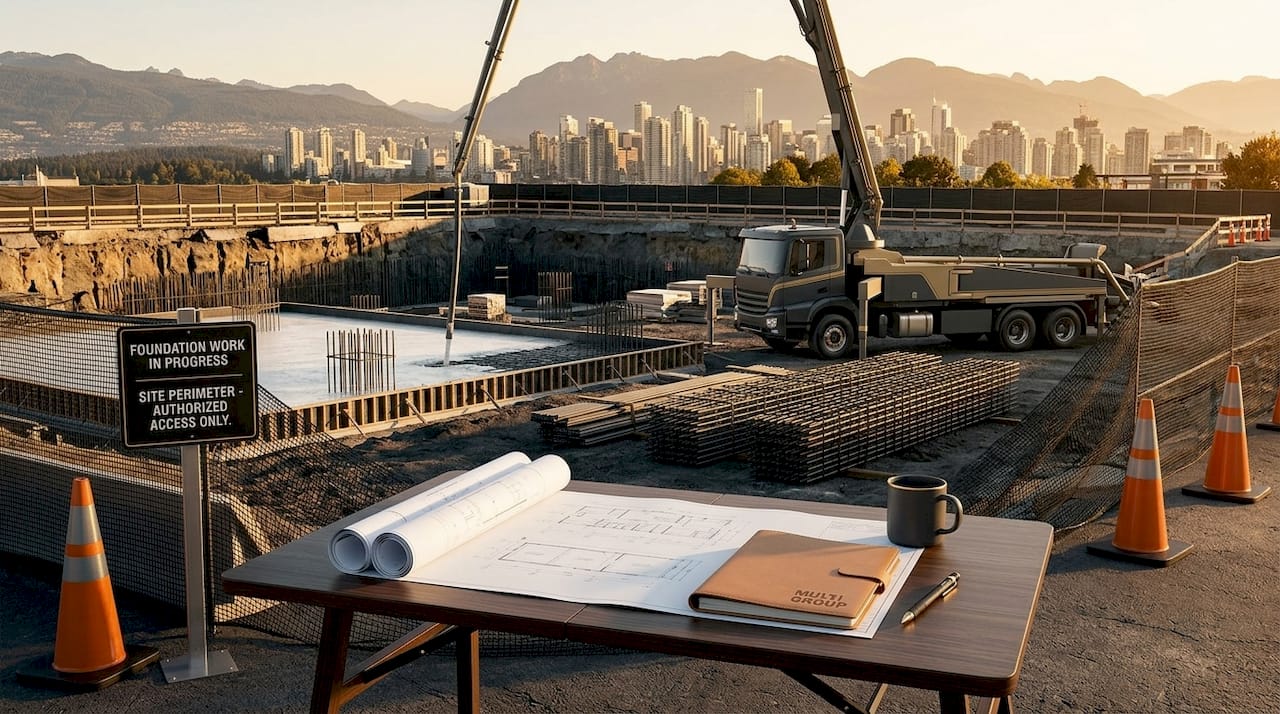
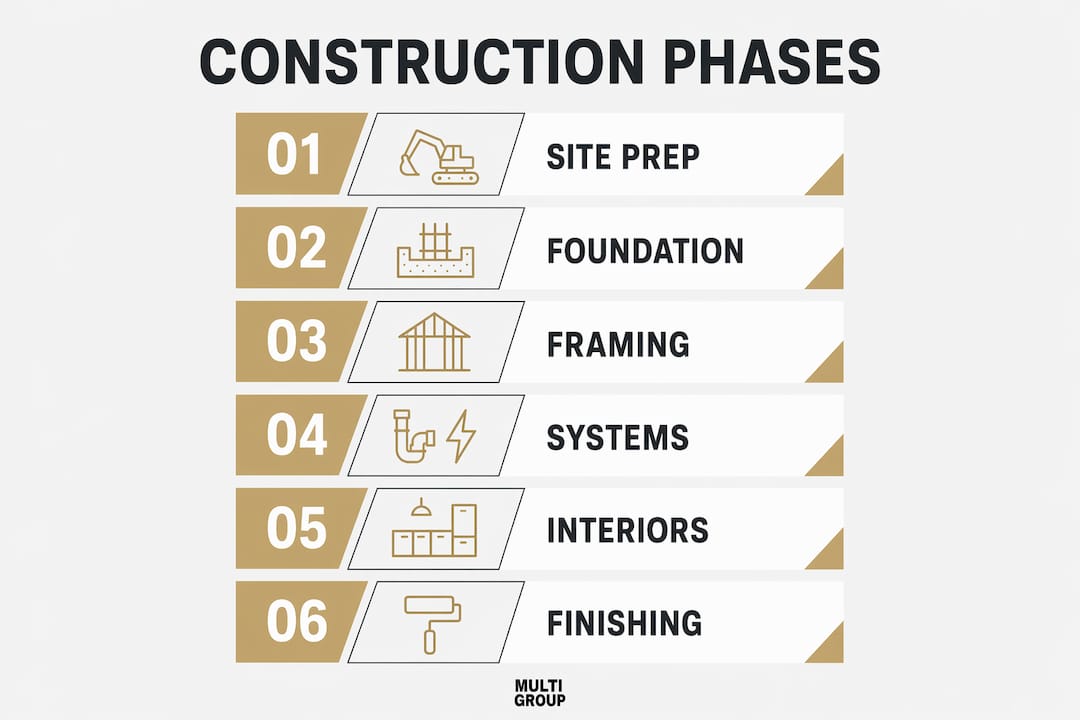
A standard residential build in Metro Vancouver follows six major phases. Custom home timelines typically range from 9 to 18 months depending on project complexity, permit timelines, and weather. Understanding each phase helps you anticipate decisions and avoid being caught off guard.
| Phase | Typical Duration | Key Activities |
|---|---|---|
| Site prep and foundation | 4 to 8 weeks | Excavation, formwork, concrete pour, waterproofing |
| Framing and roofing | 6 to 10 weeks | Structural framing, sheathing, roof installation, windows |
| Mechanical rough-ins | 4 to 8 weeks | Plumbing, electrical, HVAC installation and inspections |
| Insulation and drywall | 3 to 5 weeks | Insulation, vapor barrier, drywall hang and tape |
| Interior finishes | 8 to 14 weeks | Flooring, cabinetry, fixtures, painting, trim |
| Final inspections and move-in | 2 to 4 weeks | Punch list, occupancy permit, utility connections |
Several factors commonly push these timelines past their estimates:
- Permit delays. Municipalities like Surrey and Vancouver have high application volumes. Submit permit applications as early as possible, ideally before finalizing your contractor selection.
- Long-lead materials. Custom windows, specialty cabinetry, and engineered lumber can have 8 to 16 week lead times. Scheduling long-lead items early and maintaining a clean permit record significantly reduces project delays.
- Inspection scheduling. Rough-in inspections for plumbing and electrical must pass before walls close. Failed inspections add days or weeks to each phase.
- Weather. Concrete pours and exterior work in Metro Vancouver are weather-dependent from November through March.
Your role as a homeowner during construction is to make decisions quickly, attend scheduled site meetings, and avoid making verbal change requests. Every change to scope, materials, or layout should go through a written change order before work proceeds.
How do you manage budgets, contingencies, and cost pitfalls?
Construction costs in Metro Vancouver vary significantly by project type and finish level. Basic residential projects run approximately $1,800 to $2,500 per square meter, while premium builds reach $6,500 to $8,000 or more per square meter, excluding land, permits, and site preparation. These ranges reflect the wide gap between standard builder-grade finishes and high-end custom work.
| Cost Category | What It Includes | Commonly Excluded From Contracts |
|---|---|---|
| Hard construction costs | Framing, mechanical, finishes, labor | Landscaping, fencing, window treatments |
| Soft costs | Permits, design fees, surveys | Furniture, appliances, moving costs |
| Contingency | Unforeseen site conditions, changes | Upgrades chosen after contract signing |
Allowances for cabinetry and fixtures are frequently set too low in initial contracts, which leads to significant budget overruns during the finish stage. If your contract includes a $15,000 kitchen cabinet allowance and you select $28,000 worth of cabinetry, you owe the difference out of pocket at a time when your contingency fund may already be under pressure.
Pro Tip: Ask your contractor to itemize every allowance in the contract and research realistic costs for each category before signing. Adjusting allowances upfront is far less painful than absorbing overages mid-project.
Tracking spending against your budget weekly, not monthly, gives you time to course-correct before overruns become unmanageable. Authorize every change order in writing and keep a running total of approved changes against your contingency balance. This discipline, combined with a solid home construction guide, is what separates projects that finish on budget from those that do not.
What practical tips keep your build on track and accountable?
Quality control and accountability during construction depend on documentation and consistent communication. The following practices protect your investment at every stage of the build.
- Get everything in writing. Verbal agreements offer no reliable recourse. Warranties, timelines, material specifications, and change orders must all be documented in signed contracts or written amendments.
- Document punch-list items with dated photos and video. Visual records of deficiencies are far more effective than blue tape alone when following up on repairs or filing warranty claims.
- Schedule two formal walk-throughs. Conduct one before drywall closes to verify rough-in work, and one at substantial completion to document all outstanding items.
- Prepare for disruption. If you are living on-site during a renovation in Coquitlam or Richmond, plan for dust, noise, limited access to kitchens and bathrooms, and unpredictable daily schedules.
- Track your occupancy permit. You cannot legally move in until the municipality issues an occupancy permit. Confirm this milestone is on your contractor's schedule and follow up proactively.
"The homeowners who have the smoothest builds are the ones who treat documentation as a habit, not a reaction. They photograph everything, confirm every decision in writing, and stay engaged without micromanaging. That combination builds trust with the contractor and protects the homeowner at the same time."
Staying engaged throughout the project does not mean hovering on-site daily. It means reviewing weekly reports, attending scheduled meetings, and responding to contractor questions within 24 hours so decisions never stall the schedule.
Key takeaways
A successful residential build in Metro Vancouver requires early goal clarity, a fully loaded budget with contingency, a licensed and well-vetted team, and consistent written documentation from contract to move-in.
| Point | Details |
|---|---|
| Budget before you design | Include permits, site prep, landscaping, and a 10 to 20% contingency before finalizing any contract. |
| Vet your team thoroughly | Verify licensing, insurance, and references specific to your project type and municipality. |
| Know the construction phases | A standard Metro Vancouver build runs 9 to 18 months across six distinct phases, each with its own inspections. |
| Watch your allowances | Underestimated allowances for cabinetry and fixtures are a leading cause of late-stage budget overruns. |
| Document everything | Written agreements, dated photos, and signed change orders are your primary tools for accountability. |
What I have learned from managing Metro Vancouver residential builds
After working through dozens of residential projects across Burnaby, Surrey, North Vancouver, and Richmond, the pattern is consistent: the builds that go smoothly are the ones where the homeowner did the hard thinking before construction started. Not during framing. Not when the cabinetry quote comes in. Before.
The single most common mistake I see is treating the budget as a ceiling rather than a plan. Homeowners approve a contract number, assume that is the final cost, and then face a cascade of allowance upgrades, change orders, and excluded costs that push the total 15 to 25% higher. The contingency fund is not pessimism. It is the most realistic line item in the entire budget.
I also think the industry undersells the value of a good project manager. Most homeowners focus on finding the right architect or the right builder, which matters. But the person coordinating between those two, tracking the schedule, and catching problems before they become expensive is often the most important hire on the project. Construction management skills that balance technical knowledge with communication are what keep a project moving when trades conflict or materials arrive late.
Finally, do not underestimate Metro Vancouver's regulatory environment. Permit timelines, zoning restrictions, and inspection requirements vary meaningfully between municipalities. A contractor who builds regularly in Vancouver proper may not know the specific requirements in Coquitlam or Delta. Local experience is not a bonus. It is a qualification.
— Momo
How Multigroup supports your Metro Vancouver residential build
Multigroup Contracting brings licensed, insured general contracting expertise to residential and commercial projects across Metro Vancouver, including Burnaby, Richmond, Surrey, Coquitlam, and North Vancouver. Whether you are planning a new custom home, a full interior renovation, or a complex tenant improvement, Multigroup manages permits, scheduling, subcontractor coordination, and quality control from start to finish. The team's hands-on approach means homeowners get a single point of accountability throughout the project, not a revolving door of trades to manage independently. Explore Multigroup's residential construction services or contact the team directly to discuss your project scope, timeline, and budget. Reach Multigroup at 778-819-5933, info@multigroup.ca, or multigroup.ca.
FAQ
What is included in a residential build planning guide?
A residential build planning guide covers goal setting, budgeting, permit applications, team selection, construction phases, and post-build inspections. It gives homeowners a structured sequence of decisions to follow from concept through move-in.
How long does a residential build take in Metro Vancouver?
Custom home construction in Metro Vancouver typically takes 9 to 18 months, depending on project complexity, permit timelines, and finish level. Permit delays and long-lead materials are the most common causes of schedule extensions.
How much should I budget for contingency on a residential build?
Set aside 10 to 20% of your total construction budget as a contingency reserve. This covers unforeseen site conditions, design changes, and material cost increases that are common in Metro Vancouver projects.
Do I need a permit for a residential renovation in Metro Vancouver?
Most structural, electrical, plumbing, and mechanical work requires a building permit in Metro Vancouver municipalities. Requirements vary by city, so confirm with your local planning department in Vancouver, Burnaby, Surrey, or Richmond before starting work.
What questions should I ask a contractor before hiring them?
Ask about their licensing and WorkSafeBC coverage, references from comparable projects, their change-order process, and how they communicate with homeowners. Review a detailed contractor interview guide to prepare for these conversations before signing any contract.