
TL;DR:
- Many Metro Vancouver property owners invest heavily in lavish renovations expecting high payoffs, but simpler upgrades often deliver better returns.
- Understanding renovation ROI and local market nuances helps property owners avoid costly over-improvements and align projects with neighborhood value ceilings.
Many Metro Vancouver property owners spend heavily on lavish renovations expecting big paydays at resale, only to discover the market rewards simpler upgrades far more generously. Renovation ROI is the percentage of your renovation costs you recoup through increased property value, and knowing how to calculate it before you break ground is what separates profitable renovations from expensive regrets. This guide cuts through the noise to show homeowners and commercial property owners exactly which projects deliver real returns, how to measure success, and how to avoid the costly mistakes that erode investment gains right here in Metro Vancouver.
Table of Contents
- What is renovation ROI and why does it matter?
- Residential renovation ROI: What projects pay off?
- Commercial properties: Calculating ROI for business renovations
- Maximizing your renovation returns: Local wisdom and pitfalls
- Renovation ROI: What most guides miss for Vancouver owners
- Ready to upgrade? Get expert support for your Vancouver renovation
- Frequently asked questions
Key Takeaways
| Point | Details |
|---|---|
| ROI is percentage-based | Renovation ROI measures what portion of your renovation spend you recoup via property value boost. |
| Not all projects pay equally | Simple exterior upgrades usually deliver higher returns than extensive interior remodels. |
| Local market matters | Metro Vancouver’s real estate climate and buyer trends influence which renovations pay back best. |
| Avoid over-improvement | Spending more than 5% of your home’s value on any one project often leads to diminishing returns. |
| Enjoyment counts too | Don’t overlook quality of life when planning renovations—ROI isn’t just about resale. |
What is renovation ROI and why does it matter?
Renovation ROI is not just a number for house flippers. It is a practical decision-making tool for any property owner who wants to spend wisely. At its core, renovation ROI is calculated as (value added / cost) x 100. If you spend $20,000 on a kitchen update and it adds $24,000 to your home's value, your ROI is 120%. That sounds straightforward, but in practice, most owners skip this math entirely.
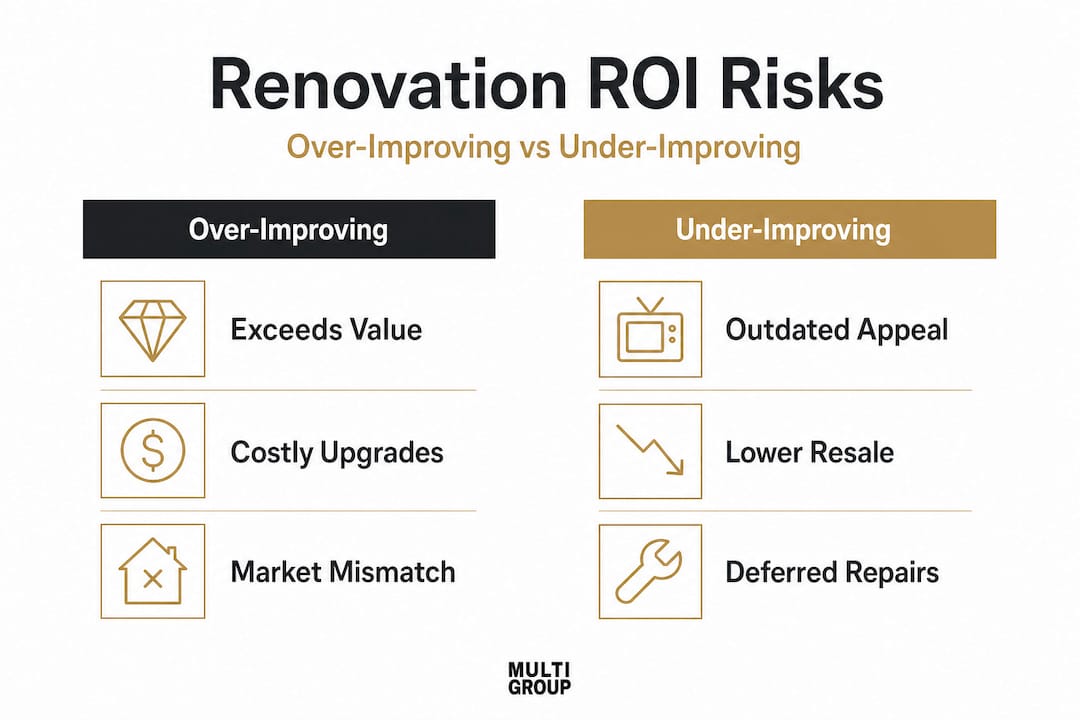
Understanding why ROI matters comes down to two key risks. First, over-improvement: spending more on renovations than the surrounding market will ever support. Second, misaligned priorities: pouring money into high-cost projects that buyers in your specific neighborhood do not actually value. Both mistakes are common, and both are avoidable.
Metro Vancouver's real estate market adds additional layers of complexity. High land values, strict building codes, and a diverse buyer demographic mean that not all renovation data from national reports translates directly. Local buyer expectations, neighborhood comparable sales (commonly called "comps"), and proximity to transit or schools all influence how much added value a renovation can realistically deliver. That is why understanding the benefits of renovation goes beyond resale figures alone.
Here is a simple reference for how renovation ROI tiers are generally categorized:
| ROI range | Project category | Example |
|---|---|---|
| Over 150% | High-impact exterior | Garage door replacement |
| 80% to 150% | Strategic interior | Minor kitchen remodel |
| 50% to 80% | Moderate improvement | Bathroom refresh |
| Under 50% | Low-return luxury | High-end pool addition |
"Renovation decisions made without local market data are often the most expensive ones. The numbers tell a story, but only when you read them in the right context."
The table above is a useful baseline, but it should be paired with local appraisals and contractor insights. A project in one Metro Vancouver neighborhood may return far more than the same work done in another part of the region.
Residential renovation ROI: What projects pay off?
With the basics defined, let's get practical about which residential renovations actually pay off and why. The data here may surprise you. Many property owners assume luxury additions like a new master suite or a wine cellar will attract premium offers. The reality is quite different.
According to 2025 Cost vs. Value data, the top-performing projects in the United States include garage door replacement at 267% ROI, manufactured stone veneer at 207%, and minor kitchen remodels returning up to 113%. These are not glamorous renovations. They are focused, cost-efficient upgrades that immediately improve curb appeal and daily functionality. The Pacific region leads US ROI, with exterior projects consistently outperforming interior ones, which strongly reflects what Metro Vancouver contractors observe locally.
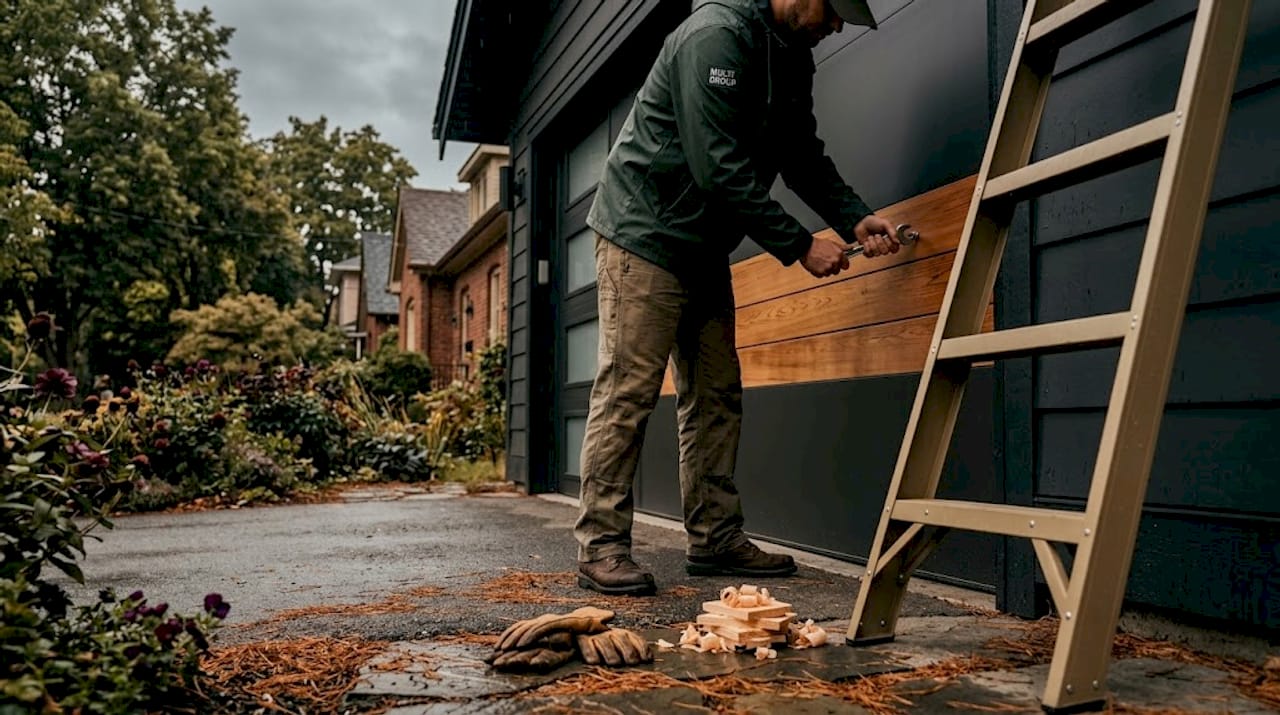
Why do exterior projects perform so well? Because first impressions directly influence buyer psychology and offer acceptance rates. A prospective buyer who pulls up to a property with an attractive facade, clean siding, and a modern garage door is already emotionally engaged before stepping inside. That engagement translates to stronger offers and faster sales.
Here is a comparison of common residential renovation projects across ROI performance levels:
| Project | Estimated cost (CAD) | Typical ROI range | Best use case |
|---|---|---|---|
| Garage door replacement | $2,500 to $5,000 | 200% to 267% | All home types |
| Manufactured stone veneer | $10,000 to $20,000 | 180% to 207% | Detached homes |
| Minor kitchen remodel | $15,000 to $30,000 | 90% to 113% | Pre-sale prep |
| Major bathroom renovation | $25,000 to $50,000 | 55% to 70% | Long-term owners |
| Primary suite addition | $80,000 to $150,000 | 40% to 55% | Larger properties |
Key factors that influence your residential ROI in Metro Vancouver include:
- Neighborhood ceiling: Your home's value cannot exceed what comparable homes in your area sell for, no matter how premium your finishes are.
- Buyer demographic: Younger buyers and families in Metro Vancouver often prioritize functional kitchens and energy-efficient features over decorative upgrades.
- Permit compliance: Renovations without proper permits can reduce property value and create legal complications at the point of sale.
- Climate suitability: Materials and systems suited to Metro Vancouver's wet climate, such as moisture-resistant siding and proper drainage, tend to hold their value better over time.
Understanding the full range of home renovation types available to you is the first step toward building a smart renovation plan. It is also worth reviewing a complete Vancouver renovation guide to align project timelines and budgets with realistic outcomes.
Pro Tip: Before committing to any residential renovation, get a current appraisal of your home and identify the gap between your property's value and the neighborhood ceiling. That gap tells you exactly how much renovation spending the market will realistically support.
Commercial properties: Calculating ROI for business renovations
Homeowners are not the only ones tracking ROI. Commercial property owners need a distinct approach, and the metrics are different. For residential renovations, ROI is largely about increased resale value. For commercial properties, the primary measure is Net Operating Income, commonly referred to as NOI.
NOI is the revenue a property generates after operating expenses but before taxes and financing costs. When you renovate a commercial property to attract higher-quality tenants, reduce energy expenses, or improve occupancy rates, that improvement flows directly into NOI, which then increases the property's overall market value. This is a critical distinction for any Metro Vancouver business owner or investor.
According to RBC Royal Bank's analysis of commercial retrofits, HVAC upgrades can reduce energy consumption by 20% to 40%, and applicable tax credits can reach up to 30% of project costs. When you factor in those savings alongside increased rental income, the total return on a commercial renovation can be significantly stronger than residential equivalents.
Here is how commercial renovation ROI typically breaks down by project type:
| Renovation type | Primary ROI driver | Typical payback period |
|---|---|---|
| HVAC and energy systems | Utility savings, tax credits | 5 to 8 years |
| Tenant improvements | Higher rents, lease renewals | 2 to 4 years |
| Facade and exterior updates | Occupancy rates, curb appeal | 3 to 5 years |
| Accessibility upgrades | Compliance, broader tenant pool | 3 to 6 years |
| Common area modernization | Tenant retention, premium positioning | 4 to 7 years |
When planning a commercial renovation for maximum ROI, follow this sequence:
- Audit current operating costs. Identify the biggest expense categories, typically energy, maintenance, and tenant turnover, and prioritize renovations that target those directly.
- Assess market rental rates. Determine what comparable properties in Metro Vancouver charge per square foot and identify the gap between your current rates and market potential.
- Model the NOI impact. Project how proposed renovations will affect both income (rents) and expenses (utilities, maintenance) to calculate the realistic return.
- Factor in incentives and credits. BC Hydro, FortisBC, and federal programs offer rebates and credits for energy-efficient upgrades that can substantially improve your project's ROI.
- Consult your contractor on phasing. Phased renovations allow you to maintain tenant occupancy and cash flow while upgrading, which reduces the income gap during construction.
Vancouver's growing emphasis on sustainability and green building standards makes energy-efficient commercial renovations particularly valuable. Properties that meet current energy benchmarks attract institutional tenants, support premium rents, and align with the city's long-term regulatory direction.
Pro Tip: When evaluating a commercial renovation, calculate your break-even period alongside total ROI. A project with a 150% return that takes 15 years to break even may be less attractive than a 90% return project that pays back within four years and frees up capital for additional investments.
For detailed strategies tailored to local conditions, explore these resources on Metro Vancouver commercial strategies and commercial best practices.
Maximizing your renovation returns: Local wisdom and pitfalls
Now, let's turn all this number crunching into action with the smartest strategies and avoidable pitfalls for Metro Vancouver owners.
One of the most reliable rules in renovation investment is the 5% guideline from Investopedia: cap your renovation spend at approximately 5% of your property's value per project to avoid over-improvement. On a $1.2 million home, that means limiting any single renovation to roughly $60,000. Exceeding this threshold rarely results in proportional value gains, especially in markets where comps set an effective ceiling on what buyers will pay.
Smart strategies for maximizing renovation ROI in Metro Vancouver include:
- Prioritize structural and systems work first. Buyers and appraisers discount properties with deferred maintenance, even if the aesthetics are impressive.
- Choose materials aligned with local climate. Fiber cement siding, metal roofing, and composite decking perform well in Metro Vancouver's wet climate and require less maintenance over time.
- Renovate in logical sequence. Completing mechanical systems before cosmetic work prevents costly rework and keeps projects on schedule.
- Work with a contractor who knows the permit process. Delays at the permitting stage are one of the most common budget killers in Metro Vancouver. A contractor experienced with local building departments can significantly reduce those risks.
- Track both financial and livability ROI. Even if a renovation does not maximize resale value, it may deliver meaningful improvements to comfort, energy costs, or daily convenience. Both forms of return matter.
Common pitfalls that cost Metro Vancouver property owners money:
- Ignoring neighborhood comps. Installing $80,000 kitchens in neighborhoods where homes sell for $900,000 is a reliable way to destroy ROI.
- Skipping permits to save money. Unpermitted work can force costly remediation at the time of sale and may expose owners to liability.
- Over-customizing to personal taste. Highly personalized finishes rarely align with broader buyer preferences and often require buyers to budget for replacement.
- Neglecting regular maintenance. Small, ongoing maintenance investments protect the value of past renovations. Deferring maintenance accelerates depreciation.
"The best-performing renovations in Metro Vancouver are almost always the ones that solve a real problem the property has, not the ones that chase a trend."
For project management insights that help you stay on time and within budget, review these project management tips for renovating property. If you are considering premium upgrades, understanding high-end renovation ROI will help you calibrate expectations accurately.
Renovation ROI: What most guides miss for Vancouver owners
Most renovation ROI guides focus almost exclusively on resale value. That framing misses a significant portion of what makes a renovation financially valuable, particularly for Metro Vancouver property owners who may hold their properties for extended periods or use them to generate rental income.
The honest truth, shaped by direct experience in Vancouver's construction market, is this: some of the most profitable renovation decisions we see are not the ones that scored highest on a national ROI chart. They are the ones that were correctly timed, appropriately scaled, and matched to the specific financial goals of the owner.
An investor who renovates a secondary suite to generate $2,400 per month in rental income may see a return on that renovation within two to three years, outperforming any resale-focused upgrade in percentage terms. A commercial tenant improvement that locks in a five-year lease at a 15% premium over market rate delivers compounding value that a simple cost vs. value calculation does not capture.
Vancouver's local context also matters more than most national reports acknowledge. Metro Vancouver's climate, its density-driven housing policies, its aging housing stock, and its increasingly strict energy performance requirements all shape which renovations truly deliver value here. A renovation strategy built on national averages without local calibration is a guess, not a plan.
Chasing the "best" ROI project on a national list can actually blind owners to better opportunities. The right renovation is the one that aligns with your financial timeline, your property type, your tenant base, and your exit strategy. Staying current on Vancouver renovation trends is one of the most practical ways to keep that alignment sharp as the market evolves.
Ready to upgrade? Get expert support for your Vancouver renovation
Knowing which renovations deliver strong returns is only part of the equation. The other part is executing them with precision, on time, and within budget.
Multigroup Contracting brings hands-on expertise to residential and commercial renovation projects across Metro Vancouver. From minor kitchen updates to full commercial tenant improvements, our team manages every detail including permits, scheduling, trades coordination, and quality control. We help property owners translate renovation goals into realistic budgets and timelines that protect their investment from the start. Whether you are preparing a home for sale, optimizing a commercial property's income potential, or upgrading a space for long-term enjoyment, we deliver the craftsmanship and project management discipline that keeps your ROI on track. Visit multigroup.ca to learn more and start planning your next project with a team that knows Vancouver's market from the ground up.
Frequently asked questions
How do you calculate renovation ROI for a home project?
Renovation ROI is calculated as (value added / cost) x 100, so divide the estimated value increase by the total project cost and multiply by 100 to get your ROI percentage.
Which renovation projects give the highest ROI in Metro Vancouver?
Exterior improvements consistently outperform interior renovations locally. Garage door replacement delivers 267% ROI and manufactured stone veneer reaches 207%, with the Pacific region leading all US regions for exterior project returns, a pattern that closely mirrors what Metro Vancouver contractors observe.
What's different about ROI for commercial renovations?
Commercial renovation ROI is primarily measured through improvements to Net Operating Income rather than resale value, focusing on energy savings, higher rental rates, and reduced operating expenses to generate returns.
How do you avoid over-improving your property when renovating?
The most reliable guideline is to cap renovation spending at 5% of the property's total value per project, which prevents investments that exceed what the local resale market will realistically return.
Can renovating for personal enjoyment offer good ROI?
Yes, resale value is not the only valid measure of return. Renovations that reduce energy costs, improve daily comfort, or enhance functional space deliver meaningful financial and quality-of-life value even when the immediate resale uplift is modest.