
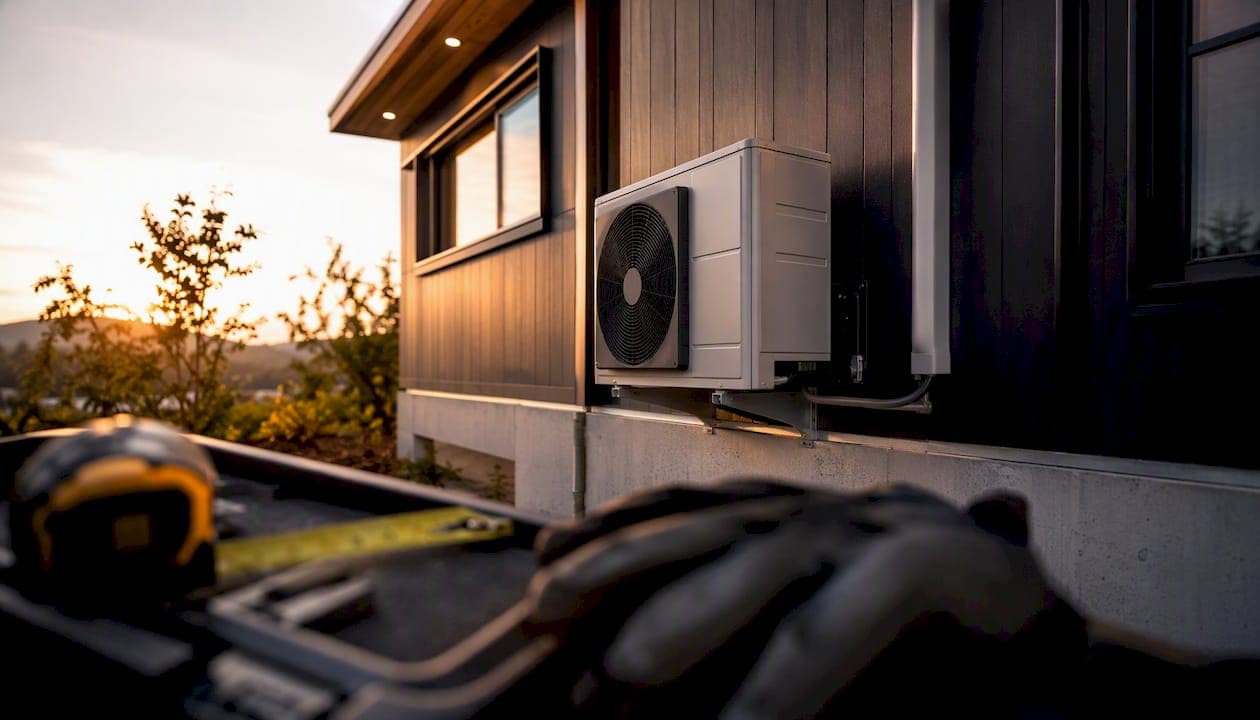
Vancouver homeowners can stack provincial, utility, and federal incentives to significantly reduce the cost of energy-efficient upgrades. The three main streams that apply in Metro Vancouver are the Better Homes BC Home Renovation Rebate Program (delivered through BC Hydro and FortisBC), the Better Homes BC Energy Savings Program (income-tiered), and the federal Canada Greener Homes Initiative with its affiliated affordability programs. The Canada Greener Homes Loan portal closed to new applications on October 2, 2025, so confirm current federal financing options before planning your budget.
Before any work starts, run a rebate eligibility check on the Better Homes BC and Canada Greener Homes websites, confirm permit requirements with your municipality, and verify your contractor holds the registrations each programme requires.
Common upgrades and the programmes that fund them:
- Air-source or ground-source heat pump: Home Renovation Rebate (up to $4,000), Energy Savings Program (income-tiered top-ups), Oil to Heat Pump Affordability program
- Attic/wall/floor insulation: Home Renovation Rebate (attic insulation up to $900), Canada Greener Homes grants
- Windows and exterior doors: Home Renovation Rebate (Tier 2 windows up to $2,000 total), Canada Greener Homes grants
- Heat-pump water heater: Home Renovation Rebate, Canada Greener Homes grants
Key takeaways
Vancouver homeowners can recover thousands of dollars on energy-efficient upgrades by combining Better Homes BC rebates with federal Canada Greener Homes supports, provided the right sequence of assessments, permits, and registered installers is followed before work begins.
| Point | Details |
|---|---|
| Start with the assessment | Book a pre-retrofit energy assessment before scheduling any contractor; claims are rejected if work starts first. |
| Know your programme caps | Home Renovation Rebate pays up to $4,000 for a whole-home heat pump, up to $900 for attic insulation, and up to $2,000 for Tier 2 windows. |
| Check income-based streams | The Energy Savings Program offers tiered rebates; Level 3 can cover the full cost for eligible households switching from fossil-fuel heating. |
| Loan portal is closed | The Canada Greener Homes Loan portal closed October 2, 2025; verify current federal financing options before budgeting. |
| Use Multigroup for compliant delivery | Multigroup handles permits, registered installer coordination, and documentation across Metro Vancouver to keep rebate claims on track. |
Table of Contents
- What renovation rebates are available in Vancouver right now?
- Who qualifies in Vancouver: eligibility rules and special streams
- How to apply: step-by-step process and typical timeline
- How much can you expect back, and what will you still pay?
- How to find and vet a Vancouver contractor for rebate-compliant work
- Why aligning your project scope with rebate rules saves money
- Multigroup supports rebate-compliant renovations across Metro Vancouver
- Sources
- FAQ
What renovation rebates are available in Vancouver right now?
Each programme operates independently, with its own administrator, eligible upgrades, and application process. Understanding who runs each one prevents you from applying to the wrong stream or missing a top-up.
Better Homes BC Home Renovation Rebate Program
Administered jointly by BC Hydro and FortisBC under the Better Homes BC umbrella, this is the primary provincial/utility rebate for most Vancouver homeowners. Updated requirements effective for invoices dated on or after May 15, 2026 set the following headline amounts:
Up to $4,000 back on a whole-home heat pump replacement through the Home Renovation Rebate Program alone — before any federal top-up.
Stacking with federal grants is permitted, but you cannot claim the same cost twice across programmes. Keep invoices itemised by upgrade line.
Better Homes BC Energy Savings Program
This income-tiered stream targets low-to-moderate-income households. The Energy Savings Program uses explicit income thresholds to determine Level 1, 2, or 3 rebate eligibility, with Level 3 reserved for ground-oriented homes switching from fossil-fuel heating (gas, propane, or oil) to an electric heat pump. Income-qualified households can often have the full cost of recommended retrofits covered, removing the out-of-pocket barrier that stops many homeowners from acting.
Canada Greener Homes Initiative and affordability streams
The federal Canada Greener Homes Initiative includes several streams relevant to Vancouver homeowners. The Oil to Heat Pump Affordability program offers grants up to $10,000, and some co-delivered provincial streams reach up to $25,000 in grants or direct installs. Amounts and delivery vary by province and programme partner, so confirm BC-specific values on the NRCan site.
The Canada Greener Homes Loan offered interest-free financing between $5,000 and $40,000 on a 10-year repayment term, one loan per eligible property. The loan portal closed October 2, 2025; check NRCan for any reopening or replacement programme before building it into your financing plan.
NRCan's January 2026 progress update reported an average grant of approximately $4,439 per household across hundreds of thousands of completed retrofits, which signals both the programme's scale and the realistic value most homeowners receive.
Who qualifies in Vancouver: eligibility rules and special streams
Standard eligibility requirements
Most Home Renovation Rebate applicants must meet all of the following:
- Own and occupy the home as a primary residence
- Hold an active BC Hydro or FortisBC account at the property
- Use a contractor with a valid GST number and a BC business licence for the trade; self-installation is not eligible
- Install products that appear on the relevant NRCan or Better Homes BC eligible-product lists
There is no minimum home age requirement for the Home Renovation Rebate, but some federal streams specify the home must have been built before a certain year. Confirm this on the programme page for your specific upgrade.
Income-based streams
The Energy Savings Program's income thresholds are structured by household size. Households below the Level 1 threshold qualify for the highest rebate tier; those between Level 1 and Level 3 thresholds receive graduated support. Level 3 rebates apply only to ground-oriented homes (detached, semi-detached, row houses) switching from a fossil-fuel heating system to an electric heat pump. If your household income is near a threshold boundary, apply early in the calendar year when annual income figures are clearest.
Special cases
- Strata and multi-unit buildings: individual unit owners in strata buildings may qualify for some rebates, but common-area upgrades typically require strata council involvement. Confirm with Better Homes BC before proceeding.
- Rental units: some programmes require owner-occupancy; rental properties may not qualify for all streams. Check each programme's specific rules.
- Northern/off-grid adjustments: the Oil to Heat Pump Affordability program and some loan provisions historically offered adjusted retrofit amounts for northern and off-grid communities, including initial advance increases. Vancouver falls outside these zones, but homeowners in remote parts of Metro Vancouver should verify.
- Leased or financed equipment: heat pumps or water heaters acquired through a lease or third-party financing arrangement may not qualify. You generally need to own the equipment outright.
Pro Tip: Never start installation before completing any required pre-retrofit energy assessment. Programme administrators routinely reject claims where work began before the assessment date. Book the assessment first, get the report in hand, then schedule your contractor.
How to apply: step-by-step process and typical timeline
The application sequence
- Check eligibility on the Better Homes BC and Canada Greener Homes websites for your specific upgrade and home type.
- Book a pre-retrofit energy assessment if required (mandatory for most federal Greener Homes streams; check whether your provincial stream also requires one).
- Select a registered installer from the Better Homes BC or NRCan approved-contractor lists for your upgrade type.
- Obtain municipal permits for upgrades that require them (heat pump installations and significant structural work typically do in Vancouver).
- Complete the installation and collect all required documentation before the contractor leaves the site.
- Book a post-retrofit verification if required, and submit your application with all supporting documents within the programme's deadline window.
For a step-by-step renovation planning framework that covers permits and scheduling, the property renovation guide for Vancouver homes is a useful companion resource.
Typical timeline per step
| Step | Typical duration | Notes |
|---|---|---|
| Eligibility check | 1–2 days | Online; use official programme portals |
| Pre-retrofit energy assessment | 1–3 weeks to book | Registered energy advisor required |
| Contractor selection and quotes | 1–4 weeks | Verify registrations before signing |
| Municipal permit approval | 2–6 weeks | Varies by upgrade type and municipality |
| Installation | 1–5 days | Depends on upgrade scope |
| Post-retrofit verification | 1–3 weeks to book | Required for most heat pump claims |
| Rebate payment processing | 6–12 weeks after submission | Allow extra time during peak seasons |
Documents to collect
Keep originals and digital copies of: the pre- and post-retrofit assessment reports, the contractor invoice showing GST number and BC business licence number, product labels and manufacturer spec sheets (NRCan requires these for window product eligibility verification), and the municipal permit receipt where applicable.

How much can you expect back, and what will you still pay?
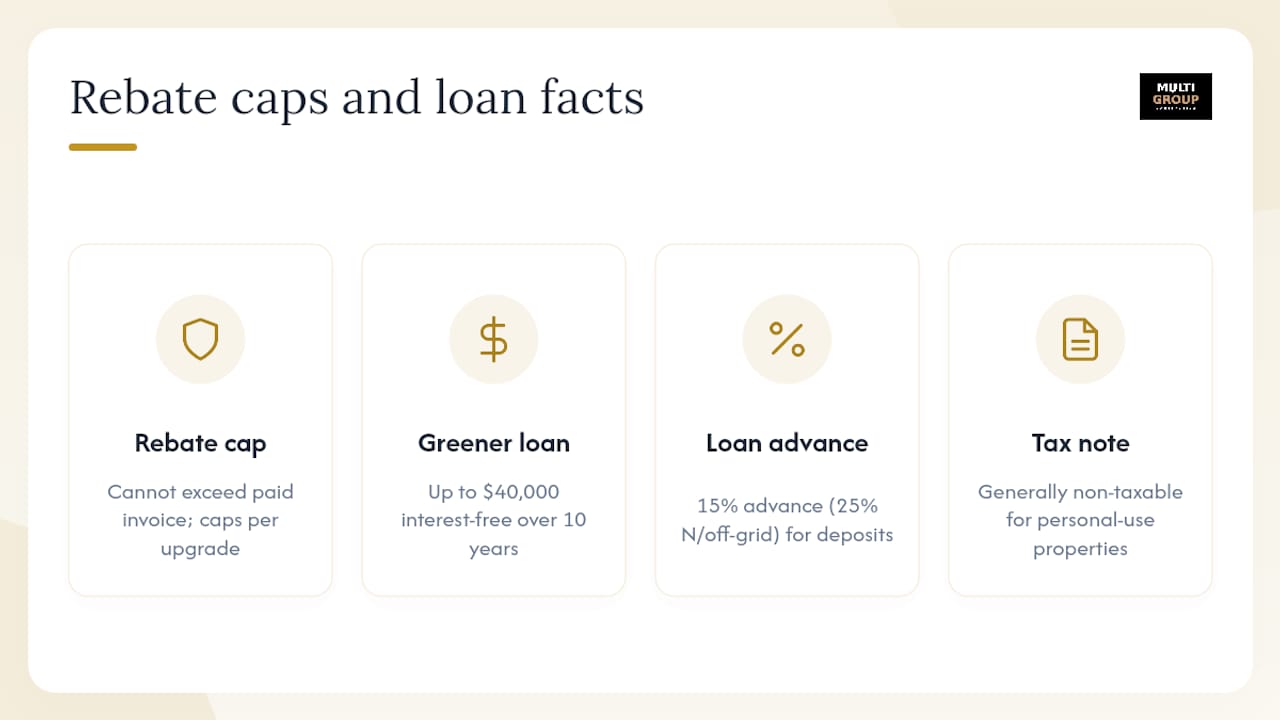
Rebates cannot exceed the amount on your paid invoice, and each programme caps amounts per upgrade type. Here is a realistic example for a Metro Vancouver single-family home:
These are ballpark figures. Get written quotes from at least two licensed contractors before finalising your budget. For a broader look at renovation financing options in Vancouver, including how to bridge the gap between rebate receipt and project payment, that guide covers the main loan types available to BC homeowners.
The Canada Greener Homes Loan offered up to $40,000 interest-free over 10 years — but the portal closed October 2, 2025. Confirm whether a replacement programme is available before counting on federal loan financing.
The Canada Greener Homes Loan historically allowed an initial advance of 15% of the loan amount (25% for northern/off-grid applicants) to cover contractor deposits. If a replacement programme launches with similar terms, that advance provision is worth factoring into your cash-flow planning.
Tax note: rebates and grants received by homeowners for personal-use properties are generally not considered taxable income in Canada. If the property has any business use, or if you are a landlord, confirm the tax treatment with a qualified accountant before filing.
For a detailed look at eligible retrofits and grant amounts under the federal programme, NRCan publishes per-category figures that feed directly into grant calculations.
How to find and vet a Vancouver contractor for rebate-compliant work
Choosing the wrong contractor is the single most common reason rebate applications fail. Programmes are specific: the installer must hold the right registrations, the invoice must contain the right details, and the work must follow the right sequence.
Licences and registrations to verify
- Valid BC business licence for the relevant trade (electrical, HVAC, insulation)
- GST number that appears on every invoice
- Registration as an approved installer on the Better Homes BC or NRCan programme list for your upgrade type
- Evidence of experience with permitted energy retrofits in Metro Vancouver
Questions to ask before signing
Ask the contractor: Which rebate programmes have you completed claims for in the past 12 months? Can you provide a sample invoice showing your GST and BC licence numbers? Will you coordinate the pre- and post-retrofit assessment scheduling? How do you handle permit submissions with the City of Vancouver or the relevant municipality?
Red flags
- Requests to split invoices or bill in a way that obscures the upgrade cost
- Insistence on starting work before your pre-retrofit assessment is complete
- Reluctance to provide product labels or manufacturer spec sheets
- No GST number or BC business licence on the quote
- Pressure to waive the permit process for upgrades that clearly require one
Ballpark CAD pricing for Metro Vancouver upgrades
These ranges reflect Metro Vancouver market conditions and vary with home size, access, and product selection. Always request written, itemised quotes. For context on current residential construction trends in Greater Vancouver, labour and material costs have shifted notably in 2026.
Heat pump installations in the City of Vancouver require both an electrical permit and a mechanical permit. Multigroup handles permit submissions and BC Building Code compliance as part of project management, which keeps the rebate documentation trail clean and avoids the delays that come from after-the-fact permit applications.
Why aligning your project scope with rebate rules saves money
The most expensive mistake Multigroup sees on retrofit projects is a homeowner who books a contractor first and asks about rebates second. By the time they realise a pre-retrofit assessment was required, or that their chosen product is not on the eligible list, the installation is already done and the rebate is gone.
Integrating rebate requirements into the project plan from day one changes the outcome. It means the assessment is booked before the contractor mobilises, the product selection is confirmed against the eligible-product list before purchase, and the permit is in hand before installation begins. That sequence is not bureaucratic overhead; it is the difference between recovering $4,000 or more on a heat pump project and recovering nothing.
Multigroup's project management approach covers permit handling, registered installer coordination, and pre/post-retrofit documentation as part of the scope, not as an afterthought. For homeowners who want to understand which building-system upgrades deliver the best energy payback alongside rebate value, the building systems upgrade guide lays out the rationale clearly.
Multigroup supports rebate-compliant renovations across Metro Vancouver
Vancouver homeowners who want to claim every dollar available from provincial and federal programmes need a contractor who understands the documentation requirements as well as the construction work itself.

Multigroup is a licensed Vancouver general contractor with direct experience in permitted energy retrofits, permit submissions, and the invoice and documentation standards that Better Homes BC and NRCan require. Services relevant to rebate-compliant projects include project management, permit handling, registered installer coordination, pre/post-retrofit documentation support, and BC Building Code compliance across all upgrade types.
Multigroup serves homeowners throughout Metro Vancouver, including Burnaby, Richmond, Surrey, Coquitlam, North Vancouver, West Vancouver, New Westminster, Langley, and Delta. Whether you are planning a commercial renovation in Vancouver or a residential energy retrofit, the process starts the same way: confirm eligibility before work begins, then build the project plan around the rebate requirements.
Contact Multigroup for a project quote or to discuss how your planned upgrades align with current rebate programmes. Confirm programme eligibility on Better Homes BC and Canada Greener Homes before committing to a scope or start date.
Sources
Verify current programme values, deadlines, and eligibility rules directly on these official pages before starting any project:
- Canada Greener Homes Initiative | Natural Resources Canada
- Canada Greener Homes Loan | CMHC
- Home Renovation Rebate Program requirements | Better Homes BC
Check these pages for any deadline changes or new programme announcements before finalising your project plan.
This article is general information, not a substitute for advice from a qualified financial advisor. Consult a qualified financial professional about your own circumstances before acting on anything here.
FAQ
What is the BC Home Renovation Rebate Program?
The Better Homes BC Home Renovation Rebate Program is a provincial/utility rebate delivered through BC Hydro and FortisBC that pays homeowners for installing eligible energy-efficient upgrades, including heat pumps (up to $4,000), attic insulation (up to $900), and Tier 2 windows (up to $2,000 total). Requirements were updated for invoices dated on or after May 15, 2026.
Is there a home renovation tax credit in BC or Canada?
Federal and provincial tax credits for home renovations are separate from rebate programmes. For a detailed breakdown of what qualifies and how to claim it, the home renovation tax credit guide for Canadians covers the main federal and provincial credit options currently available.
What is the free home renovation grant for seniors in BC?
Seniors may qualify for income-based streams under the Better Homes BC Energy Savings Program, which can cover the full cost of eligible retrofits for qualifying households. A dedicated senior home renovation tax credit guide outlines the additional credits and grants available specifically to older Canadians.
Can you stack provincial and federal rebates on the same project?
Yes, stacking is generally permitted provided you do not claim the same cost twice across programmes. Keep invoices itemised by upgrade, retain all product labels and assessment reports, and confirm stacking rules on each programme's official page before submitting.
Is the Canada Greener Homes Loan still available?
The Canada Greener Homes Loan portal closed to new applications on October 2, 2025. Check the NRCan and CMHC programme pages for current status or any replacement financing programme before planning your budget around federal loan support.