

TL;DR:
- Proper planning and task sequencing are crucial to avoid delays and budget overruns.
- Unexpected site conditions like asbestos or wiring issues require contingency planning and flexible schedules.
- Clear communication, documentation, and experienced local partners ensure a successful renovation project.
Renovation projects in Metro Vancouver have a way of growing beyond their original scope, budget, and timeline faster than most homeowners expect. Without a structured approach, even a straightforward kitchen update can spiral into months of delays and unexpected costs. This guide walks you through the proven phases of home renovation project management, from early planning through final inspection, so you can protect your investment and avoid the most common pitfalls. Whether you're tackling a full custom build or a targeted room refresh, these strategies apply directly to the realities of renovating in Metro Vancouver.
Table of Contents
- Understanding the renovation process: Phases and timeline
- Pre-renovation essentials: Planning, permits, and assembling your team
- Task sequencing: Avoiding costly rework and staying on schedule
- Tracking progress and adapting to surprises during your project
- Our perspective: What most guides miss about home renovation management
- Ready to manage your renovation with confidence?
- Frequently asked questions
Key Takeaways
| Point | Details |
|---|---|
| Map your renovation phases | Understanding each project phase helps prevent timeline surprises and budget blowouts. |
| Get permits and assemble your team early | Preparation cuts risk of major delays caused by paperwork and approvals. |
| Sequence tasks to avoid costly rework | Proper sequencing can prevent up to 35 percent of unnecessary expenses. |
| Use digital tools for real-time tracking | Digital twins and weekly check-ins make it easy to detect and adapt to project changes early. |
| Expect the unexpected | Buffer for delays and discoveries to keep your renovation calm and on track. |
Understanding the renovation process: Phases and timeline
Every successful renovation follows a predictable sequence of phases. Skipping or rushing any one of them creates problems that ripple forward and cost more to fix later. Core project management methodologies for homeowner renovations include structured 5-step processes: planning, team assembly, execution phases, progress tracking, and quality control. Knowing this framework before you start puts you in control.
Here's a breakdown of the standard renovation phases and their typical durations for a mid-size Metro Vancouver home project:
| Phase | Description | Typical duration |
|---|---|---|
| Planning and design | Goals, drawings, permits | 4 to 12 weeks |
| Demolition | Removal of existing materials | 1 to 2 weeks |
| Structural work | Framing, load-bearing changes | 1 to 4 weeks |
| Rough mechanicals | Electrical, plumbing, HVAC rough-in | 2 to 4 weeks |
| Insulation and drywall | Wall and ceiling enclosure | 1 to 3 weeks |
| Finishes | Painting, millwork, cabinetry, tile | 2 to 6 weeks |
| Flooring and final touches | Flooring install, fixtures, cleanup | 1 to 3 weeks |
Delays typically start in the planning phase and compound from there. A permit that takes three extra weeks pushes every subsequent trade back. Contractors who are already booked may not be available when you're finally ready, which creates scheduling gaps that stretch your timeline further.
Sequential discipline is the term professionals use to describe the practice of not starting a later phase before the earlier one is truly complete. It sounds obvious, but homeowners under time pressure often push contractors to start finishes before rough mechanicals are inspected. That shortcut almost always leads to costly rework.
Key risks to watch for in each phase:
- Planning: Incomplete drawings lead to permit rejections
- Demolition: Hidden conditions like mold or asbestos require remediation before proceeding
- Structural: Engineer sign-off delays can stall the entire project
- Rough mechanicals: Failed inspections require corrections before drywall can close
- Finishes: Material lead times, especially for custom cabinetry, can add 4 to 8 weeks
If you want to understand how current 2026 renovation trends are affecting timelines and material availability in Metro Vancouver, it's worth reviewing what's driving demand before you finalize your schedule.
Pre-renovation essentials: Planning, permits, and assembling your team
With the renovation process clarified, the next step is ensuring all prerequisites and paperwork are in place before a single wall comes down. This phase is where most homeowners underinvest their time, and it's where the most preventable problems originate.

Start by defining your project goals clearly. Separate your must-haves from your nice-to-haves and set a realistic budget with a 15 to 20 percent contingency buffer built in from the start. That buffer isn't pessimism. It's standard practice for any Metro Vancouver renovation.
Permits contribute to 20-50% of the renovation timeline. Strata approvals may take 2 to 4 weeks on top of city permit processing. Missing this step is one of the most common triggers for major project delays. Review the latest Vancouver permit tips to understand exactly what approvals your project requires before you book any trades.
Here's a comparison of the three most common project management approaches homeowners use:
| Approach | Best for | Key trade-off |
|---|---|---|
| DIY management | Small, low-complexity projects | High time commitment, risk of errors |
| Design-build firm | Full renovations, single point of contact | Higher upfront cost, streamlined process |
| Architect plus contractor split | Custom or complex builds | More control, more coordination required |
For most Metro Vancouver homeowners tackling renovations above $50,000, a design-build firm or experienced local contractor selection process is the most reliable path. The coordination savings alone often offset the management fee.
Documentation checklist before breaking ground:
- Signed contract with clear scope, payment schedule, and change order process
- Approved permits posted on site
- Strata approval letter (if applicable)
- Insurance certificates from all contractors
- Material specifications and lead time confirmations
- Agreed project schedule with milestone dates
Pro Tip: Always get your permit approval in hand before scheduling your demolition crew. Booking trades before permits are approved is one of the most common and costly sequencing mistakes homeowners make.
Task sequencing: Avoiding costly rework and staying on schedule
After planning your paperwork and professional team, it's crucial to map the right order of renovation phases. Proper task sequencing is not just about efficiency. It directly protects your budget.
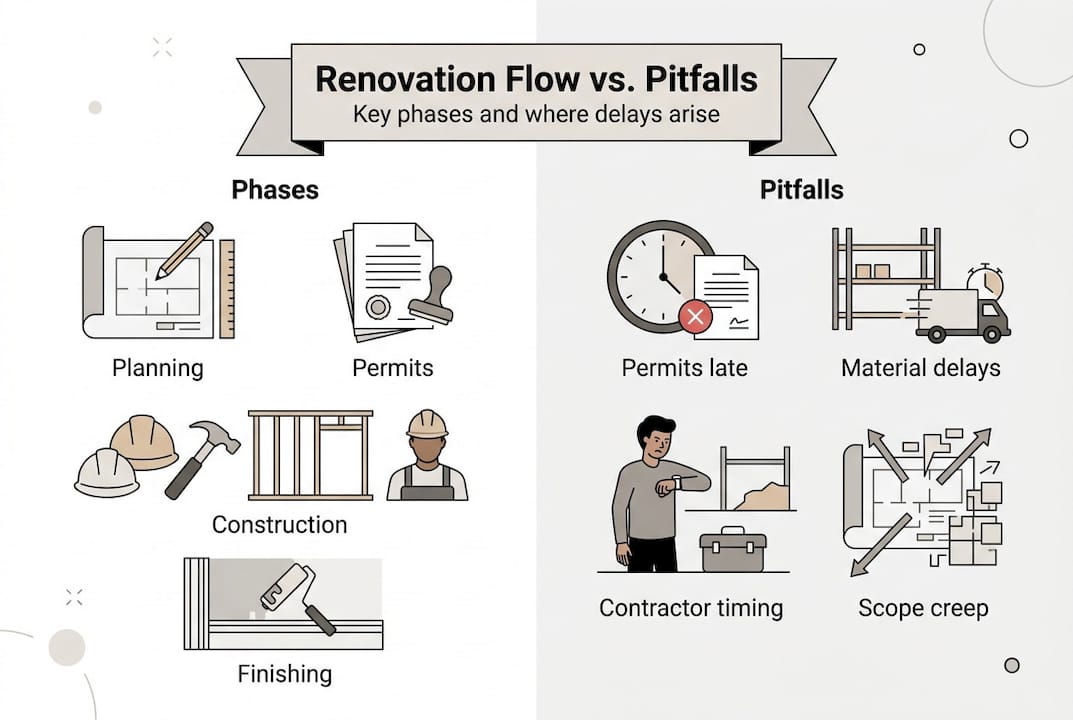
Logical ordering prevents 35% of budget overruns caused by rework. That's a significant number, and it reflects a very real pattern: finishing work gets damaged when mechanical trades come back to make corrections, or flooring gets scratched when heavy fixtures are installed afterward.
The correct general sequence for a home renovation is:
- Demolition and site preparation
- Structural modifications and framing
- Rough-in electrical, plumbing, and HVAC
- Inspections and approvals for rough mechanicals
- Insulation installation
- Drywall hanging, taping, and finishing
- Painting (prime and first coat)
- Cabinetry, millwork, and built-ins
- Tile and backsplash work
- Final painting coats
- Flooring installation
- Fixture and appliance installation
- Final inspections and touch-ups
"We've seen projects where flooring was installed before plumbing fixtures were set. One leak during fixture connection damaged brand-new hardwood and added three weeks and significant cost to the project. Sequence isn't optional."
To keep your contractors following the agreed sequence, include milestone sign-offs in your contract. Each phase should require written confirmation before the next begins. This creates accountability and gives you a paper trail if disputes arise.
Understanding kitchen and bath cost planning in advance also helps you sequence purchasing decisions correctly, so materials arrive just in time rather than sitting on site and getting damaged.
Tracking progress and adapting to surprises during your project
With your sequence mapped, you're ready to keep your renovation on track and respond effectively when surprises arise. And surprises will arise.
65% of projects in older homes overrun budgets by 15 to 25 percent due to unexpected discoveries like knob-and-tube wiring, asbestos, or structural issues. In Metro Vancouver, where much of the housing stock dates to the mid-20th century, this is a near-certainty on any significant renovation.
Digital tools like Matterport 3D digital twins reduce site visits and miscommunication during progress tracking. These tools let you review site conditions remotely, share progress with your design team, and document the state of the project at each milestone. Explore more digital renovation tools that experienced Vancouver contractors use to keep projects transparent.
Practical progress tracking habits:
- Weekly check-ins: Schedule a standing call or site visit every Friday to review completed work and confirm next week's plan
- Photo documentation: Photograph all rough-in work before it's covered by drywall
- Milestone sign-offs: Don't authorize payment for a phase until it passes inspection
- Change order log: Track every scope change in writing with cost and schedule impact noted
- Buffer weeks: Build two to three buffer weeks into your schedule for permit and inspection delays
Pro Tip: If your contractor discovers asbestos or knob-and-tube wiring, don't panic. These are manageable with the right remediation trades. The key is having a contingency budget and a flexible schedule so the discovery doesn't derail the whole project.
"The homeowners who handle surprises best are the ones who planned for them. A 15 percent contingency budget and a two-week schedule buffer turn a crisis into a minor adjustment."
Communication is the most underrated project management tool. Keep a shared document or project management app where all decisions, changes, and approvals are recorded. Verbal agreements disappear. Written records protect everyone.
Our perspective: What most guides miss about home renovation management
Most renovation guides focus on checklists and timelines, and those are genuinely useful. But after managing projects across Metro Vancouver for years, we've learned that checklists alone don't determine whether a renovation succeeds.
What actually separates smooth projects from chaotic ones is the quality of communication and the willingness to adapt. A perfectly sequenced plan still falls apart if the homeowner and contractor aren't aligned on expectations, or if no one is empowered to make fast decisions when something unexpected comes up.
Technology helps significantly. Tools that support future of construction tech adoption are making it easier to track progress, document conditions, and reduce miscommunication. But technology is only as effective as the team using it.
The most important thing you can do as a homeowner is stay engaged without micromanaging. Review progress weekly, ask questions, and make decisions promptly when your contractor needs input. Delayed decisions from homeowners are one of the top causes of schedule slippage that rarely gets mentioned in standard guides. Your responsiveness is part of the project management equation.
Ready to manage your renovation with confidence?
If this guide has shown you anything, it's that successful renovations in Metro Vancouver require more than good intentions. They require structured planning, proper sequencing, and experienced partners who know the local permit landscape and trade networks.

Multigroup Contracting brings full project management expertise to residential renovations across Metro Vancouver. From permit and approval guidance to on-site coordination and quality control, our team handles the complexity so you don't have to. Visit the renovation management experts at Multigroup Contracting to request a quote or learn more about how we support homeowners from first concept through final walkthrough.
Frequently asked questions
What are the biggest causes of renovation delays in Vancouver?
Permits and weather are the leading causes of delays in Metro Vancouver renovations, along with unexpected site discoveries. Weather-related delays are especially common from October through March.
How can I prevent budget overruns when managing my own project?
Careful planning, proper task sequencing, and building in a 10 to 15 percent budget buffer significantly reduce overspending risk. Logical sequencing and buffers prevent up to 35 percent of rework-related overruns.
What are digital twins and how do they help homeowners manage renovations?
Digital twins are 3D digital models of your renovation site that let you track progress remotely and reduce communication errors. Matterport twins support progress tracking and minimize the need for constant in-person site visits.
Do I need special approval if my home is in a strata or heritage zone?
Yes. Strata approvals typically add 2 to 4 weeks to your timeline, and heritage homes may face additional permit steps and material restrictions that require early planning.
Recommended
- Multigroup Contracting | Vancouver General Contractor – Commercial & Residential Construction
- Multigroup Contracting | Vancouver General Contractor – Commercial & Residential Construction
- Multigroup Contracting | Vancouver General Contractor – Commercial & Residential Construction
- Multigroup Contracting | Vancouver General Contractor – Commercial & Residential Construction