

TL;DR:
- A Vancouver permitting checklist lists required documents and steps property owners and developers must complete to obtain permits.
- Following the checklist and providing detailed, scaled plans helps avoid delays and costly rejections.
A permitting checklist for Vancouver projects is a structured list of mandatory documents and procedural steps that property owners, developers, and renters must complete to obtain construction or renovation permits. The Vancouver Building By-law is the primary regulatory foundation governing every permit in the city, from a single-family home addition to a full commercial tenant improvement. Getting this checklist right before you submit saves weeks of back-and-forth with the City. This guide covers mandatory documents, 2026 fee structures, application steps, and how requirements differ by project type.
1. What does a permitting checklist Vancouver project require?
Every Vancouver permit application starts with a core set of documents. Residential building permits require a completed Development/Building Permit Application form, owner or agent authorization, a scaled site plan, a detailed description of work, an estimated construction value, and full contact information. Missing any one of these items triggers an incomplete submission notice, which restarts your review clock.
The City of Vancouver publishes document checklists on its website to help applicants confirm submission completeness before they submit. Using these checklists before your first visit to the permit counter is the single most effective way to avoid delays. Multigroup recommends downloading the current checklist directly from the City's website each time, since requirements are updated regularly.
2. What are the mandatory documents in the Vancouver permitting checklist?
The following documents are required for most Vancouver building permit applications:
- Completed Development/Building Permit Application form — signed by the owner or authorized agent
- Owner/agent authorization letter — required when a contractor or consultant submits on the owner's behalf
- Scaled site plan — shows property boundaries, existing structures, setbacks, and proposed work footprint
- Detailed description of work — includes scope, materials, finishes, and structural changes
- Estimated construction value — used to calculate permit fees; must be realistic and defensible
- Contact information — full legal name, mailing address, phone, and email for owner and agent
- Drawings and specifications — architectural, structural, mechanical, and electrical drawings depending on project scope
A detailed work description that specifies materials and finishes reduces the likelihood of a reviewer requesting clarification. Vague descriptions like "interior renovation" are the most common reason for incomplete application notices. Write out exactly what is being removed, added, or altered.
Pro Tip: Prepare your site plan at a recognized scale such as 1:200 or 1:500. Hand-drawn plans that are not to scale are rejected at intake without review.
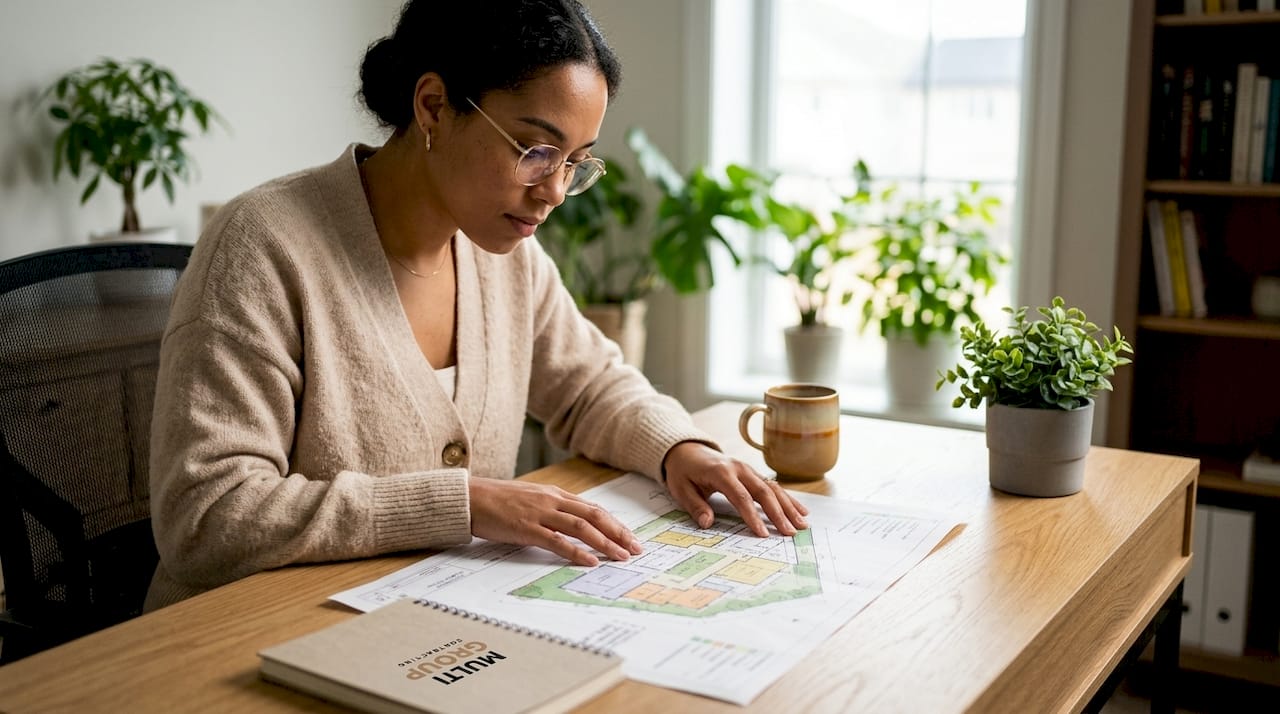
For residential renovation projects, the homeowner's permit guide published by Multigroup provides a practical breakdown of which drawings are required at each stage of the application process.
3. How to navigate Vancouver's permitting fee structure in 2026
Vancouver permit fees are calculated based on project valuation tiers. The 2026 fee schedule applies a base fee to the first $5,000 of construction value, then adds incremental charges for each additional dollar of value above that threshold. The result is that a $500,000 commercial renovation carries a meaningfully higher permit fee than a $50,000 residential addition.
The table below summarises the general fee tier structure from the 2026 Development and Building Permit fee schedule:
| Construction value | Fee structure |
|---|---|
| Up to $5,000 | Flat base fee applies |
| $5,001 to $100,000 | Base fee plus incremental rate per $1,000 |
| $100,001 to $500,000 | Higher base fee plus reduced incremental rate |
| Over $500,000 | Highest base fee plus lowest incremental rate per $1,000 |
Underestimating your construction value to reduce fees is a documented risk. The City can reassess the value during inspection, which triggers a fee adjustment and potential delays. Always use realistic contractor quotes as the basis for your declared value.
Pro Tip: Request a written cost estimate from your general contractor before submitting your permit application. This protects you from valuation disputes and gives the City a clear, documented basis for fee calculation.
Project type also affects fees. Commercial tenant improvements, warehouse renovations, and retail buildouts often carry additional development permit fees on top of the building permit fee. Budget for both when planning a commercial project in Metro Vancouver.
4. What are the steps to applying for permits in Vancouver?
The Vancouver permit application process follows a defined sequence. Skipping or reordering steps is the most common cause of application rejection.
- Step 1: Confirm zoning and land use — check the Vancouver Zoning and Development By-law to confirm your project is permitted on the site before preparing any documents
- Step 2: Prepare your full document package — assemble all mandatory documents listed in the City's current checklist
- Step 3: Submit a development permit application — required for most new builds, additions, and changes of use before a building permit can be issued
- Step 4: Submit a building permit application — follows development permit approval; includes structural, mechanical, and electrical drawings
- Step 5: Pay permit fees — fees are due at submission; the City will not begin review until payment is confirmed
- Step 6: Respond to reviewer comments — the City may issue a resubmission request; respond completely and promptly
- Step 7: Receive permit and post on site — the permit must be visibly posted at the construction site before any work begins
- Step 8: Schedule required inspections — framing, plumbing, electrical, and final inspections must be booked through the City
Since may 1, 2026, multiplex permit applications must be submitted through Vancouver's Development and Business Services online portal. The portal provides a personalised document checklist, allows applicants to save progress, and enables direct messaging with intake staff. This change significantly reduces the rate of incomplete submissions for multiplex projects.
5. How do permitting requirements differ by project type?
Vancouver's permit application workflows differ significantly depending on whether you are building a single-family home, a multiplex, a commercial space, or completing a renovation. Each project type has its own submission requirements, timelines, and fee structures.
The table below compares key checklist items across the four main project categories:
| Checklist item | Single-family home | Multiplex | Commercial renovation | Home renovation |
|---|---|---|---|---|
| Development permit | Sometimes required | Required | Usually required | Rarely required |
| Building permit | Required | Required | Required | Required |
| Scaled site plan | Required | Required | Required | Required |
| Geotechnical report | Rarely required | Often required | Site-dependent | Not required |
| Environmental permit | Not required | May be required | Site-dependent | Not required |
| Structural drawings | Required | Required | Required | Scope-dependent |
| Mechanical/electrical drawings | Scope-dependent | Required | Required | Scope-dependent |
| Tenant improvement package | Not applicable | Not applicable | Required | Not applicable |
Multiplex properties carry the most complex requirements. Multiplex projects may require additional environmental development permits and often have extended review timelines compared to single-family homes. The City routes multiplex applicants through a personalised checklist system specifically to reduce missing documentation.
Commercial renovations, including tenant improvements, retail buildouts, and office renovations, require a full tenant improvement package. This package typically includes architectural drawings, a reflected ceiling plan, mechanical and electrical schedules, and a life safety plan. Multigroup's tenant improvement guide covers the specific document requirements for commercial permit submissions in Vancouver.
For any project where the scope is unclear, consulting a licensed contractor in Vancouver before preparing your permit package is the most reliable way to avoid submitting the wrong documents for your project category.
Key takeaways
A complete Vancouver permit application, organised by project type and aligned with the Vancouver Building By-law, is the most reliable way to avoid delays and fee surprises in 2026.
| Point | Details |
|---|---|
| Start with the City's checklist | Download the current document checklist from the City of Vancouver website before preparing any submission. |
| Describe work in full detail | Vague work descriptions are the leading cause of incomplete application notices and review delays. |
| Use the 2026 fee schedule | Calculate permit fees using the current tiered schedule and declare a realistic construction value. |
| Match documents to project type | Multiplex and commercial projects require additional documents not needed for simple home renovations. |
| Post your permit before starting | The permit must be visibly posted on site before any construction work begins. |
What I have learned from handling Vancouver permits
Working on construction projects across Metro Vancouver, from warehouse renovations in Burnaby to retail buildouts in Richmond, has taught me one consistent lesson: the permit application is not a formality. It is the foundation of the entire project timeline.
The most common mistake I see property owners make is treating the permit application as something to rush through after the contractor is already hired. By that point, the pressure to start work is high, and applicants cut corners on documentation. A missing signature or an unscaled site plan can add three to four weeks to a project that was already scheduled tightly.
The second mistake is underestimating fees. The 2026 fee schedule is tiered, and a $400,000 commercial renovation will generate a permit fee that surprises owners who have never seen the schedule before. Getting a written cost estimate from your contractor and running it through the fee schedule before you submit removes that surprise entirely.
My practical recommendation is to align every permit application with the Vancouver Building By-law requirements from the start. Reviewers flag applications that do not reference the correct by-law sections. A licensed contractor who knows the by-law can prepare a submission that speaks the City's language, which shortens the review cycle noticeably.
— MultigroupTeam
Multigroup Contracting: permit-ready construction in Metro Vancouver
Multigroup is a licensed Vancouver general contractor with direct experience managing permit applications for tenant improvements, commercial renovations, warehouse renovations, retail buildouts, and residential custom builds across Metro Vancouver.
Multigroup handles the full permit process, from preparing BC Building Code-compliant drawings to coordinating with City of Vancouver intake staff, so your project starts on time and within budget. Whether you are planning an office renovation in Burnaby, a coffee shop buildout in Richmond, or a multiplex development in Surrey, the team at Multigroup manages every step of the permit process on your behalf. Contact Multigroup to discuss your project and get a clear picture of your permit requirements before you break ground.
FAQ
What documents are required for a Vancouver building permit?
A Vancouver building permit application requires a completed application form, owner or agent authorization, a scaled site plan, a detailed description of work, an estimated construction value, and full contact information. Additional drawings such as structural, mechanical, and electrical plans are required depending on project scope.
How are Vancouver permit fees calculated in 2026?
The 2026 fee schedule calculates fees based on declared construction value, starting with a base fee on the first $5,000 and applying incremental rates for higher valuations. Commercial and multiplex projects typically incur both development and building permit fees.
Do I need a development permit before a building permit in Vancouver?
Most new builds, additions, and changes of use require a development permit before a building permit can be issued. Simple interior renovations within an existing residential use often proceed directly to a building permit.
How do I apply for a multiplex permit in Vancouver?
Since may 1, 2026, multiplex permit applications must be submitted through Vancouver's Development and Business Services online portal. The portal provides a personalised checklist, progress saving, and direct messaging with City intake staff.
When should I hire a licensed contractor for my Vancouver permit application?
Hire a licensed contractor before preparing your permit package whenever your project involves structural changes, a change of use, or a project type you have not permitted before. A licensed contractor ensures your drawings and documents meet BC Building Code requirements, which reduces reviewer comments and speeds approval.