
TL;DR:
- Choosing a new build allows for full customization and modern code compliance, but involves higher costs and longer timelines.
- The construction process follows a sequence from site preparation to occupancy, with particular attention needed during framing and MEP rough-ins.
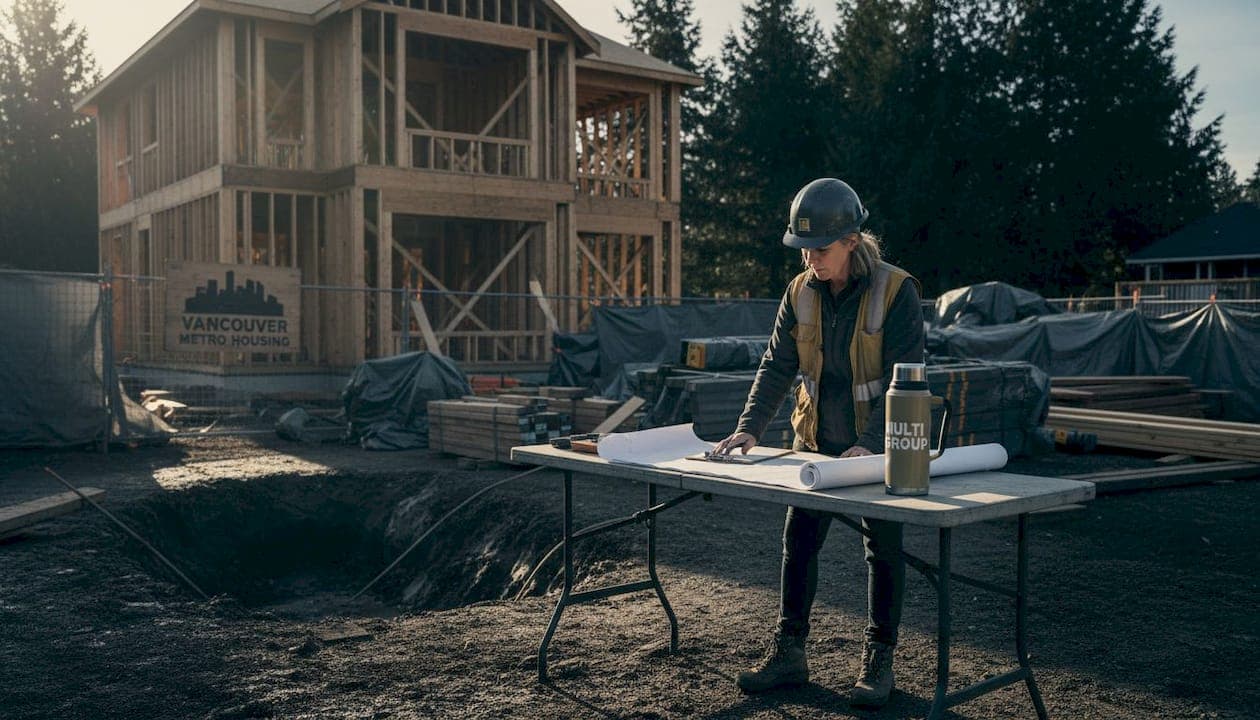
Choosing between a new build and a renovation is one of the first major decisions Metro Vancouver property owners and developers face, and it's rarely straightforward. The two paths look similar from a distance but involve fundamentally different processes, costs, and outcomes. New build construction means starting from the ground up, and while that opens a wide range of possibilities, it also introduces a specific set of requirements around permits, methods, and project management. This article breaks down exactly what new build construction involves, which methods work best in Metro Vancouver, and what every property owner should know before breaking ground.
Table of Contents
- Defining new build construction in Metro Vancouver
- Major methods used in new build construction
- The new build construction process: step by step
- How commercial projects differ from residential new builds
- Key considerations for a successful new build project
- Our take: What most people miss about new build projects
- Start your new build project with expert guidance
- Frequently asked questions
Key Takeaways
| Point | Details |
|---|---|
| Full customization | New build projects let you design a property from scratch to meet your needs. |
| Method selection matters | Choosing the right construction approach impacts cost, speed, and durability. |
| Process clarity | Understanding the multi-step process helps prevent costly delays. |
| Residential vs. commercial | Commercial new builds require extra coordination, design-build models, and phased permits. |
| Planning is crucial | Complete permit packages and expert management reduce risks and increase project success. |
Defining new build construction in Metro Vancouver
New build construction refers to erecting a structure on a site where no usable building currently exists, or where an existing structure has been fully demolished to make way for something new. Unlike a renovation or tenant improvement, a new build starts with a blank foundation and works upward from scratch. There is no existing building layout to work around, no older systems to upgrade or integrate, and no heritage constraints tied to an existing structure.
New builds offer full customization and modern code compliance compared to renovations, but they typically involve higher upfront investment and longer timelines. That trade-off is real, but for many Metro Vancouver property owners and developers, the benefits outweigh the costs. You get to specify every aspect of the build, from structural systems and floor plans to mechanical, electrical, and plumbing configurations that meet current British Columbia building codes from day one.
Several factors make new build construction particularly relevant in Metro Vancouver right now:
- Urban density pressures are pushing property owners toward maximizing land use, which often means building new rather than renovating aging stock.
- Energy efficiency targets under BC's Step Code program are easier to meet in a new build than in a retrofit of an older building.
- Design flexibility allows commercial developers to tailor spaces precisely to their intended use, whether that's a multi-family residential complex or a commercial warehouse.
- Long-term value is often higher with new builds because every system is modern, under warranty, and built to current code standards.
Staying current with 2026 residential trends and understanding Metro Vancouver construction methods can help owners make smarter decisions when planning a new build from the start.
Major methods used in new build construction
Selecting the right construction method shapes the entire project, from timeline and budget to long-term performance. Key methodologies include traditional stick framing with dimensional lumber as the dominant approach for residential, alongside alternatives like modular construction, structural insulated panels (SIPs), steel framing, and concrete for improved efficiency and performance. Each approach has distinct strengths depending on the project type, location, and budget.
Here is a comparison of the most common methods used in Metro Vancouver new builds:
| Method | Best for | Key advantage | Key limitation |
|---|---|---|---|
| Stick framing | Residential, low-rise | Cost-effective, widely understood | Labor-intensive, longer scheduling |
| Modular construction | Multi-family, commercial | Faster timelines, factory precision | Less design flexibility on site |
| SIPs (structural insulated panels) | Residential, energy-focused | Excellent insulation, quick assembly | Higher panel cost upfront |
| Steel framing | Commercial, industrial | Durability, long spans | Requires specialized trades |
| Cast-in-place concrete | High-rise, mixed-use | Structural strength, fire resistance | Highest cost and complexity |
Stick framing remains the most widely used method for residential new builds in Metro Vancouver. Trades familiar with wood framing are abundant in the region, material costs are relatively predictable, and the process is well understood by local inspectors and engineers. For most single-family homes and low-rise residential projects, it remains the practical default.
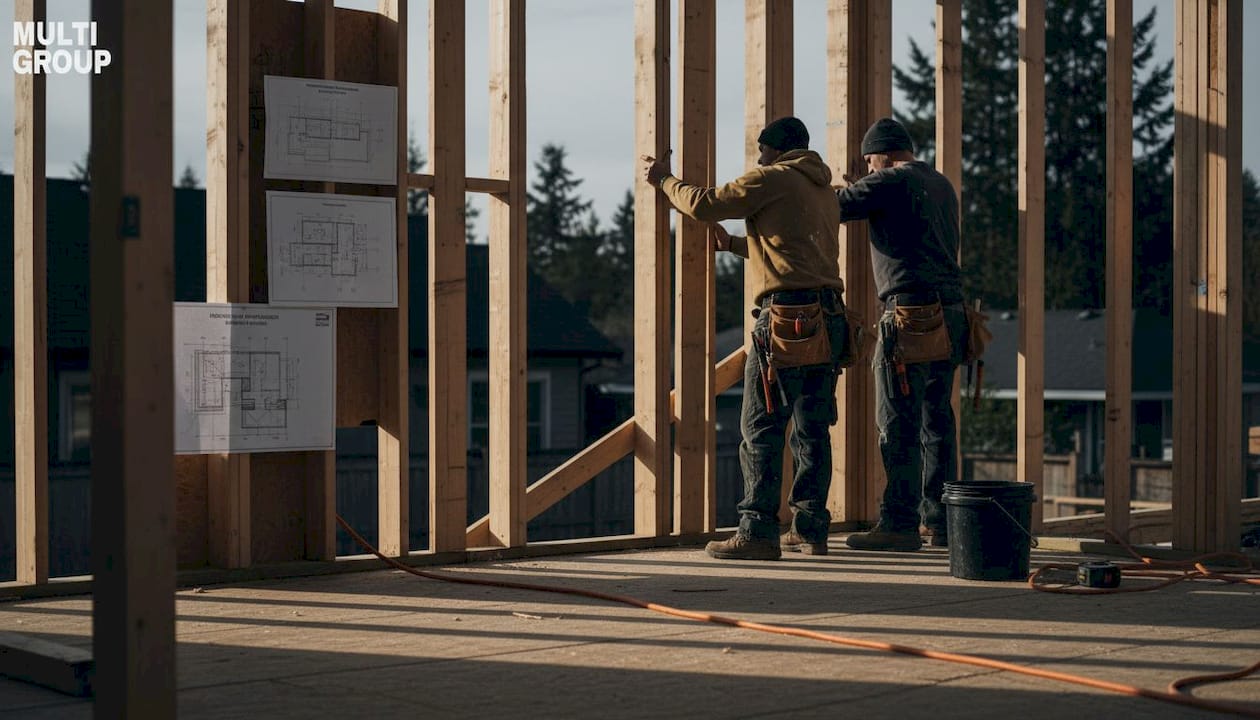
Modular construction is gaining traction, particularly for multi-family residential and commercial applications. Modules are built off-site in a controlled factory environment, then transported and assembled on the foundation. This approach can cut construction timelines significantly, which is an important advantage given Metro Vancouver's competitive labor market and tight project schedules.
Steel framing and concrete construction are standard for commercial new builds, especially when projects require large open spans, high load capacity, or multiple stories. These methods align well with commercial construction best practices in the region and are regularly used for warehouses, retail centers, and mixed-use developments.
Pro Tip: Metro Vancouver's wet climate means moisture management should factor into your method selection. SIPs and well-detailed stick frame assemblies with proper vapor and air barriers consistently outperform poorly detailed builds over the long term.
Understanding the full range of Vancouver construction trends helps owners and developers make informed choices before committing to a method.
The new build construction process: step by step
Knowing what to expect at each stage of a new build prevents costly surprises and helps owners stay engaged without disrupting the schedule. The standard process for new homes and commercial builds follows a logical sequence from site preparation through to final occupancy.
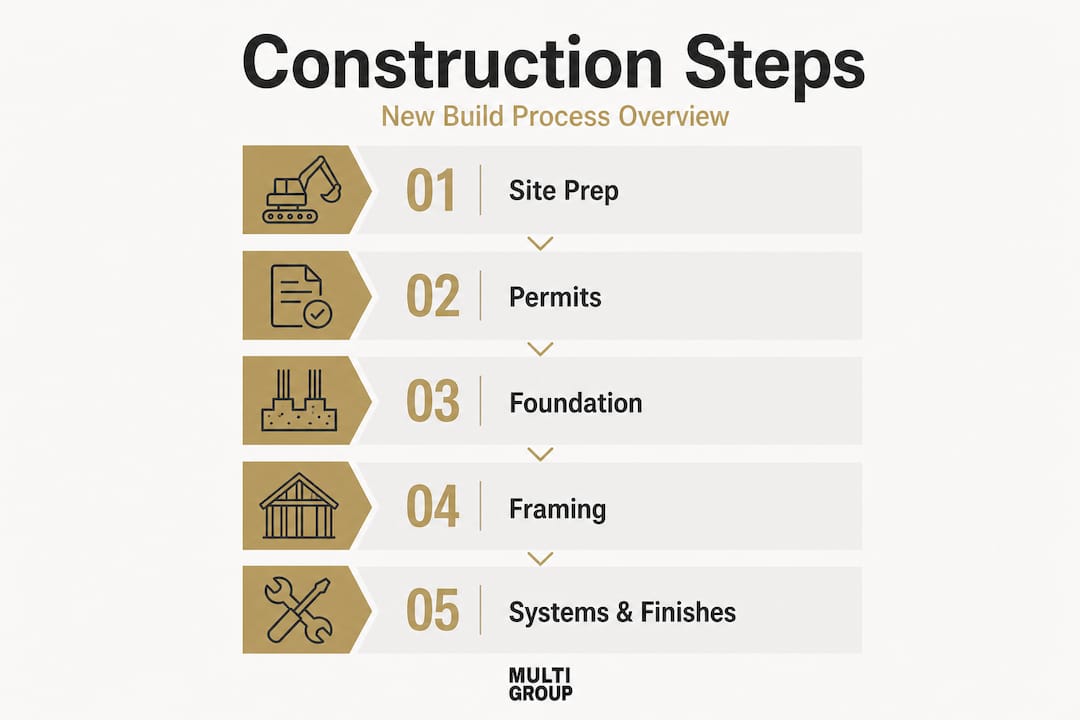
Here is the typical sequence for a Metro Vancouver new build:
- Site preparation: Clearing vegetation, grading the land, and setting up site services including temporary power and water. Geotechnical review is completed at this stage.
- Foundation: Forming and pouring the foundation slab or basement, depending on the design. This stage involves structural engineering inspections.
- Framing: Erecting walls, floors, and roof structures. Framing inspections are required before enclosing the structure.
- MEP rough-ins: Installing mechanical (HVAC), electrical, and plumbing systems before walls are closed in. These require separate inspections for each trade.
- Insulation and air barrier: Installing insulation and sealing the building envelope to meet BC's Step Code energy requirements.
- Drywall and sheathing: Closing in interior walls and completing exterior cladding systems.
- Interior finishes: Installing millwork, cabinetry, flooring, tile, fixtures, paint, and all visible surfaces.
- Exterior finishes: Completing landscaping, driveways, walkways, and final site grading.
- Final inspections: Municipal inspectors review all systems for code compliance across structural, mechanical, electrical, and plumbing categories.
- Occupancy permit: Issued by the municipality once all inspections pass and deficiencies are resolved.
"The framing and MEP rough-in stages are where most schedule delays occur. Coordination between trades at these stages requires precise sequencing and proactive communication from the project manager."
Metro Vancouver's regulatory environment adds layers to this sequence that aren't always visible to first-time owners. Municipal permitting timelines vary significantly across cities like Vancouver, Burnaby, Surrey, and Coquitlam. Building a detailed schedule that accounts for inspection turnaround times is not optional. It is essential.
Pro Tip: Build buffer time into your schedule at the MEP rough-in stage. If one trade runs behind, it can delay all subsequent inspections. Experienced construction project management teams build these buffers in from day one.
Strong project planning for homeowners at the outset makes every phase easier to navigate and reduces the risk of costly changes mid-construction.
How commercial projects differ from residential new builds
Commercial new builds share the same general process sequence as residential projects but involve several important distinctions that affect how you plan, permit, and execute the work. Commercial new builds emphasize design-build integration, early geotechnical and site analysis, and phased permitting, and Metro Vancouver specifically focuses on partnerships for non-market and affordable housing initiatives.
Here is a summary of the key differences between residential and commercial new builds:
| Factor | Residential new build | Commercial new build |
|---|---|---|
| Permit complexity | Standard building permit process | Often phased: development, building, and occupancy permits |
| Design approach | Architect-led design, then general contractor | Frequently uses design-build integration |
| Site analysis | Basic geotechnical for foundation | Full geotech, environmental, and traffic studies |
| Timeline | 12 to 24 months typical | 18 to 36+ months depending on scale |
| Stakeholder involvement | Owner and contractor | Owner, municipality, financiers, and tenants |
| End use considerations | Residential code and habitability | Zoning, commercial use, and public access requirements |
The design-build approach is particularly valuable for commercial projects. Rather than completing the full design before tendering construction, the design-build model allows design and construction to overlap, compressing the overall schedule. This matters significantly when lease commitments or business launch dates are fixed.
Phased permitting is another common feature of commercial new builds. Developers often apply for an early works or site preparation permit before the full building permit is issued. This allows site clearing, shoring, and foundation work to begin while the remaining design is still being finalized, saving weeks or months on the overall timeline.
Non-market and affordable housing projects in Metro Vancouver follow a different track entirely, typically involving phases of commercial buildout in partnership with Metro Vancouver Housing, BC Housing, or municipal agencies. These projects involve additional layers of approval, reporting, and funding milestones that require experienced project managers familiar with both public and private construction processes.
Key commercial new build considerations worth tracking include:
- Early site analysis: Environmental assessments, soil conditions, and utility connections must be confirmed before design is locked in.
- Phased permits: Coordinate with the municipality early to understand which permits can be issued in sequence.
- Tenant coordination: If the building will be occupied while partially under construction, sequencing becomes critical.
- Public engagement: Larger commercial projects often require public hearing approvals before permitting begins.
Key considerations for a successful new build project
Preparation is the most consistent predictor of a successful new build outcome. Whether you are developing a residential property or breaking ground on a commercial facility, certain fundamentals directly affect timeline, cost, and final quality.
The most common factors driving successful new builds in Metro Vancouver include:
- Thorough budgeting from day one: Include hard costs (construction), soft costs (permits, design, engineering), and a contingency of 10 to 15 percent for unforeseen conditions.
- Complete permit submissions: Prioritize complete permit packages to avoid resubmissions; use design-build for commercial efficiency. Incomplete applications are the single most common cause of permit delays.
- Experienced project management: A skilled general contractor who manages scheduling, subcontractors, and inspections protects your timeline and budget simultaneously.
- Architectural and engineering alignment: Design decisions made before construction is underway cost a fraction of what changes cost once work has begun.
- Supply chain awareness: Certain materials, particularly windows, structural steel, and mechanical equipment, carry long lead times. Order these early.
Pro Tip: Lock in your structural and mechanical specifications before applying for permits. Changes to these systems after permit issuance require amended permit submissions, which reset review timelines and add cost.
Understanding permit navigation in Metro Vancouver is a skill in itself. Municipal review times, documentation requirements, and inspector availability all vary. Working with a contractor who has existing relationships with local building departments can make a measurable difference in how quickly approvals move.
Our take: What most people miss about new build projects
After managing new build projects across Metro Vancouver's diverse municipalities, one thing stands out consistently: most property owners underestimate the complexity of the regulatory environment, not the construction itself. The physical work of building is well understood. The permitting, approval, and inspection ecosystem is where projects quietly lose weeks and sometimes months.
Metro Vancouver includes dozens of municipalities, each with its own building department processes, reviewer preferences, and documentation standards. A permit package that moves quickly in Burnaby might require revisions in Vancouver or Surrey. Owners who assume the process is uniform across the region often face frustrating delays that could have been anticipated with better upfront planning.
The second thing most owners miss is how much early collaboration matters. Small decisions made at the schematic design stage, like floor-to-ceiling heights, structural bay spacing, or mechanical system location, ripple through every subsequent phase. When owners, architects, and contractors are aligned before the design is finalized, the build runs smoother. When those conversations happen late, costly revisions follow.
Strong project management is not just about scheduling. It is about creating the right communication structure so that every team member understands the project's priorities and constraints from week one. That structure prevents the small misalignments that turn into expensive problems by the time finishes are being installed.
Custom new builds can produce exceptional results for Metro Vancouver property owners, but they require a genuine willingness to invest in the planning process, not just the construction itself.
Start your new build project with expert guidance
Understanding the process is the first step. Turning that knowledge into a successful build requires the right team behind you.
Multigroup Contracting brings years of Metro Vancouver new build experience to every project, managing permits, schedules, trades, and quality control so property owners and developers can stay focused on their goals. Whether you are planning a residential new build or a commercial development, the team at Multigroup Contracting is ready to help you move from concept to occupancy with confidence. Reach out today to discuss your project, get a consultation, and see how experienced local project management turns complex builds into successful outcomes.
Frequently asked questions
What does a new build construction project typically cost in Metro Vancouver?
Costs vary widely depending on size, location, and chosen construction method. Expect a starting range from $250 to $600 per square foot for residential new builds, with commercial projects varying based on use type, structural complexity, and finishes.
How long does a new build construction project take to complete?
Most new builds in Metro Vancouver take 12 to 24 months from permitting to handover, though project duration varies significantly based on project size, design complexity, and regulatory approval timelines.
What are the main advantages of new build over renovation?
New builds offer full customization and modern code compliance that renovations often cannot achieve, but they require a larger upfront investment and flexibility around extended timelines.
What permits are needed for new build construction in Metro Vancouver?
You will typically need zoning approval, a development permit, and a building permit at minimum, with mechanical, electrical, and plumbing sub-permits issued separately. Requirements vary by municipality, so early consultation with your local building department is essential.
Can I use modular construction for both residential and commercial new builds?
Yes. Modular construction is a viable alternative for both residential and commercial projects, offering faster timelines and factory-quality precision that can reduce overall construction costs on the right projects.