

TL;DR:
- Renovating a Vancouver medical clinic is complex due to strict regulations, ongoing patient care, and high stakes for compliance and functionality.
- Thorough assessment, strategic planning, proper budgeting, and expert contractor selection are essential for a successful project that enhances patient and staff experience.
Renovating a medical clinic in Vancouver is one of the more demanding construction projects a clinic owner or manager will face. Regulatory requirements are strict, patient care must continue, and the stakes for getting it wrong are high. Yet a well-executed renovation directly impacts patient retention, staff efficiency, and long-term compliance. This guide walks through every major phase of the process, from identifying what needs to change, to budgeting, permitting, contractor selection, and managing the build, so you can move forward with clarity and confidence.
Table of Contents
- Assessing your clinic's renovation needs
- Planning and budgeting your renovation project
- Permits and regulations in Vancouver
- Choosing the right contractor for your clinic renovation
- Executing and overseeing the renovation process
- What most clinics miss about successful renovations
- Start your clinic renovation project with expert support
- Frequently asked questions
Key Takeaways
| Point | Details |
|---|---|
| Prioritize clinic needs | Start your renovation by identifying functional gaps and regulatory requirements unique to your clinic. |
| Plan and budget wisely | Set a realistic timeline and budget, allowing for contingencies common in Vancouver renovations. |
| Compliance is critical | Secure all necessary permits and follow local regulations to avoid costly setbacks. |
| Choose specialized contractors | Work with contractors who have specific experience with medical clinics in Vancouver for best results. |
| Engage in active oversight | Staying involved during every stage ensures your renovation stays on track and delivers optimal outcomes. |
Assessing your clinic's renovation needs
Understanding what aspects of your clinic to renovate is the starting point for a strategic upgrade. Before contacting a single contractor or pulling any budgets together, a thorough internal assessment gives you a clear picture of what is working, what is failing, and what could be optimized.
Common triggers that push clinic owners toward renovation include outdated interior design that no longer reflects the standard of care provided, regulatory changes requiring new accessibility features, and inefficient floor plans that slow down patient flow. If your reception area creates bottlenecks during peak hours, or your exam rooms lack adequate soundproofing for private consultations, those are functional problems that directly affect patient experience and staff performance.
The areas most commonly prioritized in Vancouver medical clinic renovations include:
- Reception and waiting areas: First impressions matter, and cramped or outdated waiting rooms signal disorganization to patients.
- Exam rooms: Sizing, layout, and equipment placement all affect how efficiently staff can work.
- Accessibility features: Ramps, wider doorways, accessible washrooms, and proper signage are often legally required, not optional.
- HVAC systems: Older systems struggle to maintain proper air quality and temperature control across multiple zones, which is critical in clinical environments.
- Lighting and electrical: Modern diagnostic equipment demands updated electrical capacity, and lighting directly affects both patient comfort and clinical accuracy.
Engaging your staff early in this process is essential. Nurses, receptionists, and medical assistants are the people navigating the space daily. Their observations often reveal operational issues that management simply does not see from an administrative perspective.
| Area | Common Problem | Renovation Priority |
|---|---|---|
| Reception | Crowding, poor sightlines | High |
| Exam rooms | Insufficient size, outdated fixtures | High |
| Washrooms | Non-accessible layout | High |
| Break room | Undersize, poor ventilation | Medium |
| HVAC system | Aging units, poor zoning | High |
| Storage | Inadequate space, disorganized layout | Medium |
Pro Tip: Schedule walkthroughs at different times of day, including morning rush and late afternoon, to identify where bottlenecks actually form. A space that looks functional at noon can be chaotic at 8:00 a.m.
Planning and budgeting your renovation project
With your needs assessed, it's time to put plans and numbers on paper. Proper planning and budgeting are crucial for minimizing project delays and overruns, and medical clinic renovations in Vancouver are no exception.

Start by converting your assessment findings into clearly ranked priorities. Not everything can be done at once, especially if the clinic needs to remain partially operational during construction. Separate your list into must-have upgrades, important improvements, and future-phase items. This structure makes it easier to define the project scope and keep costs from expanding uncontrollably.
Vancouver renovation costs vary considerably depending on the scope of work, finish quality, and the complexity of systems involved. For commercial medical spaces, per-square-foot costs typically range from $150 to $350 CAD for moderate renovations, with more complex clinical builds pushing higher. Full tenant improvement buildouts with new MEP (mechanical, electrical, plumbing) rough-ins can exceed $400 per square foot depending on the building's existing infrastructure.
Here are the key steps to planning your renovation project:
- Set clear renovation goals: Define exactly what outcomes you want, such as increased patient capacity, improved accessibility, or reduced staff travel distance between rooms.
- Request preliminary quotes: Reach out to at least three contractors with experience in medical or commercial spaces to establish a realistic cost range.
- Define the project scope: Work with your chosen contractor to produce a detailed scope of work document. This prevents scope creep later.
- Create a realistic timeline: Factor in permitting lead times, contractor scheduling, and any patient care continuity requirements.
- Finalize your budget with contingency included: Lock in your numbers before committing, and do not skip the buffer.
| Option | Cost Range (per sq ft) | Best For |
|---|---|---|
| Budget materials, standard contractor | $150–$200 | Basic compliance upgrades |
| Mid-range materials, experienced contractor | $200–$300 | Balanced quality and efficiency |
| Premium materials, specialized contractor | $300–$400+ | Full clinical redesign and branding |
Pro Tip: Build a 10–15% contingency into your renovation budget from day one. Unexpected structural issues, hidden electrical work, or supply delays are common, and a contingency fund keeps the project moving without disrupting your cash flow.
Permits and regulations in Vancouver
After sketching your plans and budget, securing legal clearance is your next hurdle. Vancouver renovation permits for medical clinics require strict adherence to local permitting processes and codes, and cutting corners here creates expensive problems downstream.
Medical clinics in Vancouver typically require several types of permits depending on the scope of work. A building permit is required for structural changes, new walls, or significant alterations to mechanical and electrical systems. If the occupancy classification of the space changes, an occupancy permit is also required. Renovations that affect plumbing or drainage need a separate plumbing permit, and any HVAC system modifications require a mechanical permit. Clinics serving patients with mobility challenges must also comply with the BC Building Code's accessibility requirements.
Common permitting mistakes that clinic owners make include:
- Applying too late: Permit approvals in Vancouver can take several weeks to a few months depending on the project type and season. Starting the permit process after hiring your contractor is already too late.
- Incomplete documentation: Missing drawings, engineering stamps, or site plans cause automatic delays at the permit counter.
- Ignoring accessibility codes: Failing to meet barrier-free design standards can require costly retrofits after the fact.
- Skipping inspections: Inspections at key stages (framing, rough-in, and final) are mandatory. Missing them can void approvals and require rework.
Important: Operating a medical clinic in a space that has not received proper permit sign-off is a legal liability. Beyond fines, it can affect your professional licensing, insurance coverage, and ability to receive accreditation. Never occupy or use renovated space until all inspections and occupancy approvals are in place.
Pro Tip: Start the permitting process as early as possible, ideally before finalizing your contractor selection. Vancouver's permitting office sees seasonal peaks that can add weeks to review timelines, especially in spring and fall.
Choosing the right contractor for your clinic renovation
Once all plans and permits are handled, selecting the right contractor determines your project's ultimate success. Specialized medical clinic contractors bring critical expertise in patient-friendly design and infection control that general contractors may not have on their radar.
Medical environments have unique construction requirements. Materials must be selected for cleanability and durability. Wall and floor finishes in clinical areas need to resist chemical cleaning agents. HVAC and ventilation specifications in exam rooms or procedure areas may differ from standard commercial builds. A contractor without medical facility experience may underprice the project, make poor material substitutions, or miss code requirements specific to healthcare spaces.
| Factor | General Contractor | Specialized Medical Contractor |
|---|---|---|
| Medical code knowledge | Limited | Extensive |
| Infection control experience | Minimal | Core competency |
| Patient-friendly design | Generic | Clinically informed |
| Permit handling for healthcare | Basic | Practiced and efficient |
| Scheduling around patient care | Rarely considered | Standard practice |
Use this numbered process to vet and select your contractor:
- Verify licensing: Confirm the contractor holds a valid BC business license and is in good standing with the BC Housing Registrar or applicable trade bodies.
- Check insurance coverage: General liability and WorkSafeBC coverage are non-negotiable. Ask for certificates of insurance directly.
- Request medical or commercial references: Ask specifically for references from medical clinic, dental office, or similar healthcare renovation projects.
- Review project portfolios: Look for tenant improvement services experience in commercial healthcare or clinical environments.
- Compare written quotes: Never compare verbal estimates. Require detailed, itemized written quotes before making any decisions.
Red flags to watch for when evaluating contractors:
- No written contract or vague scope language
- Requests for large upfront deposits without a clear payment schedule
- Inability to provide verifiable local references
- No experience with commercial permitting in Vancouver
- Pressure to skip permits to "save time or money"
Executing and overseeing the renovation process
With your contractor engaged, knowing what the process looks like and understanding your oversight role keeps renovation headaches at bay. Active oversight ensures that clinic renovations are completed efficiently with minimal disruption to your operations.
Every well-run renovation follows a predictable sequence of phases. Understanding these stages helps you set realistic expectations and communicate clearly with your project team.
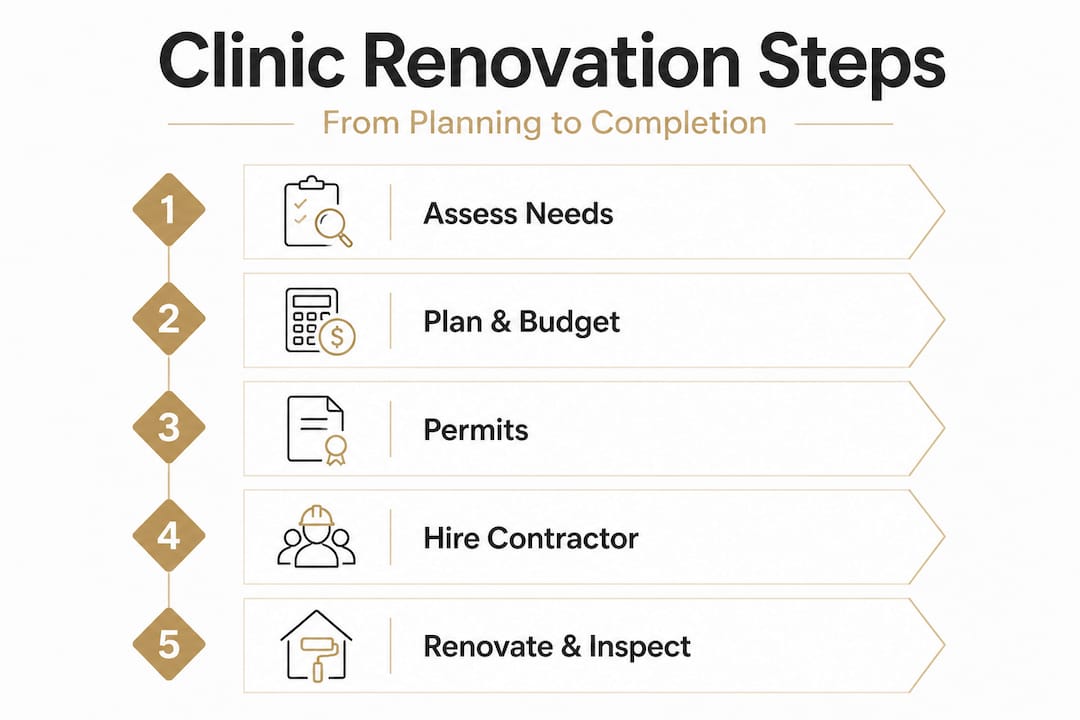
| Phase | Description | Typical Duration |
|---|---|---|
| Demolition | Removal of existing walls, fixtures, finishes | 1–2 weeks |
| Rough-in | Framing, electrical, plumbing, and HVAC rough work | 2–4 weeks |
| Inspections | City or third-party inspection of rough-in work | 1–2 weeks |
| Finishing | Drywall, flooring, painting, millwork, fixtures | 3–5 weeks |
| Final inspection | Sign-off on completed work and occupancy approval | 1–2 weeks |
Your oversight responsibilities during the build are significant. Staying informed and responsive keeps the project on schedule and within budget.
- Schedule weekly check-ins with your contractor: Review progress, flag concerns, and confirm upcoming work against the project timeline.
- Attend all site walkthroughs: Walking the space regularly allows you to catch issues, such as a misplaced wall or wrong material, before they become expensive corrections.
- Document everything in writing: All change orders, schedule adjustments, and material substitutions should be confirmed via email or a formal change order document.
- Keep staff and patients informed: Communicate proactively about noise, access changes, and any disruptions to normal clinic operations.
- Confirm inspection results promptly: Follow up with your contractor immediately after each inspection to confirm approval or address any deficiencies.
Pro Tip: A quick 15-minute walkthrough twice a week is one of the most effective ways to catch errors early. Problems identified during framing cost a fraction of what they cost to correct after drywall is installed.
What most clinics miss about successful renovations
After working on medical and commercial spaces across Metro Vancouver, one pattern is clear: most clinic renovations that fall short do so not because of poor execution but because of poor prioritization.
Clinic owners often spend the majority of their attention and budget on surface finishes. New paint, stylish flooring, and modern furniture create a strong visual impression. But if the exam room layout still forces nurses to walk an inefficient path, or the reception desk placement still creates a congestion point near the entrance, the renovation has not solved the core problem. Patients notice how they feel moving through a space more than they notice the tile choice.
The clinics that come out of renovation ahead of their competition are the ones that systematically gathered staff and patient feedback before finalizing any design decisions. Surveys, brief interviews, and even a simple suggestion box before the renovation starts provide data that architectural drawings alone cannot capture.
There is also a sustainability angle that many Vancouver clinic owners overlook. Investing in sustainable clinic construction features, including energy-efficient lighting, low-VOC (volatile organic compound) materials, and improved insulation, does more than reduce operating costs. It positions the clinic for future regulatory changes and resonates strongly with patients who increasingly factor environmental responsibility into their healthcare decisions.
The most forward-thinking clinic owners also plan for technology and scale. Rough-in for future data infrastructure, additional electrical capacity for new diagnostic equipment, and modular room designs that can adapt to changing care models are investments that pay dividends over a 10-year horizon. The renovation you do today should accommodate the clinic you expect to operate five years from now, not just the one you are running today.
Pro Tip: Invest in features that scale with regulatory and technology changes. Pre-wiring for telehealth stations, for example, costs relatively little during rough-in but becomes expensive to retrofit after walls are closed.
Start your clinic renovation project with expert support
If you're ready to translate this guide into a smooth, successful renovation, here's your next step.
Vancouver's medical renovation landscape rewards clinic owners who work with contractors who understand the full picture: compliance requirements, clinical workflows, patient experience, and build quality. The educational framework in this guide gets you prepared, but execution requires a team with the right experience behind it.

Multigroup Contracting works with Vancouver general contractors and clinic owners throughout Metro Vancouver to deliver medical and commercial renovations on time and on budget. From permit handling and project scheduling to final inspections and handover, the team manages every phase so you can stay focused on running your practice. Explore our project portfolio and reach out to discuss your clinic's specific renovation needs. The right contractor partnership makes the difference between a renovation that simply refreshes the space and one that genuinely transforms how your clinic operates.
Frequently asked questions
What permits do I need for a medical clinic renovation in Vancouver?
Most clinic renovations require a building permit at minimum, with additional permits for medical renovations covering plumbing, mechanical, and accessibility depending on scope. Consulting with the City of Vancouver's development and building services office early in your planning process is the most reliable way to confirm what applies to your specific project.
How long does a typical clinic renovation take?
Small to mid-sized clinic renovations in Vancouver typically take 6–12 weeks from construction start to final inspection, though permitting and design phases add time on the front end. Scope complexity, contractor availability, and inspection scheduling are the main variables that affect the overall timeline.
Can I keep my clinic open during renovations?
Partial operations are often possible, particularly when renovations are phased by area, but your ability to stay open depends entirely on the scope of work and applicable health and safety requirements. Active project oversight and clear communication with your contractor and staff are what make partial operation workable without compromising patient care.
How can renovations improve patient satisfaction?
Modern layouts, upgraded accessibility features, and current technology all contribute to a clinical environment that patients find welcoming, efficient, and trustworthy. Understanding what to renovate in your clinic starts with identifying the touchpoints that most directly affect how patients experience their visit, from the moment they enter the waiting room to when they check out.