

TL;DR:
- Effective renovation planning involves establishing a detailed budget, comprehensive scope, and sequenced schedule to prevent delays and cost overruns.
- Homeowners must include all systems, permits, and finishes upfront, while securing contractor bids and building in contingency funds.
- Consistent documentation, proactive communication, and flexibility are essential for managing disruptions and ensuring project success.
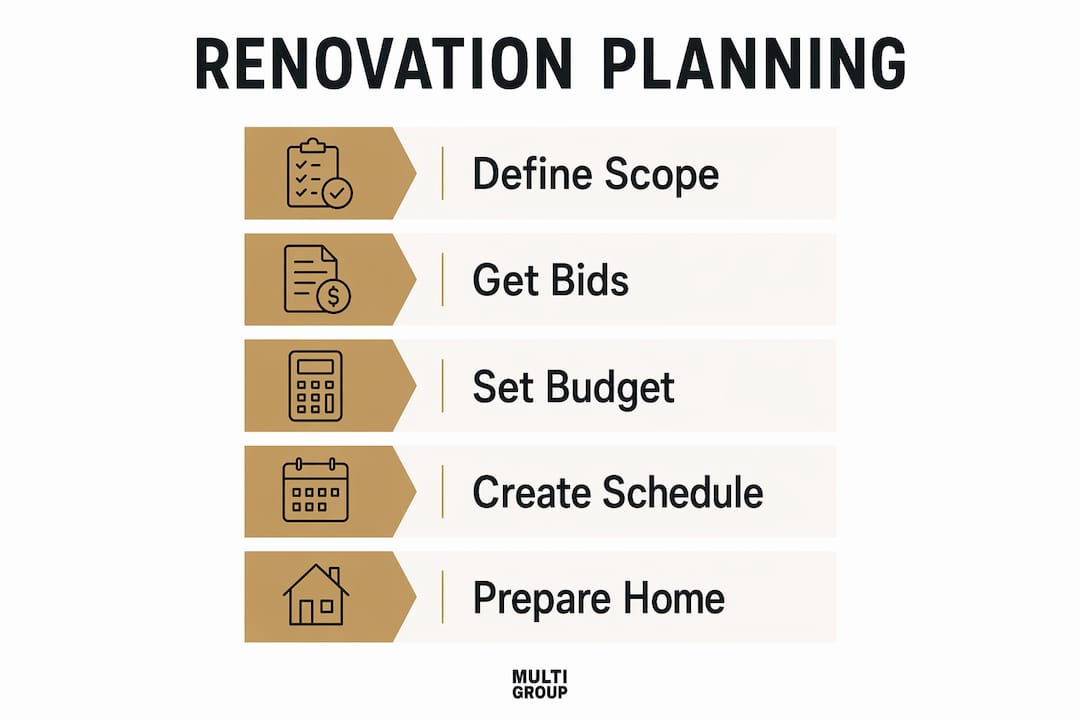
Renovation planning is the process of organizing every element of a project, from budget and design to contractor management and scheduling, so your home improvement work finishes on time and within budget. Knowing how to plan a renovation before a single wall comes down is the single most effective way to avoid the cost overruns and delays that derail most projects. This guide walks you through each phase: setting a realistic budget with contractor estimates, defining your full project scope, building a practical schedule, and preparing your home for the disruption ahead. Follow these steps and you will have a clear, workable plan before construction begins.
How to plan a renovation budget that actually holds
A renovation budget is a detailed cost estimate covering labor, materials, permits, and a contingency reserve, built from real contractor bids rather than internet estimates. Getting 3 to 5 contractor estimates is the most reliable way to establish a true baseline, since online cost calculators vary too widely to be useful for decision-making. Each bid should break down labor and materials separately so you can compare them line by line, not just as a total number.

Once you have your bids, add a contingency fund of 10 to 20% on top of your base estimate. That reserve exists to absorb hidden conditions like outdated wiring, water damage behind walls, or code upgrades that only surface once demolition begins. Skipping this step is the most common reason homeowners run out of money mid-project.
Use a budget template to track three columns: estimated cost, actual cost, and variance. Tools like Microsoft Excel, Google Sheets, or dedicated apps like Houzz Pro let you update figures in real time as invoices arrive. Reviewing this weekly keeps you in control rather than reacting to surprises at the end.
Here is a sample budget breakdown for a mid-range kitchen renovation:
| Cost Category | Estimated Amount | Notes |
|---|---|---|
| Demolition and disposal | $1,500 | Includes haul-away fees |
| Structural and rough-ins | $8,000 | Electrical, plumbing, HVAC |
| Cabinets and millwork | $12,000 | Custom vs. semi-custom affects cost |
| Countertops and fixtures | $5,000 | Stone, faucets, sink |
| Flooring and paint | $4,000 | Hardwood or tile plus labor |
| Contingency (15%) | $4,575 | Non-negotiable reserve |
Pro Tip: Never award a contract based on the lowest bid alone. Low bids often lead to change orders and delays because the contractor underpriced the work to win the job. A mid-range bid with a detailed scope is almost always the safer choice.
For deeper guidance on construction budgeting techniques, Multigroup's 2026 guide covers cost structures specific to Metro Vancouver projects.
What should your renovation scope include?
The full scope of a renovation covers every component from demolition through final finishes, including all building systems. A detailed scope prevents delays and incomplete work because contractors price and schedule only what is written down. If you leave out the HVAC upgrade or the bathroom rough-in, those items become expensive change orders later.
Your scope document should list every phase in order:
- Demolition: Wall removal, floor tear-out, fixture removal
- Structural work: Beam installation, load-bearing wall modifications
- Rough-ins: Electrical, plumbing, HVAC, and low-voltage wiring
- Insulation and drywall: Fire blocking, vapor barriers, boarding, and taping
- Flooring: Subfloor prep, hardwood, tile, or luxury vinyl installation
- Paint and trim: Priming, finish coats, baseboards, and door casings
- Fixtures and finishes: Cabinets, countertops, lighting, plumbing fixtures
- Inspections and punch list: Final walkthrough and deficiency corrections
Permits are not optional. Permits and inspections act as hard checkpoints that control when walls can be closed, and missing an inspection means opening them back up. In Metro Vancouver, the City of Vancouver, Burnaby, and Surrey each have their own permit offices with different processing timelines, so factor two to six weeks into your schedule for permit approval.
Design decisions must be finalized before construction starts, not during it. Changing your tile selection after the subfloor is prepped costs money in restocking fees and lost labor time. Prioritize function before aesthetics: get the systems right first, then choose your finishes.
| Approach | Risk Level | Cost Impact |
|---|---|---|
| Full scope defined upfront | Low | Predictable budget |
| Partial scope with "we'll figure it out" | High | 20 to 40% cost increase common |
| Finishes chosen before systems confirmed | Medium | Potential rework on rough-ins |
| Permits pulled before construction | Low | Avoids stop-work orders |
How do you build a renovation schedule that works?
A renovation schedule is a sequenced timeline that assigns start and finish dates to each phase, accounts for dependencies between trades, and includes buffer time to absorb delays. Scheduling buffers equal to 10 to 15% of total project duration are standard practice in construction management. On a 10-week project, that means building in at least one week of float before your target completion date.
The typical renovation sequence follows this order:
- Demolition and site protection
- Structural modifications and beam work
- Rough-in inspections (electrical, plumbing, HVAC)
- Insulation and drywall
- Flooring installation
- Painting and trim
- Cabinet and fixture installation
- Final inspections and punch list
Scheduling failures mostly arise from overlooked task dependencies and long material lead times, not slow contractor work. If your custom cabinets have a 10-week lead time and you order them after demolition starts, you will be waiting with a gutted kitchen for two months. Order long-lead items the moment your scope and design are finalized.
Communication is the other half of schedule management. Set a weekly check-in with your general contractor every Monday morning. Ask for a three-week look-ahead schedule showing what is planned, what is in progress, and what is waiting on decisions or deliveries. Regular schedule reviews and quick responses to delays reduce cascade effects on your completion date significantly.
Pro Tip: Keep a decision log with the date, the decision made, and the cost impact. This single habit prevents the most common source of contractor disputes and protects you if a change order conversation turns contentious.
How to prepare your home and yourself for renovation disruptions
Living through a renovation requires both physical preparation of your home and realistic expectations about the disruption ahead. Move furniture and cover remaining items with plastic sheeting before work begins. Dust travels further than most homeowners expect, and protecting adjacent rooms costs far less than cleaning or replacing damaged belongings.
Practical steps to prepare your home:
- Designate a storage zone in a garage or spare room for displaced furniture and appliances
- Seal off work areas with plastic barriers and tape to contain dust
- Set up a temporary kitchen or bathroom if the primary one is out of service
- Secure valuables and remove artwork from walls near the work zone
- Notify neighbors in Burnaby, North Vancouver, or Richmond about expected noise and work hours
The emotional side of renovation is real and often underestimated. Scope changes, material delays, and budget adjustments are normal parts of any project. A clear decision log with dates and costs reduces confusion and prevents costly change orders by keeping every modification documented and agreed upon in writing.
The homeowners who manage renovation stress best are those who accept early that the plan will change. Build flexibility into your budget and schedule from day one, and treat every change order as a decision to make, not a crisis to survive.
For a broader look at managing renovation projects on time and within budget, Multigroup's project management guide covers the full lifecycle from planning through closeout.
Key takeaways
Successful renovation planning requires a realistic budget built from contractor bids, a complete scope covering all systems and finishes, a sequenced schedule with built-in buffers, and consistent documentation throughout the project.
| Point | Details |
|---|---|
| Get 3 to 5 contractor bids | Use real estimates to set your budget baseline, not online calculators. |
| Reserve 10 to 20% contingency | Hidden conditions are normal; a contingency fund keeps the project moving. |
| Define full scope before construction | Include all systems, finishes, and permits to avoid costly change orders. |
| Build 10 to 15% schedule buffer | Float absorbs delays from material lead times and inspection wait periods. |
| Maintain a decision log | Document every change with date and cost impact to prevent disputes. |
What I've learned from watching renovation plans succeed and fail
After working on residential projects across Metro Vancouver, from kitchen overhauls in Coquitlam to full-floor renovations in Richmond, the pattern is consistent. The projects that go wrong do not fail because of bad contractors or bad luck. They fail because the planning phase was rushed.
The most common mistake I see is homeowners finalizing their tile and cabinet selections before confirming the rough-in layout with their plumber and electrician. You can fall in love with a farmhouse sink that requires a drain relocation, and suddenly a $500 fixture decision becomes a $2,000 plumbing change. Function before aesthetics is not just advice. It is the order of operations that protects your budget.
The second mistake is treating the contingency fund as optional savings. Homeowners who skip it are not being disciplined with money. They are transferring risk onto a credit card or a stalled project. Early research into costs and timelines is the most reliable way to set a contingency that reflects your actual project, not a generic percentage.
The contractors I respect most are the ones who push back when a scope is incomplete. A general contractor who asks hard questions before signing a contract is protecting you, not being difficult. Build that relationship from the start, and your project will run better for it.
— Momo
Plan your renovation with Multigroup in Metro Vancouver

Multigroup Contracting works with homeowners across Metro Vancouver, including Burnaby, Richmond, Surrey, Coquitlam, and North Vancouver, to plan and deliver residential renovations that stay on schedule and within budget. From permit handling and subcontractor coordination to full project management, Multigroup covers every phase of the process so you are not managing it alone. Whether you are planning a kitchen renovation, a bathroom remodel, or a whole-home refresh, Multigroup's licensed and insured team brings the structure and expertise your project needs. Explore Multigroup's residential renovation services or contact the team directly to discuss your project.
Call: 778-819-5933 Email: info@multigroup.ca Website: multigroup.ca
FAQ
How many contractor estimates should I get for a renovation?
Get 3 to 5 detailed estimates before committing to a contractor. This range gives you a reliable budget baseline and enough information to compare scope, not just price.
What percentage should I budget for renovation contingency?
A contingency fund of 10 to 20% of your total estimated cost is standard. Projects involving older homes or structural work should use the higher end of that range.
What is the correct order of renovation phases?
Renovation phases follow this sequence: demolition, structural work, rough-ins, insulation, drywall, flooring, paint, fixtures, and final inspections. Skipping or reordering phases causes rework and added cost.
How long does a typical home renovation take?
Timeline depends on scope, but a mid-size kitchen or bathroom renovation typically runs 6 to 12 weeks. Adding a 10 to 15% schedule buffer accounts for permit delays, material lead times, and inspection wait periods.
Do I need permits for a home renovation in Metro Vancouver?
Most structural, electrical, plumbing, and HVAC work requires a permit in Metro Vancouver municipalities. Pulling permits before construction starts protects you from stop-work orders and ensures inspections happen at the right phases.