
TL;DR:
- High-end interior renovations involve using premium materials and disciplined project management to enhance both lifestyle and property value. Proper planning, team coordination, and decision sequencing are essential for staying on time and budget. Emerging tools like digital twin modeling improve pre-construction accuracy and reduce project risks.
A high-end interior renovation is the process of transforming a home using premium materials, quality craftsmanship, and disciplined project management to enhance both lifestyle and long-term property value. Unlike a standard refresh, this type of work touches fixed elements, building systems, and spatial planning at a level that demands professional coordination. The result is a home that performs as well as it looks. This guide covers everything you need to know: planning steps, realistic budgets, material selection, project management, and the most common mistakes that derail even well-funded projects. Whether you are renovating a Metro Vancouver residence or a property elsewhere in BC, the principles here apply directly.
What are the essential planning steps for a high-end interior renovation?
Successful luxury renovations begin with a document, not a mood board. The Owner's Project Requirements (OPR) is the foundation of every well-run high-end project. It captures adjacency needs, acoustic requirements, thermal comfort targets, and lifestyle priorities before a single drawing is produced. A clear OPR prevents costly redesigns and scope creep later in the process.
Your team assembly follows directly from the OPR. A licensed interior designer holding NCIDQ certification, a registered architect, and a licensed general contractor must all be engaged before design begins. Each professional plays a distinct role. The designer leads spatial and finish decisions, the architect handles structural and code compliance, and the general contractor manages procurement, scheduling, and site execution.
Permit submissions and BC Building Code compliance reviews belong in the planning phase, not after drawings are complete. Early permit submissions in Metro Vancouver can take four to twelve weeks depending on the municipality. Submitting late compresses your construction window and adds cost.
Budget composition at this stage should include four categories:
- Construction costs — labour, materials, and site management
- Professional fees — design, architecture, engineering, and permit costs
- Contingency — 10–20% of total construction cost, held in reserve
- FF&E — furniture, fixtures, and equipment ordered separately from construction
Pro Tip: Use digital twin technology during pre-construction. A 1:1 millimetric virtual model of your space, including wires, pipes, and structural members, catches conflicts before they become on-site problems. This is the current gold standard for precision planning in 2026.
How to set a realistic budget and timeline for luxury renovations?
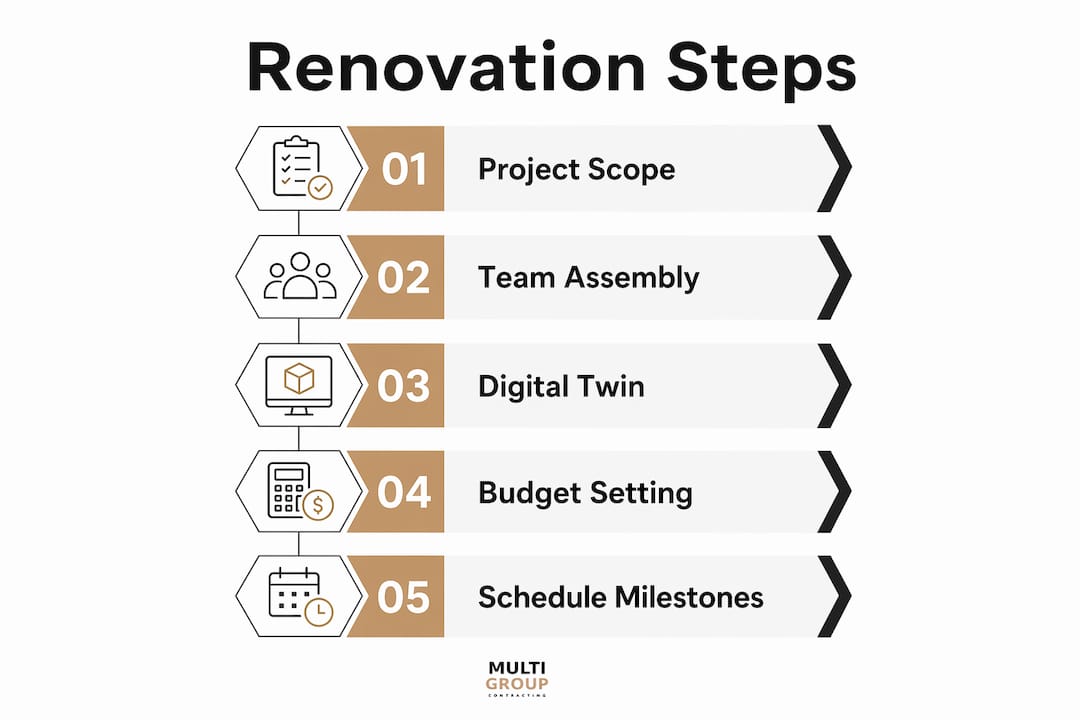
Cost benchmarks give you a starting point, not a ceiling. High-end interior remodels in metropolitan areas generally start at $550–$700 per square foot in 2026, with complex projects exceeding that range. The BLS Producer Price Index recorded over 3% year-over-year growth in residential building material input costs through late 2025. That trend continues to push project costs upward in 2026.
Timeline expectations follow a phased structure:
| Phase | Typical Duration |
|---|---|
| Concept and schematic design | 4–8 weeks |
| Design development and documentation | 6–10 weeks |
| Permit review and approval | 4–12 weeks |
| Procurement of custom items | 10–24+ weeks |
| Construction and installation | 4–12+ months |
Full-home luxury renovations routinely require 12 to 18 months from first design meeting to final walkthrough. Homeowners who plan for 12 months and budget for 18 are rarely caught off guard.
Key budgeting principles to apply from the start:
- Hold a contingency fund of 10–20% of your total construction budget. Older properties need the higher end of that range.
- Pay deposits on long-lead items, including stone slabs, custom cabinetry, and appliances, as soon as selections are confirmed. Lead times of 16–24 weeks are common.
- Separate your FF&E budget from your construction budget. Mixing them creates accounting confusion and cash flow problems.
- Review cost-saving strategies early, before selections are locked in. Savings found in procurement are easier to capture than savings found mid-construction.
Which materials and design features define a high-end renovation?
Quality fixed elements define a high-end remodel more than any decorative choice. Custom cabinetry with full-extension hardware, natural stone countertops and flooring, and wide-plank hardwood are the three fixed investments that consistently hold value and signal craftsmanship. These are not items to value-engineer out of the budget.
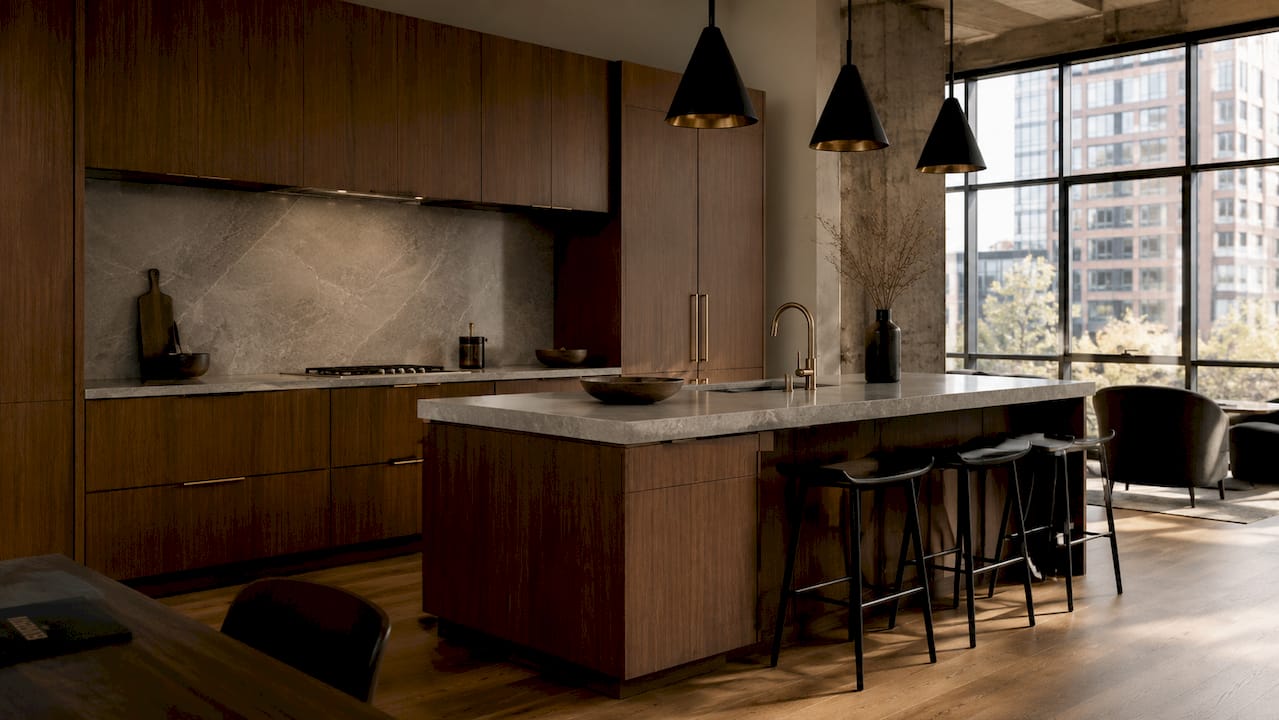
Premium appliances anchor the kitchen and laundry. Sub-Zero refrigeration, Wolf cooking equipment, and Miele dishwashers and laundry units represent the standard specification in high-end residential projects. These brands carry long service lives and strong resale recognition. Spa-level bathroom features, including thermostatic shower systems, heated floors, and freestanding soaking tubs, complete the wellness amenity package that buyers and owners expect at this level.
Functional design must lead aesthetic decisions. Homeowners who select finishes before confirming floor plans, storage volumes, and traffic flow often end up with beautiful rooms that do not work well. The layout drives everything. Finishes follow.
Pro Tip: Build a whole-home finish palette before any selections are confirmed. Specify metals, wood tones, stone veining directions, and grout colours across every room at once. This prevents the common problem of a kitchen and a bathroom that look like they belong in different houses.
Additional features that define premium interiors:
- Smart-home integration using Matter or Thread protocol networks for lighting, climate, and security
- Layered lighting design with separate circuits for ambient, task, and accent sources
- Acoustic insulation between floors and in media rooms
- Residential design principles applied to traffic flow, natural light, and storage placement
What project management practices ensure a smooth high-end renovation?
Project management is where luxury renovations succeed or fail. The quality of your materials means nothing if the sequencing is wrong or the documentation is loose. Every field change must be written down, priced, and signed by both the designer and the general contractor before work proceeds. Verbal approvals create disputes.
A structured decision sequence prevents the most expensive rework. Industry experts recommend resolving architectural decisions first, then mechanical, electrical, and plumbing (MEP) systems, and finally decorative finishes. Reversing that order, which happens when homeowners fall in love with a tile before the shower drain location is confirmed, causes costly demolition and reinstallation.
Follow this sequence for decision-making:
- Confirm structural and architectural changes
- Lock in MEP routing and rough-in locations
- Finalise fixed millwork and cabinetry dimensions
- Confirm stone and tile selections with verified quantities
- Select decorative finishes, hardware, and lighting fixtures
Milestone scheduling keeps the project on track. Set hard dates for design sign-off, permit submission, procurement orders, and construction start. Each missed milestone compresses the next phase. Effective project coordination requires weekly site meetings, a shared project action log, and a single point of contact between the homeowner and the construction team.
Pro Tip: Stage and protect completed work areas as construction progresses. Hardwood floors installed before painting is complete will be damaged. Sequence protection into the schedule, not as an afterthought.
How to avoid common mistakes in luxury renovations?
The most expensive mistakes in high-end renovations are predictable. Knowing them in advance is the most cost-effective preparation you can do.
- Prioritising aesthetics over function. A kitchen designed around a dramatic range hood but without adequate prep space or storage fails the homeowner every day. Lifestyle needs drive practical floor plans, not the reverse.
- Underestimating contingency. A 5% contingency on a $1.2M renovation leaves $60,000 in reserve. That amount disappears quickly when a single custom fabrication item is delayed or damaged in shipping.
- Skipping system upgrades. Plumbing, electrical, and HVAC systems at 15 years are at the threshold for failure. Renovating around aging systems and leaving them in place creates emergency risk within the life of the renovation itself.
- Chasing trends over timelessness. Fluted cabinetry, coloured grout, and statement ceilings cycle in and out of fashion. Neutral, well-proportioned spaces with quality materials age well. Trendy finishes do not.
- Delaying permit submissions. Permit approvals in Metro Vancouver municipalities take time. Starting the permit process after design is complete adds months to the project start date.
- Neglecting the renovation planning framework. Homeowners who skip structured planning consistently overspend and extend timelines.
Key takeaways
A high-end interior renovation succeeds when planning, team selection, and decision sequencing are treated as seriously as material quality and design.
| Point | Details |
|---|---|
| Start with an OPR document | Define adjacency, acoustic, and lifestyle needs before any design work begins. |
| Budget $550–$700+ per square foot | Hold a 10–20% contingency and separate FF&E from construction costs. |
| Sequence decisions from structure to finishes | Resolve architectural and MEP decisions before selecting decorative elements. |
| Invest in fixed elements first | Custom cabinetry, natural stone, and hardwood floors define lasting luxury. |
| Upgrade systems at 15-year thresholds | Replace aging plumbing, electrical, and HVAC to prevent failures and enable smart-home integration. |
What I have learned from high-end renovation projects in Metro Vancouver
The homeowners who get the best results are not the ones with the largest budgets. They are the ones who make decisions early and stick to them. Every week of indecision in the design phase costs money in the construction phase. That is not a theory. It shows up in every project action log.
The single most undervalued investment in a luxury renovation is the pre-construction phase. Homeowners often want to skip straight to material selection because that is the enjoyable part. But the OPR, the permit submissions, and the digital twin coordination done before a wall is touched are what determine whether the project finishes on time and on budget.
Working within BC Building Code requirements is not a constraint on design. It is a quality floor. Every licensed contractor in Metro Vancouver operates within those standards. The ones who manage permits proactively, communicate milestones clearly, and document every field change are the ones whose clients end up satisfied. The ones who cut corners on documentation create disputes that cost far more than the shortcuts saved.
Emerging tools like digital twin modelling are changing what is possible in pre-construction coordination. Clash detection that used to require expensive on-site discovery now happens in a virtual model before the first trade arrives. That shift alone is reducing schedule risk on complex residential projects. Homeowners who ask their contractor about digital twin capability are asking the right question.
A high-end renovation is both a lifestyle investment and a financial one. Treat it with the same discipline you would apply to any major capital decision.
— MultigroupTeam
Multigroup's approach to high-end residential renovations in Metro Vancouver
Multigroup is a licensed general contractor serving Metro Vancouver, including Burnaby, Richmond, Surrey, North Vancouver, and Coquitlam. The team manages commercial renovation projects and high-end residential builds with the same rigour: permit handling, BC Building Code compliance, procurement coordination, and clear milestone scheduling from day one.
For homeowners planning a luxury renovation, Multigroup provides full project management from pre-construction through final inspection. The team handles permit submissions, coordinates trades, and maintains the documentation standards that protect your budget and your timeline. Contact Multigroup directly to discuss your project scope and get a realistic assessment of cost and schedule for your Metro Vancouver home.
FAQ
What does a high-end interior renovation cost per square foot?
High-end interior renovations in metropolitan areas start at $550–$700 per square foot in 2026, with complex or fully custom projects exceeding that range depending on materials and site conditions.
How long does a luxury home renovation take?
Full-home luxury renovations typically require 12–18 months from initial design to completion, with procurement alone taking 10–24 weeks for custom items.
What contingency should I budget for a luxury renovation?
Hold 10–20% of your total construction budget as contingency. Older properties with unknown conditions require the higher end of that range.
When should I upgrade plumbing, electrical, and HVAC during a renovation?
Systems at or past the 15-year mark should be replaced during a renovation. Leaving aging systems in place creates emergency risk and prevents smart-home integration.
Do I need a permit for a high-end interior renovation in Metro Vancouver?
Most high-end renovations involving structural changes, MEP work, or additions require permits under the BC Building Code. Submitting permit applications early in the design phase prevents delays to your construction start date.