
TL;DR:
- Construction projects in Metro Vancouver frequently experience costly overruns and delays without proper management.
- Using tailored project management frameworks and local knowledge improves efficiency and reduces risks.
- Proactive planning, clear scopes, and continuous collaboration are key to successful construction outcomes.
Budget overruns and schedule delays are not just inconveniences in Metro Vancouver construction. They are expensive realities that can derail entire projects. Most large construction projects go over budget and experience significant delays, and in a market where construction costs already rank among Canada's highest, the financial stakes are even greater for local property owners and business operators. This guide breaks down how professional project management prevents those outcomes, covering the frameworks, tools, risk strategies, and local insights that make the difference between a project that succeeds and one that spirals.
Table of Contents
- Why project management matters in Metro Vancouver construction
- Core project management frameworks in construction
- Key processes and tools for effective construction project management
- Common pitfalls and risk mitigation strategies
- Our take: Why Metro Vancouver construction project management demands a local and flexible approach
- Next steps: Achieve construction success with expert project management
- Frequently asked questions
Key Takeaways
| Point | Details |
|---|---|
| Local context drives risk | Metro Vancouver’s high costs and regulations make expert project management critical for success. |
| Choose the right framework | Hybrid approaches blend discipline with flexibility and excel in challenging projects. |
| Track key performance metrics | Monitoring figures like PPC and SPI keeps projects on target and flag risks early. |
| Proactively manage risks | Clear contracts, defined scopes, and regular risk reviews help avoid costly disputes and delays. |
| Expertise pays off | Professional project management consistently delivers better outcomes in cost, schedule, and quality. |
Why project management matters in Metro Vancouver construction
To understand the tools for successful projects, you first need a clear picture of the Metro Vancouver landscape. This region is not a typical construction market. It operates under intense cost pressure, complex regulatory requirements, and a labor market that consistently challenges even experienced contractors.
Major projects in BC currently under construction are valued at $157.55 billion, and local costs sit among Canada's highest. That scale means even small inefficiencies compound quickly. A two-week delay on a tenant improvement project in Burnaby or a retail buildout in Richmond can trigger lease penalties, lost revenue, and contractor disputes that far exceed the original delay cost.
The regulatory and cost pressures unique to Metro Vancouver add another layer of complexity. Permit timelines, zoning bylaws, and building code requirements vary across municipalities. A project in the City of Vancouver faces different requirements than one in Surrey or Coquitlam. Understanding permit requirements in Vancouver before construction begins is not optional. It is a core part of the planning process.
Here is what typically goes wrong without structured project management:
- Scope creep: Undefined or poorly documented scope leads to change orders that inflate budgets.
- Labor gaps: High vacancy rates in the skilled trades mean uncoordinated scheduling creates costly idle time.
- Permit delays: Missing documentation or incorrect submissions push start dates back by weeks or months.
- Quality failures: Without clear inspection checkpoints, deficiencies surface late and become expensive to fix.
- Communication breakdowns: Misaligned expectations between owners, designers, and trades cause rework.
Reviewing commercial construction case studies from Metro Vancouver shows a clear pattern: projects with dedicated management structures consistently outperform those without them on cost, schedule, and quality. Professional project management is not overhead. It is the mechanism that keeps every other part of the project functioning.
Core project management frameworks in construction
Having established the importance of project management and the local context, let's break down the methods experts rely on. Lean, Waterfall/DBB, Agile/IPD, and hybrid frameworks each serve different project types, team cultures, and levels of scope certainty.
Waterfall (Design-Bid-Build or DBB) is the traditional linear approach. Design is completed first, then contractors bid, then construction begins. It works well when scope is fully defined upfront, budgets are fixed, and stakeholder changes are minimal. Many public sector and institutional projects in Metro Vancouver still use this model.
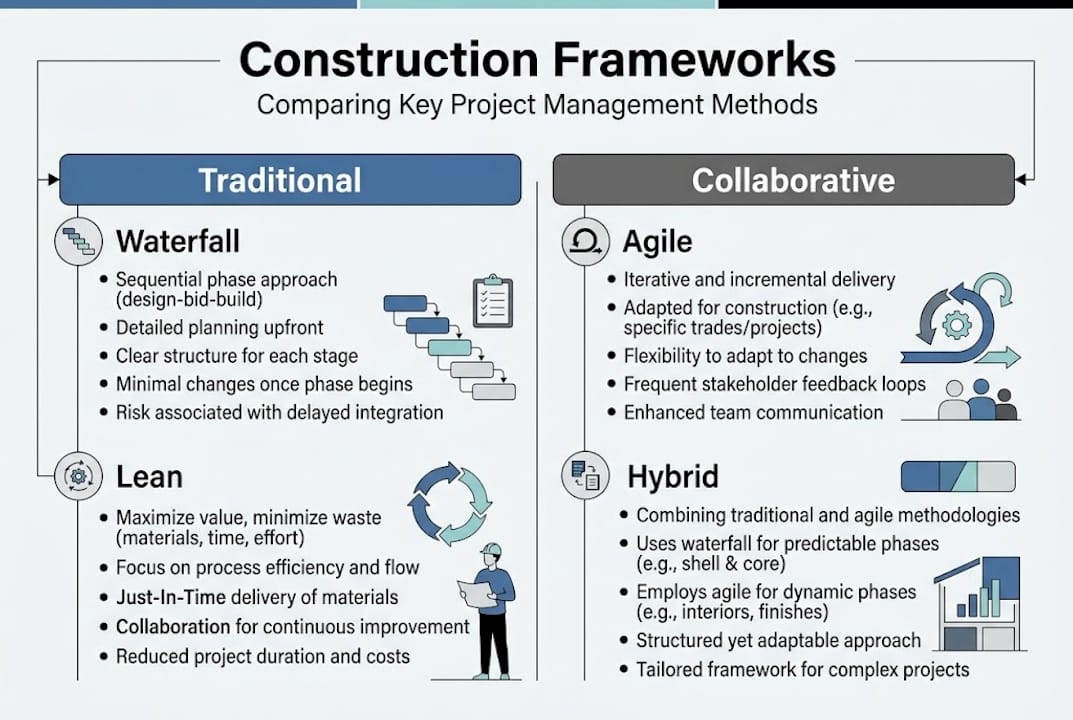
Lean Construction focuses on eliminating waste throughout the build process. It emphasizes collaborative planning, just-in-time material delivery, and continuous improvement. It suits projects where efficiency and waste reduction are priorities, such as warehouse renovations or multi-unit residential builds.
Agile and Integrated Project Delivery (IPD) bring all key stakeholders, including the owner, designer, and contractor, into a shared risk-and-reward structure from day one. This model excels on complex, fast-moving, or innovation-heavy projects where scope evolves.
| Framework | Best for | Key advantage |
|---|---|---|
| Waterfall/DBB | Fixed-scope, public projects | Clear accountability, predictable structure |
| Lean Construction | Efficiency-focused builds | Waste reduction, faster cycles |
| Agile/IPD | Complex, evolving projects | Flexibility, shared ownership |
| Hybrid | Most commercial/residential builds | Balances structure with adaptability |
Pro Tip: Hybrid approaches are becoming the standard on complex Metro Vancouver builds. Combining Waterfall's structured milestones with Lean's collaborative planning tools gives teams both predictability and the flexibility to respond when conditions change.
Picking the wrong framework carries real risk. A retail buildout using a rigid Waterfall model may struggle when a tenant requests layout changes mid-construction. Conversely, applying a fully Agile model to a straightforward office renovation can introduce unnecessary complexity. Aligning the framework to the project type is one of the first decisions that shapes long-term outcomes. Staying current on future trends in construction management helps teams make that call with confidence.
Key processes and tools for effective construction project management
With the frameworks in mind, how do professional managers actually deliver projects on time and budget? The answer lies in specific processes and measurable metrics applied consistently from preconstruction through closeout.
Constructability reviews are one of the most valuable early-stage tools. Before a shovel hits the ground, the project team evaluates drawings and specifications for conflicts, ambiguities, or sequencing issues. Catching a structural clash in the design phase costs a fraction of what it costs to fix in the field.
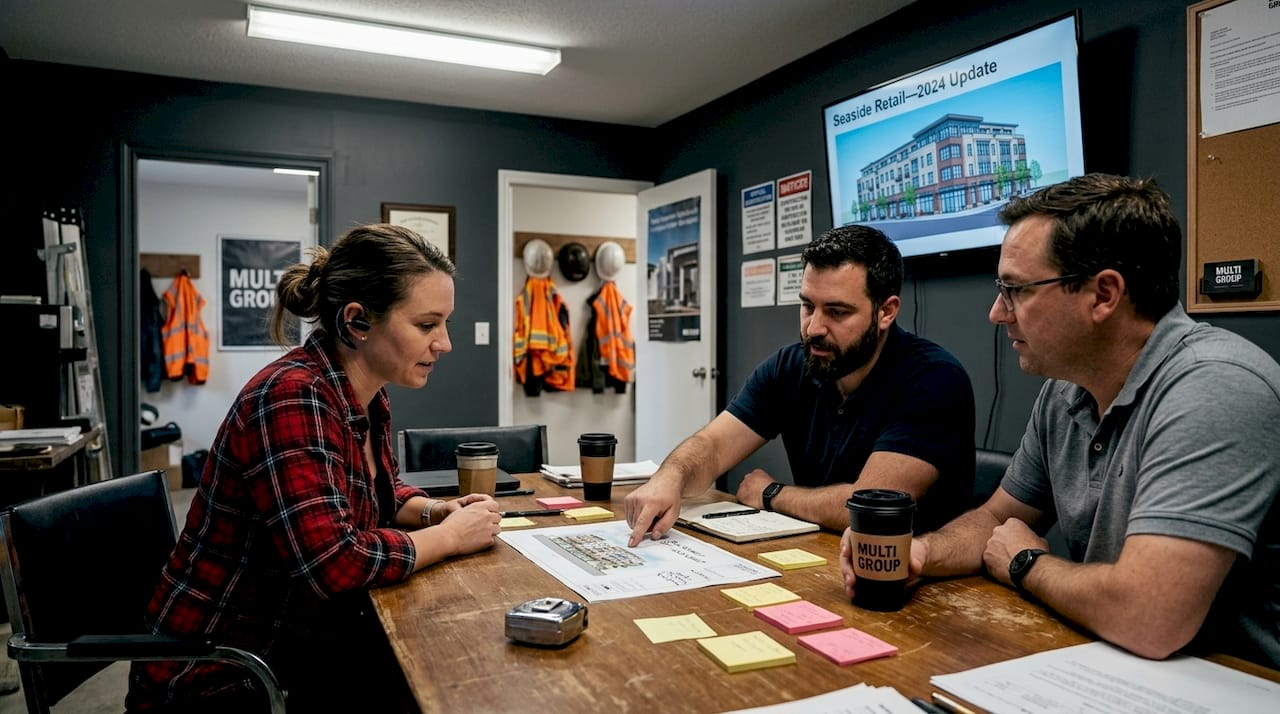
Lean tools like pull planning and the Last Planner System cut waste and boost on-time completion by shifting scheduling from top-down directives to collaborative, constraint-based planning. Teams work backward from milestones, identifying what needs to happen and what obstacles must be removed first.
The PMI Construction Extension customizes scope, quality, risk, and procurement processes specifically for construction environments, making it a practical reference for project managers working on commercial and residential builds alike.
Key metrics every project manager should monitor:
| Metric | What it measures | Target |
|---|---|---|
| PPC (Percent Plan Complete) | Weekly task completion rate | Above 80% |
| SPI (Schedule Performance Index) | Schedule efficiency | At or above 1.0 |
| CPI (Cost Performance Index) | Budget efficiency | At or above 1.0 |
| RFV (Request for Information Volume) | Design clarity gaps | Minimize early |
| LTIFR (Lost Time Injury Frequency Rate) | Site safety performance | As low as possible |
- Start with a detailed preconstruction plan that includes contingency budgets and defined milestones.
- Hold weekly pull planning sessions with all active trades on site.
- Track PPC every week. If it drops below 80%, investigate root causes immediately.
- Use cloud-based project management software to centralize drawings, RFIs, and submittals.
- Review real renovation cost examples to set realistic budget expectations before finalizing your scope.
Pro Tip: Early constraint removal is the single highest-leverage activity in construction scheduling. Identify what is blocking each upcoming task and resolve it before the task is due, not after.
Common pitfalls and risk mitigation strategies
With best-practice methods and tools covered, it is just as vital to know what can go wrong and how to avoid it. Construction risk in Metro Vancouver is real, varied, and often underestimated.
Typical pitfalls include misaligned risk allocation, unclear scope, weak contracts, supply chain disruptions, and environmental issues. Each of these can independently derail a project. Together, they can make recovery nearly impossible without significant cost.
Financial risks are the most visible. Cost overruns often trace back to incomplete scope documentation or contracts that do not clearly define who bears the cost of unforeseen conditions. Delayed payments between owners, general contractors, and subcontractors create cash flow pressure that slows work.
Operational risks include material shortages, which have become more frequent since global supply chain disruptions, and weather delays that affect exterior work schedules in Metro Vancouver's wet climate. Uncoordinated trade sequencing is another common source of costly rework.
Legal risks stem from ambiguous contract language. When a contract does not clearly define scope, change order procedures, or dispute resolution processes, disagreements become disputes and disputes become litigation.
Effective mitigation strategies:
- Conduct a formal risk allocation workshop before contract execution to identify and assign each risk category.
- Use clearly written scopes of work with detailed drawings and specifications attached to every contract.
- Schedule regular alignment meetings with all stakeholders, at minimum bi-weekly during active construction.
- Build float into the schedule for weather, inspections, and permit-related holds.
- Vet subcontractors carefully. Choosing the right contractor from the start reduces the probability of operational and quality failures.
"Risk workshops and consistent PPC improvement directly reduce the frequency of disputes, delays, and budget overruns on construction projects. The teams that invest in proactive risk planning consistently outperform those that react to problems after they occur."
For projects with sustainability requirements, integrating risk planning with sustainable project delivery practices ensures environmental compliance does not become a late-stage surprise.
Our take: Why Metro Vancouver construction project management demands a local and flexible approach
Beyond process charts and data, what really drives success in Metro Vancouver construction? In our experience, it comes down to one thing: local knowledge applied through flexible systems.
Standard project management templates, imported from other markets or applied without local context, consistently underperform here. The regulatory complexity across Metro Vancouver's municipalities, the high cost of every delay, and the specific expectations of local clients and stakeholders require a genuinely tailored approach. Preconstruction investment and locally informed contracts are not nice-to-haves. They are the foundation.
The most uncomfortable truth we have observed is that most project failures are not technical. They are human and organizational. Poor communication, unclear accountability, and misaligned expectations between owners and contractors cause more budget overruns than any material shortage or weather event.
The future of construction management in this region is hybrid: structured enough to maintain accountability, flexible enough to adapt when conditions change. Staying current on emerging local trends is part of that adaptability. Regular check-ins, local expertise, and genuine collaboration are not optional extras. They are the standard.
Next steps: Achieve construction success with expert project management
If you're ready to apply these insights to your next project, here's where to go for tailored expertise. The frameworks, metrics, and risk strategies covered in this guide are only as effective as the team executing them.
Multigroup Contracting brings full-service project management to commercial and residential construction throughout Metro Vancouver. From permit handling and scheduling to trade coordination and quality control, we manage every phase so your project stays on time and on budget. Whether you are planning a tenant improvement, a warehouse renovation, or a high-end residential interior, working with local construction project experts gives you the structure, accountability, and local knowledge your project needs to succeed.
Frequently asked questions
What is the role of a project manager in construction?
A project manager oversees scope, schedule, budget, quality, and risk, ensuring a construction project is delivered successfully and safely. The PMI Construction Extension adds construction-specific processes that make this role even more precise and effective.
Which project management approach is best for Metro Vancouver construction?
Hybrid project management frameworks work best, balancing structure and adaptability for Vancouver's complex regulatory and cost landscape. Hybrid frameworks are increasingly the default on local commercial and residential builds.
What metrics should I track during my construction project?
Track Percent Plan Complete (PPC), Schedule Performance Index (SPI), and labor safety metrics to measure performance and reduce risk. PPC, SPI, and LTIFR are the essential indicators that signal project health in real time.
How do I prevent budget overruns and delays?
Use clear scopes, structured contracts, regular risk reviews, and evidence-based planning tools to avoid common overruns and delays. Clear scope and proactive risk workshops are the most effective preventive measures available to project teams.
Are expert project management services worth the investment?
Yes, professional project management consistently delivers better outcomes on timeline, budget, and quality. Expert management improves delivery rates and reduces waste, making it one of the highest-return investments on any construction project.
Recommended
- Why use professional contractors: quality, safety, peace of mind
- Multigroup Contracting | Vancouver General Contractor – Commercial & Residential Construction
- Multigroup Contracting | Vancouver General Contractor – Commercial & Residential Construction
- Multigroup Contracting | Vancouver General Contractor – Commercial & Residential Construction
- How to Select Waterproofing Contractor for Reliable Results