
TL;DR:
- Professional construction management ensures better coordination, reduces risks, and keeps projects on schedule and within budget. It is especially critical for complex, regulated, or multi-trade projects, where early involvement and proper risk allocation can prevent costly delays. Engaging a construction manager early and choosing the right delivery model are vital for successful project outcomes in Metro Vancouver.
Hiring a general contractor and calling it done sounds reasonable. Many property owners do exactly that and then wonder why their project ran over budget, missed deadlines, or hit compliance snags along the way. The truth is that modern construction projects, whether a tenant improvement in Burnaby or a high-end residential build in North Vancouver, involve layers of coordination that go well beyond swinging a hammer. A construction manager brings structure, oversight, and accountability to every phase, and in a market as demanding as Metro Vancouver, that professional layer is increasingly the difference between a project that delivers and one that doesn't.
Table of Contents
- What does a construction manager really do?
- Why construction management matters for complex projects
- The power of early involvement: Cost, schedule, and constructability
- Risks, guarantees, and choosing the right construction management model
- Our take: Why professional construction management is more essential than ever
- Get expert construction management for your next project
- Frequently asked questions
Key Takeaways
| Point | Details |
|---|---|
| Centralized coordination | Construction managers streamline every aspect of complex projects, saving you from juggling multiple roles. |
| Risk and compliance control | They manage regulatory, quality, and safety issues to prevent costly delays and errors. |
| Maximized project outcomes | Early involvement of a construction manager leads to on-time, on-budget, and high-quality builds. |
| Model choices matter | Understanding CM at Risk and Agency CM models protects you from contractual surprises. |
| Professional guidance | Expert construction management is an evolving necessity for Metro Vancouver property owners. |
What does a construction manager really do?
With the need for project success established, it's essential to clarify the specialized role of construction managers, often misunderstood or conflated with general contractors.
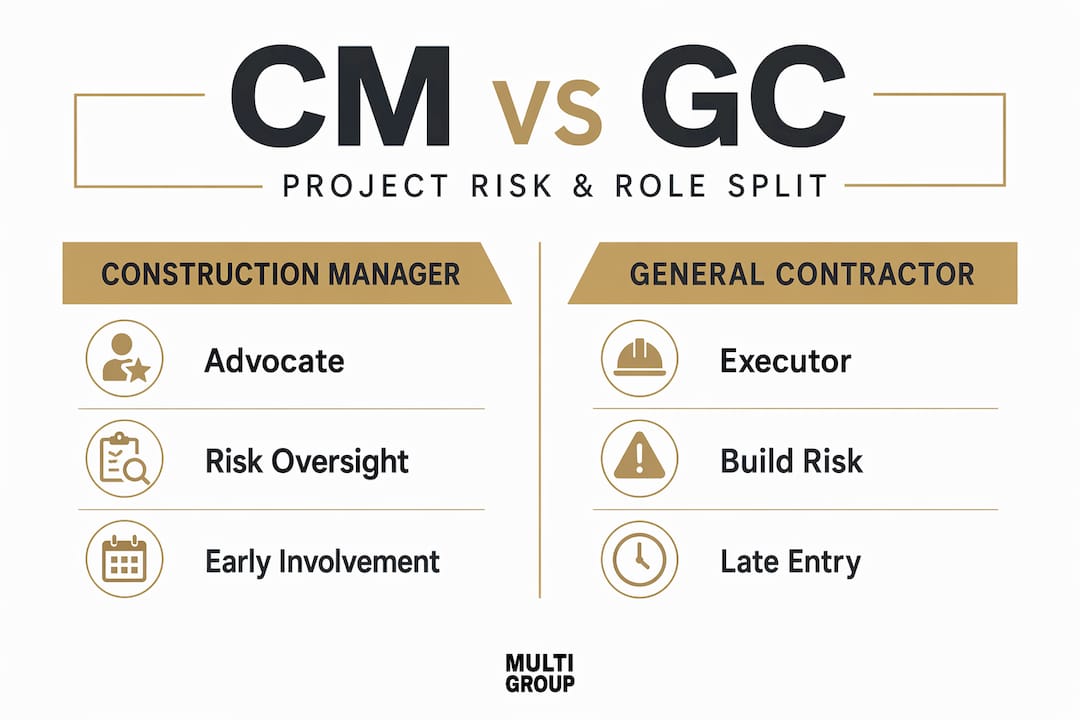
A construction manager (CM) is the owner's representative on a project. That distinction matters. While a general contractor focuses on executing the physical work, a CM focuses on organizing all the moving parts so the owner isn't trying to manage dozens of trade contractors, permit applications, inspection schedules, and supplier timelines at once. Construction managers coordinate complex, multi-stakeholder work, aligning schedule, cost, quality, safety, compliance, and procurement so the owner stays informed without being buried.
The day-to-day responsibilities of a CM include:
- Schedule management: Building and maintaining project timelines, identifying delays before they cascade
- Cost control: Tracking budgets, reviewing change orders, and providing regular cost reporting
- Trade coordination: Managing the sequencing of multiple subcontractors so work flows without conflict
- Permit handling: Submitting, tracking, and responding to municipal permit applications and inspection requests
- Safety oversight: Monitoring site compliance with WorkSafeBC regulations and project-specific safety plans
- Quality assurance: Conducting inspections to ensure work meets specification before it gets covered up
Here's how a construction manager compares to a general contractor:
| Responsibility | Construction manager | General contractor |
|---|---|---|
| Represents the owner | Yes | No (represents their own interests) |
| Directly employs trades | No (manages subs) | Often yes |
| Contract risk on cost | Varies by model | Yes |
| Pre-construction involvement | Typically early | Usually post-design |
| Focus | Process and coordination | Physical execution |
| Permit and compliance lead | Yes | Varies |
This difference in orientation is significant. A general contractor may flag a problem. A CM is structured to prevent one. When Metro Vancouver construction project management lacks that preventive oversight, small coordination gaps compound quickly into real financial exposure.
"Disjointed processes are one of the leading causes of construction project failure. When no single party owns the coordination function end to end, information gaps, schedule conflicts, and rework become almost inevitable."
You can also see how these dynamics play out in detail by reviewing construction safety case studies from complex commercial builds, where lapses in coordination had measurable consequences.
Why construction management matters for complex projects
Understand the role, but when does it become mission-critical? This section illustrates where and why construction management is indispensable.
Metro Vancouver is one of the most regulated and competitive construction markets in Canada. Permit timelines through the City of Vancouver, Burnaby, or Surrey can stretch months. Zoning bylaws, heritage overlays, seismic requirements, and energy code compliance add layers of review. For any project with meaningful customization or technical complexity, those requirements don't just slow things down. They create ripple effects when not managed proactively.
Construction management is especially valuable in residential projects when customization and regulatory requirements increase complexity and create the kind of ripple effects that lead to delays and costly rework. The same principle applies to commercial builds, where tenant improvements, code upgrades, and operational continuity add to the challenge.
Consider this data from common project risk categories:
| Risk category | Without CM | With CM |
|---|---|---|
| Schedule overruns | Frequent | Managed proactively |
| Budget creep | Common | Tracked and flagged early |
| Permit delays | Owner-managed, often reactive | Proactively scheduled |
| Trade conflicts | Reactive resolution | Sequential scheduling |
| Non-compliance issues | Discovered at inspection | Caught before work proceeds |
The pattern is clear. Poor construction performance ties directly to disjointed processes, and professional construction management's workflow organization mitigates those risks systematically rather than reactively.
How do you know if your project needs a construction manager? Consider these indicators:
- The project involves three or more trade contractors working simultaneously
- The work requires multiple municipal permits or inspections
- Your project budget exceeds $500,000
- There are custom design elements that require close specification management
- You cannot be on site daily to monitor progress
- The timeline is fixed due to business operations or lease obligations
- You're working on a commercial construction project with occupied adjacent spaces
For residential builds, using a residential project checklist alongside a professional CM helps ensure nothing slips through the cracks during planning or execution.
Pro Tip: The best time to involve a construction manager is before your design is finalized, not after you've already permitted a set of drawings. Early CM involvement changes what you design, not just how you build it.
The power of early involvement: Cost, schedule, and constructability
Tackling complexity is vital, but timing matters too. Here's why early involvement of a construction manager can be a game changer.
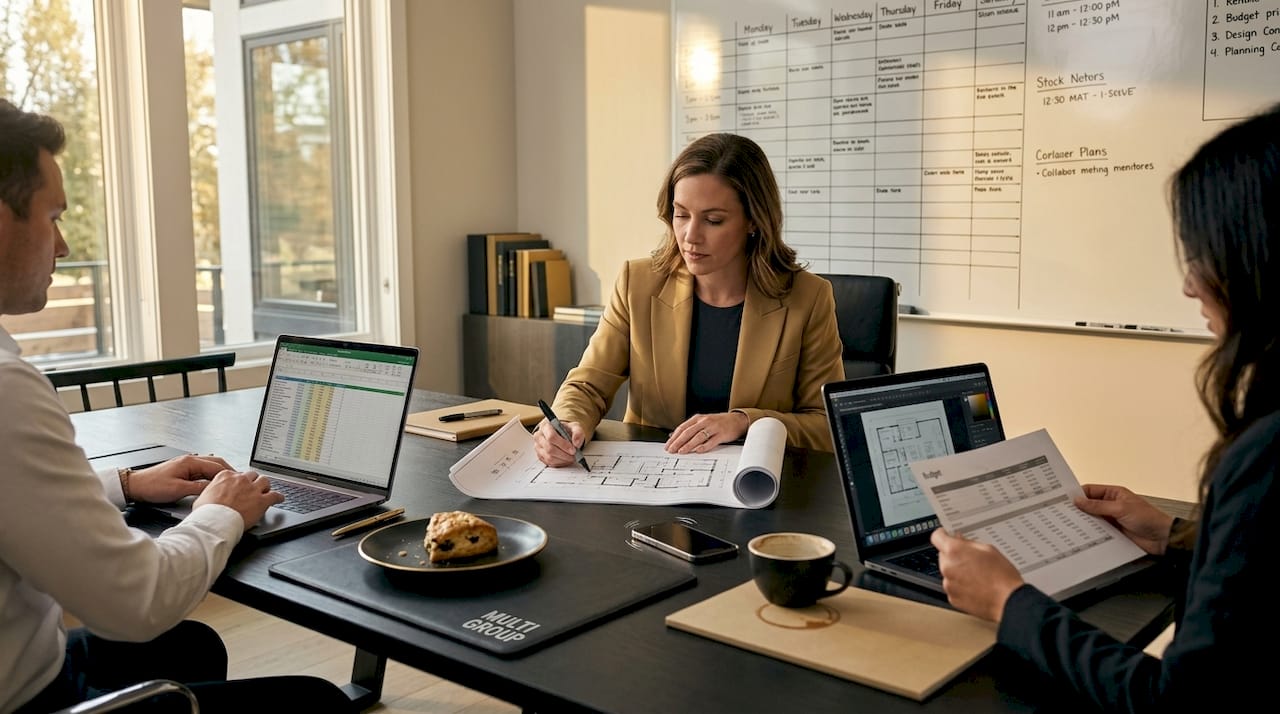
The construction industry has a consistent finding: decisions made early in a project have the largest influence on final cost and quality, while the ability to change those decisions cheaply decreases rapidly once construction begins. Getting a CM involved during pre-construction is one of the most cost-effective choices a project owner can make.
Early CM involvement during pre-construction provides constructability review and cost or schedule visibility, rather than waiting until design is fully complete. This approach often takes the form of fast-track or phased delivery.
Fast-track delivery means starting construction on completed portions of design while other portions are still being finalized. For example, a warehouse renovation might begin demolition and structural work while mechanical and electrical design is being completed. This compresses the overall timeline but requires tight coordination. Phased delivery breaks the project into sequential phases, each permitted and executed in order, reducing risk by keeping design decisions current with construction realities.
A CM's pre-construction contributions typically include:
-
Constructability reviews: Examining design drawings to identify conflicts between systems, unclear specifications, or details that would be difficult or expensive to build as drawn. Catching a structural detail that conflicts with mechanical routing on paper is far cheaper than discovering it in the field.
-
Cost estimating: Providing iterative budget estimates as design develops, so the owner always knows whether the project is on track financially. This prevents the painful scenario of completing design only to discover the project is 30% over budget.
-
Schedule development: Building a realistic construction schedule during pre-construction, identifying long-lead items like custom millwork, structural steel, or specialty equipment, and initiating procurement before permits are issued.
-
Trade market assessment: Understanding current subcontractor availability and pricing in Metro Vancouver, which fluctuates significantly. A CM who is active in the local market knows whether a particular trade has capacity or if early commitments are needed.
-
Risk identification: Flagging site conditions, regulatory requirements, and design uncertainties that could cause problems during construction.
This level of front-end investment consistently reduces change orders, which are one of the most disruptive and expensive elements of any construction project. Late-stage design changes, the kind that happen after permits are issued and work has started, can cost five to ten times more than the same change made during design.
For a deeper look at how delivery model choice affects pre-construction planning, the comparison between design-build vs construction management is worth reviewing. You can also explore project planning strategies specific to Vancouver's market conditions.
For best practices on early involvement in complex construction programs, the principles of mobilization planning apply directly to Metro Vancouver projects.
Pro Tip: Ask your CM to provide a constructability review memo before design is submitted for permit. This single step has prevented some of the most expensive mid-construction surprises we've seen in Metro Vancouver projects.
Risks, guarantees, and choosing the right construction management model
While early involvement is key, understanding the right delivery model and true risk allocation is crucial before moving forward.
Not all construction management engagements work the same way. Three primary models shape how risk and responsibility are allocated between the owner, the CM, and the trades doing the work.
Agency CM: The CM acts as a pure advisor and coordinator. They manage the process, but all contracts are held directly by the owner. The owner retains financial risk for trade contracts, while the CM provides professional management services for a fee. This model works well when the owner wants maximum transparency and control.
CM at Risk (CMAR): The CM holds the trade contracts and provides a Guaranteed Maximum Price (GMP). This shifts execution risk from the owner to the CM. However, CMAR changes risk allocation in ways owners may not fully expect. Owners may believe the GMP means the final cost is fixed, but contracts can still create meaningful financial and operational burdens for both parties, particularly around contingency disputes and scope interpretations.
General Contractor (GC) model: The GC holds a lump-sum or stipulated price contract and takes on execution risk. This model provides price certainty but typically involves less owner visibility and less pre-construction collaboration.
Here's a direct comparison:
| Model | Owner controls contract? | Price certainty | Best for |
|---|---|---|---|
| Agency CM | Yes | Low | Complex, evolving scope |
| CM at Risk | No | High (with caveats) | Mid-to-large projects with defined scope |
| General Contractor | No | High | Well-defined, straightforward scope |
"Owners who sign CMAR contracts expecting a guaranteed outcome are often surprised when disputes arise over what's included in the GMP contingency. Understanding what the CM 'guarantees' versus what they manage is critical before signing."
Key points when choosing your model:
- Transparency vs. certainty: Agency CM gives you visibility into trade costs; CMAR gives you a price cap. Decide which matters more for your project.
- Scope readiness: If design is not complete, a GMP will include significant contingency that inflates apparent cost. Agency CM may be more appropriate.
- Owner capacity: If you have in-house project management expertise, agency CM is manageable. If not, CMAR transfers more coordination burden to the CM.
- Project size and risk: For large or high-risk projects, understanding contingency structures in CMAR contracts is essential before committing.
Reviewing best practices in commercial construction alongside your delivery model selection will help clarify what oversight structure makes sense for your specific project type.
Our take: Why professional construction management is more essential than ever
Metro Vancouver's construction environment is objectively more difficult than it was five years ago. Permit timelines have lengthened. Trades are busy and selective about which projects they take on. Material costs remain volatile. Energy code and accessibility requirements have become more demanding. That combination means the informal approaches that worked on smaller or simpler projects in earlier market conditions are no longer adequate for most commercial or complex residential work.
We've seen what happens when owners rely entirely on a GC to manage their interests. It's not that GCs do poor work. The issue is structural. A GC is optimizing for their business, which is appropriate. That means change orders that protect their margin, schedules that work for their crews, and substitutions that suit their procurement. None of those things are necessarily wrong. But they are different from what an owner's representative would do.
The projects that end well consistently share a few characteristics: early CM involvement, a realistic pre-construction schedule, and a contract structure that creates aligned incentives. The future of commercial construction in Metro Vancouver will reward owners who build projects with professional management structures and punish those who treat it as optional.
If your project involves more than one trade, spans more than four months, or involves any level of custom work in a regulated environment, professional construction management is not a luxury. It's a risk management decision with a clear return on investment.
Get expert construction management for your next project
Every week, property owners and business operators in Metro Vancouver start projects without the management structure they need. Budget surprises, permit delays, and quality issues follow. The good news is that they're largely preventable.
At Multigroup Contracting, we provide construction management services in Metro Vancouver for commercial and residential projects of all scales, from retail buildouts and tenant improvements to warehouse renovations and custom residential interiors. Our team handles permit coordination, trade scheduling, cost tracking, and quality oversight so your project runs on time and on budget. If you're in the planning phase or ready to move forward, connect with us for a project assessment. We'll give you a clear picture of what your project needs and how to build it right.
Frequently asked questions
What's the main benefit of hiring a construction manager versus a general contractor?
A construction manager acts as your advocate throughout the entire project, while a general contractor primarily executes work. CMs coordinate multi-stakeholder work, aligning schedule, cost, quality, safety, and compliance on the owner's behalf.
When should I involve a construction manager on my project?
Involve a CM as early as the planning and design phase for maximum benefit. Early involvement during pre-construction provides constructability review and real cost or schedule visibility before you're committed to a design.
Does construction management eliminate all project risks?
No. Construction management significantly reduces risk through proactive coordination, but it doesn't eliminate everything. Under CMAR contracts, risk allocation can create financial burdens for both parties around GMP and contingency disputes.
Is construction management worth the cost for small projects?
For simple, well-defined builds, a general contractor may be sufficient. For customized or technically complex small projects, a CM prevents costly mistakes that typically far exceed the management fee.
How do I evaluate if a construction manager is right for my commercial or residential project?
Look at project complexity, customization level, and regulatory requirements. Construction management is especially valuable when customization and compliance demands are high, as those factors create the ripple effects that lead to delays and rework.