
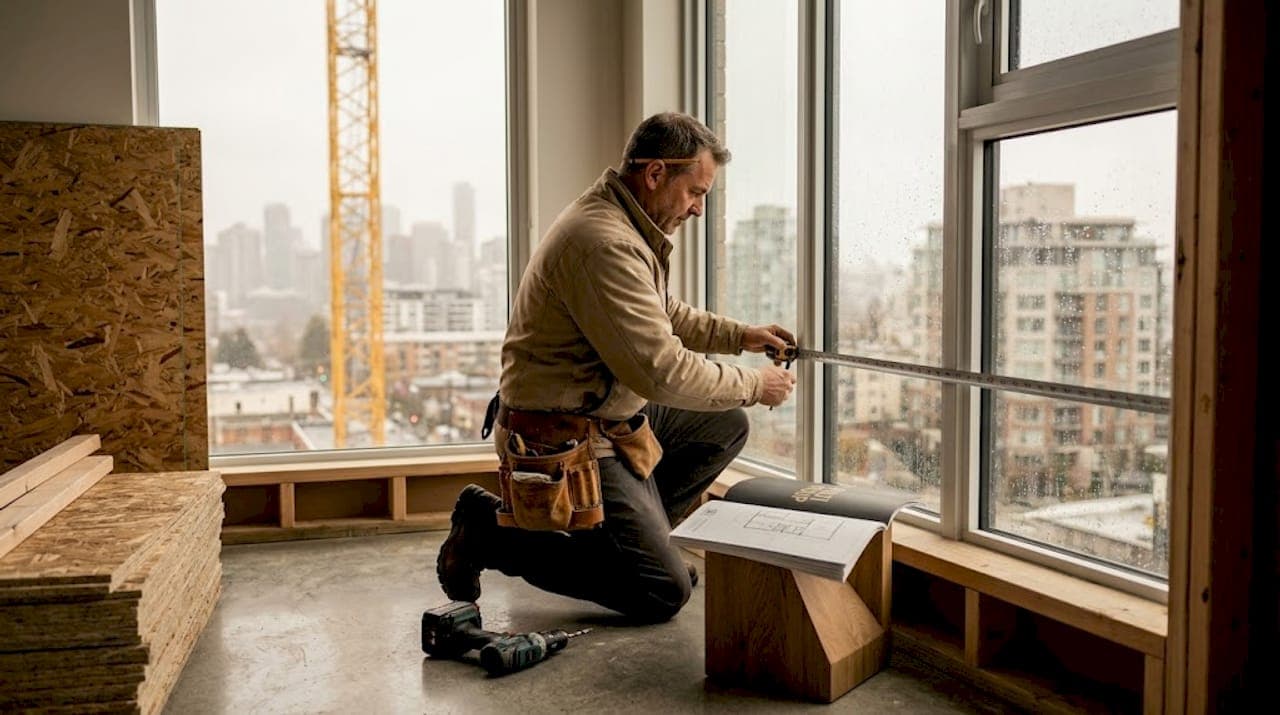
TL;DR:
- Construction craftsmanship involves skill, precision, and care that go beyond basic code compliance to ensure long-term building durability. Vancouver standards emphasize structural, envelope, and finish details that skilled contractors must meet or exceed; neglecting these can lead to costly failures over time. Property owners should ask about certifications, past work, and site processes to verify craftsmanship and protect their investments.
Passing a building inspection is the minimum requirement for any construction project, not a guarantee of quality. Yet many property owners in Vancouver assume that code compliance equals good work. Understanding what is construction craftsmanship, and why it reaches far beyond the inspection checklist, is one of the most valuable things you can do before investing in a commercial renovation or custom residential build. This article covers exactly what craftsmanship means, how local standards shape it, and how to evaluate it confidently before signing a contract.
Table of Contents
- Defining construction craftsmanship and its importance
- Vancouver and BC standards shaping craftsmanship expectations
- Craftsmanship in practice: Critical details and avoiding common pitfalls
- Professional certifications and skilled trades shaping Vancouver craftsmanship
- Applying craftsmanship knowledge: What Vancouver property owners should ask and expect
- Why craftsmanship still defines Vancouver's finest buildings in an age of technology
- Connect with Multigroup Contracting for expert craftsmanship in Vancouver
- Frequently asked questions
Key Takeaways
| Point | Details |
|---|---|
| Craftsmanship defined | Construction craftsmanship involves skilled work exceeding minimum code to ensure durability and quality. |
| Local standards matter | Vancouver and BC standards mandate wood framing and durable materials shaping craftsmanship expectations. |
| Critical details | Precision framing, cross-trade coordination, and compliance prevent costly failures and extend building life. |
| Skilled professionals | Certifications like MIOC indicate expert competence essential for high-quality craftsmanship. |
| Owner action steps | Property owners should verify credentials, request detailed plans, and prioritize communication for best outcomes. |
Defining construction craftsmanship and its importance
To appreciate why craftsmanship matters, first we must understand what it is exactly and how it is measured.
Construction craftsmanship refers to the skill, precision, and care a contractor applies to every stage of a build. It covers far more than putting materials in place. Workmanship standards define technical benchmarks covering installation tolerances, material application, and structural compliance that go well beyond what your local building inspector verifies.
"A building that passes inspection has met the legal minimum. A building with genuine craftsmanship has been built to last, perform, and hold its value for decades."
Here is what distinguishes true craftsmanship from basic code compliance:
- Workmanship standards specify precise criteria, such as allowable gaps in framing, surface flatness tolerances in flooring, and correct fastener patterns.
- Manufacturer specifications require materials to be installed in specific ways to remain under warranty coverage. Deviate from those specs and your warranty may be void, regardless of whether the work passed inspection.
- Contract standards outline project-specific quality expectations agreed upon between the owner and contractor.
- Durability outcomes depend on how well each component integrates with others, not just whether each individual piece was installed.
The role of craftsmanship in construction directly affects long-term building value. Poor workmanship may not show up in the first year, but it creates compounding problems over time: water infiltration behind improperly sealed cladding, squeaky floors from under-fastened subfloor panels, and structural movement from inconsistent framing tolerances. For Vancouver property owners investing in commercial construction, these are not abstract risks. They are real costs.
Vancouver and BC standards shaping craftsmanship expectations
Having defined craftsmanship in general, let's explore the specific standards Vancouver projects must follow, setting a clear quality baseline.
Vancouver's construction environment operates under a layered set of regulations that directly influence what good craftsmanship looks like in practice. Two key documents set the foundation for local quality expectations.
BC Housing Design Guidelines mandate wood frame construction as standard for new buildings under six storeys, with a strong emphasis on long-term cost efficiency and occupant satisfaction. These guidelines shape everything from structural framing tolerances to envelope details. The City of Vancouver Housing Design and Technical Guidelines go further, specifying minimum durability standards for finishes and materials, particularly in renovation work, to reduce ongoing maintenance costs and extend building lifespan.
Here is how those regional standards translate into real craftsmanship expectations:
| Standard area | What it governs | Impact on craftsmanship |
|---|---|---|
| Wood frame construction | Structural framing under six storeys | Precision in stud spacing, header sizing, and lateral bracing |
| Envelope durability | Cladding, windows, and moisture barriers | Correct material sequencing and sealing techniques |
| Finish materials | Interior surfaces in renovated units | Proper substrate preparation and installation methods |
| Environmental performance | Insulation, air barriers, and ventilation | Consistent installation to achieve rated performance |
These standards matter because they set the floor, not the ceiling. A craftsman-level contractor knows how to meet them and go beyond them. For property owners pursuing commercial construction best practices in Metro Vancouver, understanding this distinction helps you ask better questions and set clearer expectations from day one.
Craftsmanship in practice: Critical details and avoiding common pitfalls
With the standards clear, we can now focus on how craftsmanship shows up on site and what mistakes to watch out for.
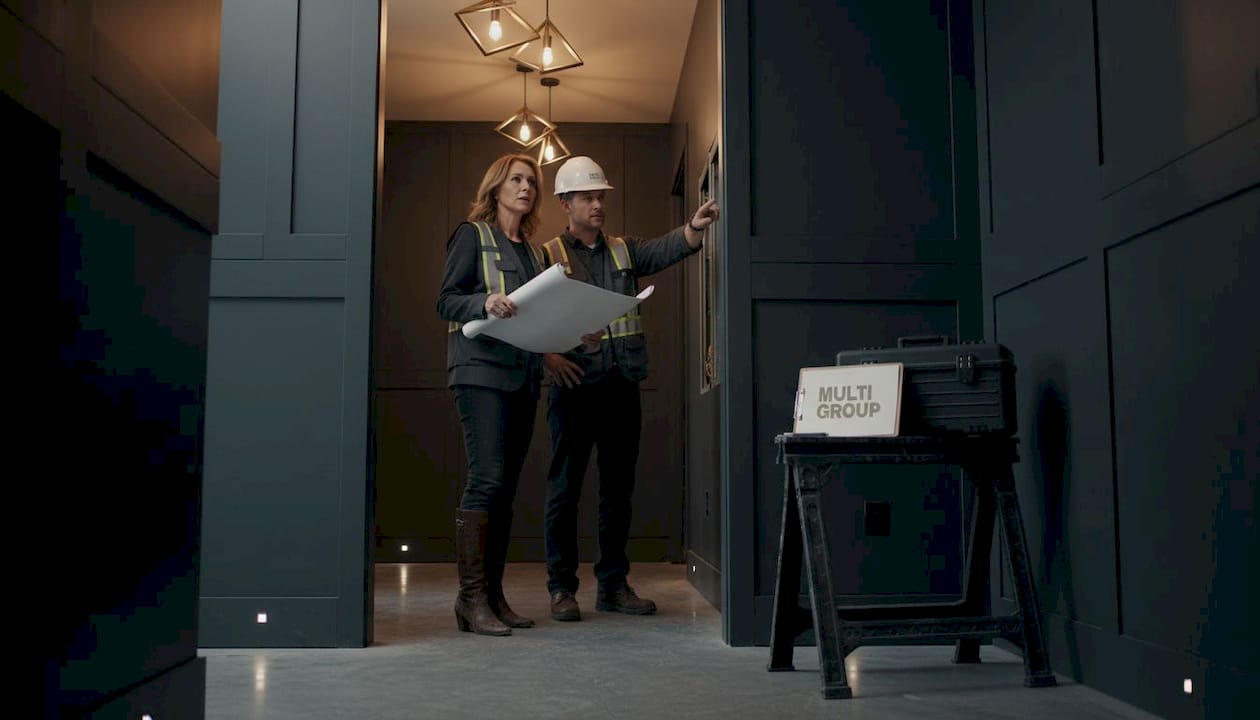
The role of craftsmanship in builds becomes visible in the details that most property owners never see until something goes wrong. Precision in framing and material installation ensures structural stability and prevents costly rework, particularly in Vancouver's wet climate where moisture management is not optional.
The following pitfalls are common on projects where craftsmanship was not prioritized:
- Inadequate lateral bracing: Vancouver sits in a seismic zone. BC Building Code Part 9 compliance for lateral bracing is non-negotiable, and rework costs when this is missed run reliably 5 to 10 times the cost of getting it right the first time.
- Poor cross-trade coordination: When framers, plumbers, and electricians do not plan together, penetrations through structural members weaken the frame, and gaps at service penetrations allow moisture entry.
- Insufficient substrate preparation: Flooring and tile failures almost always trace back to inadequate preparation of the surface underneath, not the finish material itself.
- Improper moisture barriers: In Vancouver's climate, even small lapses in barrier installation at wall transitions and window openings lead to water intrusion within a few seasons.
- Inconsistent fastener patterns: Roof sheathing and subfloor panels require specific nailing schedules. Inconsistency here creates bounce, squeaking, and eventual structural movement.
Pro Tip: Before your project begins, ask your contractor to walk you through their framing inspection process, specifically how they verify lateral bracing and confirm cross-trade penetration locations. A contractor who does this as a matter of course is demonstrating the kind of construction quality techniques that protect your investment.
A practical construction checklist for Vancouver builds helps you catch these issues early. Reviewing the residential construction checklist for Vancouver projects gives you a concrete starting point. Understanding how subcontractors are managed on your project is equally important, since most cross-trade coordination happens at that level.
Professional certifications and skilled trades shaping Vancouver craftsmanship
Beyond practical techniques, quality craftsmanship depends heavily on the skill and certification of the tradespeople involved.
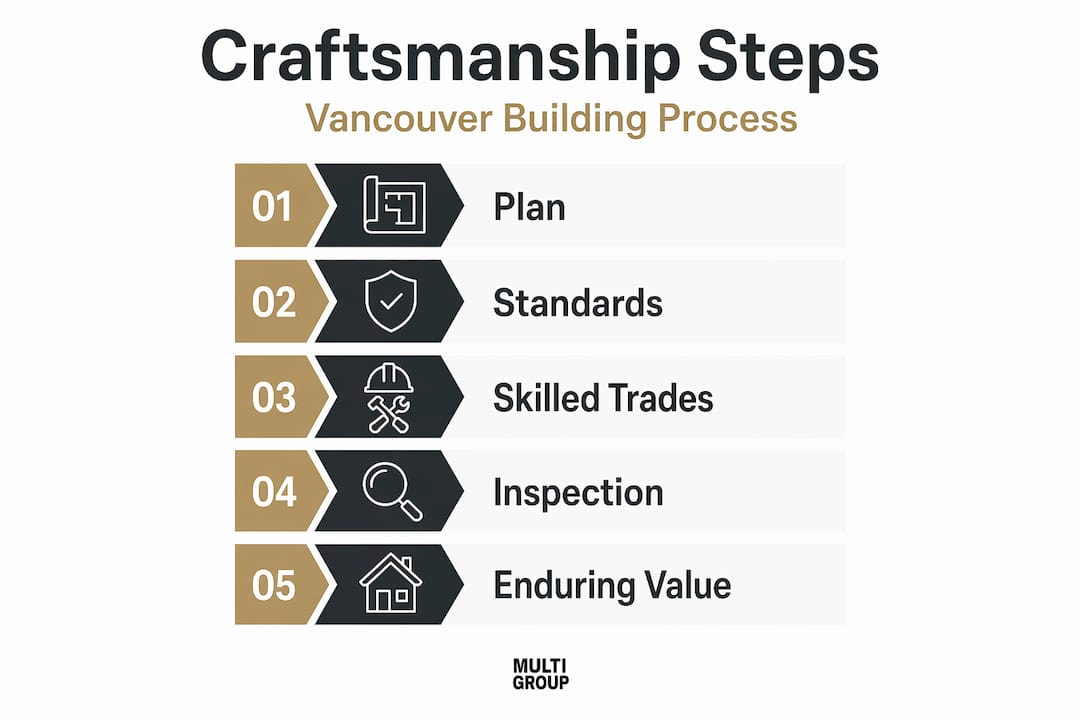
Certifications are not just paperwork. They represent documented competence in specific construction skills and techniques, and they reduce the risk of skill gaps that lead to defects. The Institute of Carpenters promotes certifications like the MIOC (Member of the Institute of Carpenters) to recognize sustained competence in wood trades, directly addressing the skill gaps that cause failures in complex custom builds.
For Vancouver property owners, here is why certified tradespeople matter on your project:
- MIOC and equivalent credentials confirm that a carpenter has demonstrated expertise over years of practice, not just completed a short course.
- Licensed contractors are required to carry proper insurance and meet WorkSafeBC requirements, protecting you from liability on site.
- Ongoing professional development ensures tradespeople stay current with updated code requirements and new material systems.
- Specialized skills are essential for executing detailed millwork, custom cabinetry, and complex finish carpentry in high-end residential or commercial interiors.
"In wood trades particularly, the difference between a certified craftsperson and an uncertified laborer is often invisible until year three or four, when joints open, surfaces delaminate, or structures shift."
The importance of craftsmanship in building comes down to who is holding the tools. Reviewing licensed contractor standards in Vancouver before hiring helps you confirm you are working with professionals who are accountable for the quality they deliver.
Applying craftsmanship knowledge: What Vancouver property owners should ask and expect
Knowing the standards and skills involved, let's explore how you can apply this to your own projects effectively.
Evaluating craftsmanship before a project starts is entirely possible if you ask the right questions. How to assess craftsmanship is less about understanding every technical detail and more about knowing which signals to look for in a contractor's process, documentation, and communication.
Here is a practical sequence to follow when vetting any contractor for a Vancouver renovation or custom build:
- Ask for BC Building Code compliance documentation. A credible contractor will have a clear process for verifying compliance with Part 9 structural requirements and local amendments.
- Request certifications and trade licenses. Confirm that key tradespeople hold relevant credentials. For carpentry-heavy projects, ask specifically about wood trade certifications.
- Review past project examples. Look for finished details in photos: consistent reveals on trim, flat and level surfaces, clean transitions between materials. These are indicators of construction quality techniques applied with care.
- Ask about cross-trade collaboration. How does the contractor coordinate between framers, plumbers, and mechanical trades? Do they use a single point of contact or leave trades to coordinate independently?
- Confirm workmanship warranty coverage. A contractor confident in their craftsmanship will offer clear terms on what is covered and for how long after project completion.
Pro Tip: Bringing detailed material samples and site-specific timelines to your first consultation identifies potential issues early and aligns expectations before any work begins. This is especially important for heritage buildings or complex commercial renovations in Vancouver.
A contractor who answers these questions clearly, without hesitation, is demonstrating the same attention to detail they bring to the physical work. Reviewing commercial construction best practices for Metro Vancouver gives you additional context for what experienced contractors do differently.
Why craftsmanship still defines Vancouver's finest buildings in an age of technology
There is a growing assumption in the industry that digital tools have reduced the importance of human skill. Laser levels, CNC-cut millwork, and 3D modeling are genuinely useful. But technology improves accuracy without replacing the human judgment and patience that skilled craftsmanship requires for structural durability and cohesive design.
We have seen this play out on real projects. A general contractor can produce perfectly modeled framing plans and still end up with a structure that shifts because a laborer misread the lateral bracing spec during installation. The model is only as good as the hands that execute it.
The importance of craftsmanship in building comes into sharpest focus over time. A well-crafted building holds its value, generates fewer maintenance calls, and earns the trust of future buyers or tenants. That is not sentiment. It is return on investment.
There is also a design dimension that technology cannot cover. The synergy between a skilled finish carpenter and a thoughtful designer produces results that no prefabricated system replicates. Custom millwork, precisely fitted joinery, and carefully staged material transitions are the details that define premium spaces in Vancouver's most competitive real estate market.
Our perspective, built from years of work across the Metro Vancouver region, is that the property owners who protect their investments best are the ones who insist on real craftsmanship from the start. They do their homework on what commercial construction actually involves, they follow a residential construction checklist to stay organized, and they do not treat the lowest bid as the safest choice. Craftsmanship is not a luxury add-on. It is the reason a building still performs well twenty years from now.
Connect with Multigroup Contracting for expert craftsmanship in Vancouver
Ready to ensure your project meets the highest craftsmanship standards? Here is how Multigroup Contracting can help.
Multigroup Contracting is a licensed and insured Vancouver-based general contractor serving the Metro Vancouver region, including Burnaby, Richmond, Surrey, Coquitlam, and North Vancouver. The team specializes in commercial tenant improvements, warehouse renovations, retail buildouts, and high-end custom residential builds. Every project is delivered with a focus on workmanship standards, transparent communication, and clear timelines.

Whether you are planning a commercial renovation or a custom home, Multigroup brings the certified trades, construction knowledge, and project management experience your investment deserves. Reach out through the website to schedule a consultation and get practical, straightforward advice tailored to your project from day one.
Frequently asked questions
What exactly does construction craftsmanship involve?
Construction craftsmanship involves the skillful and precise execution of building work that meets or exceeds industry standards for quality, durability, and aesthetic detail beyond minimum code requirements. Workmanship standards define technical benchmarks covering installation tolerances, material application, and structural compliance.
How do I verify a contractor's craftsmanship quality in Vancouver?
Ask for certifications like MIOC, review past project examples, verify compliance with BC Building Codes and local guidelines, and confirm that cross-trade collaboration and site-specific documentation are part of their standard process. The Institute of Carpenters promotes certifications like MIOC to demonstrate professional competence essential for Vancouver builds.
Why is craftsmanship more than passing a building inspection?
Passing inspections confirms minimum code compliance, but craftsmanship ensures materials are installed with precise tolerances and structural integrity that directly affect long-term durability and lifespan. Inspections verify code compliance, not workmanship quality against industry standards or contract specifications.
What are common pitfalls in construction craftsmanship?
The most frequent issues include lack of cross-trade coordination leading to joint and moisture failures, ignoring lateral bracing requirements that risk seismic damage, and insufficient framing precision that causes expensive rework. Cross-trade collaboration and lateral bracing verification are two of the most overlooked elements on Vancouver construction projects.