
TL;DR:
- Vancouver commercial renovation costs are 20 to 30% higher than the national average.
- Local expertise is crucial to navigate permits, material delays, and contractor selection successfully.
- Strategies like adaptive reuse and modular construction save costs and reduce environmental impact.
Commercial renovation in Metro Vancouver carries a cost premium that catches many property owners off guard. Vancouver renovation costs run 20 to 30% above the national average, driven by tight labor markets and high material prices. That gap means a project budgeted on national estimates can fall short before the first wall goes up. This guide walks you through what commercial renovation actually involves, what drives costs locally, and which strategies consistently deliver the best results for Vancouver businesses.
Table of Contents
- What is commercial renovation? Key concepts for owners
- Understanding Vancouver's renovation landscape
- Process explained: From renovation goals to grand opening
- Smart strategies: Cutting costs, boosting value and sustainability
- Our perspective: The overlooked advantage of local expertise in Vancouver renovations
- Next steps: Unlock expert renovation support for your Vancouver space
- Frequently asked questions
Key Takeaways
| Point | Details |
|---|---|
| Vancouver renovation costs | Expect to pay 20-30% more in Metro Vancouver due to higher labor and materials expenses. |
| Efficiency boosts value | Choosing modular construction or adaptive reuse can reduce costs, cut timelines, and improve sustainability. |
| Sustainability incentives matter | Programs like CleanBC offer rebates for low-carbon and energy-efficient renovations. |
| Process clarity saves time | Following local permit rules and budgeting for unique Vancouver factors helps avoid costly surprises. |
What is commercial renovation? Key concepts for owners
Commercial renovation refers to the process of upgrading, reconfiguring, or restoring a space used for business purposes. This is different from residential work in scope, code requirements, and how the project is managed from start to finish.
Common commercial renovation types include:
- Office renovations: Reconfiguring floor plans, updating HVAC systems, and modernizing electrical for hybrid or open-concept workspaces.
- Retail buildouts: Creating customer-facing environments with custom millwork, display fixtures, and branded interiors.
- Warehouse upgrades: Adding mezzanines (raised intermediate floors), improving loading areas, and meeting current fire and safety codes.
- Adaptive reuse: Converting an existing structure to a new commercial function, such as turning an old warehouse into office space. This approach can reduce embodied carbon by 77% and cut costs by 46% compared to new construction.
Several stakeholders are typically involved in a commercial renovation. The property owner or business operator sets the goals and approves the budget. Architects or designers translate those goals into drawings and specifications. A licensed general contractor coordinates trades, manages the schedule, and handles permits. In leased spaces, tenants and landlords negotiate the scope through tenant improvement (TI) allowances.
Every project follows a predictable sequence. Understanding these stages early prevents costly surprises:
- Discovery and goal setting: Define what the space must accomplish and set a realistic budget.
- Design and planning: Develop drawings, material selections, and engineering requirements.
- Permitting: Submit applications to the relevant municipality and secure approvals.
- Construction: Execute the work in phases, typically demolition, structural, rough-ins, then finishes.
- Inspections: City or municipal inspectors verify code compliance at key milestones.
- Handover: Final walk-through, deficiency corrections, and occupancy confirmation.
If you want a detailed breakdown of these phases, the Vancouver buildout guide covers each step in depth. For owners weighing whether to renovate at all, reviewing the reasons to invest in renovation can clarify the long-term value.
Understanding Vancouver's renovation landscape
Metro Vancouver's renovation market operates under conditions that differ significantly from most other Canadian cities. Labor is expensive and in short supply. Materials sourced locally reflect higher transportation and import costs. Demand from a concentrated, high-density urban market keeps contractors busy and reduces price competition.
| Renovation type | Vancouver avg. cost per sq ft | National avg. cost per sq ft |
|---|---|---|
| Office tenant improvement | $120 to $180 | $90 to $140 |
| Retail buildout | $100 to $160 | $75 to $120 |
| Warehouse upgrade | $60 to $100 | $45 to $75 |
| Full commercial gut renovation | $180 to $280 | $130 to $210 |
"Vancouver renovation costs run 20 to 30% above the national average, making accurate local budgeting one of the most important early decisions a property owner can make."
Beyond base costs, Vancouver's green building policies add another layer of planning. The CleanBC program offers rebates for energy efficiency upgrades, including high-performance HVAC systems, insulation improvements, and low-carbon materials. These incentives can meaningfully offset upfront costs for qualifying projects. Staying current on these programs is part of what Greater Vancouver construction trends consistently highlight as a competitive advantage for informed owners.
Permit timelines in Metro Vancouver also vary considerably by municipality. A project in the City of Vancouver may take six to twelve weeks for permit approval, while a project in Surrey or Burnaby may move faster depending on current backlog. Building this into your schedule before signing a lease or committing to an opening date is essential.
Pro Tip: Add a 15% contingency to any Vancouver commercial renovation budget. Local cost volatility, permit delays, and hidden existing conditions (like asbestos in older buildings) make this buffer a standard practice, not an overreaction.
For a broader market view, Vancouver commercial construction insights provide useful context on current pricing and demand trends.
Process explained: From renovation goals to grand opening
A successful commercial renovation follows a structured path. Skipping or rushing any phase typically results in budget overruns, permit rejections, or costly rework. Here is how the process unfolds for Metro Vancouver projects:
- Goal setting and feasibility: Define what the space needs to do for your business. Identify the must-haves versus nice-to-haves. Review the existing building's condition with a contractor early, before design fees accumulate.
- Design and documentation: Work with an architect or designer to produce permit-ready drawings. For tenant improvements, coordinate with the building owner to align with base building systems.
- Permit submission: Submit drawings to the relevant city or district. In Metro Vancouver, projects over a certain value or scope require a building permit, mechanical permit, and sometimes a development permit depending on zoning.
- Contractor selection and tendering: Get at least three quotes from licensed general contractors. Review their experience with similar project types and check references specific to Vancouver.
- Construction and site management: Your contractor manages trades, material deliveries, and inspections. Weekly site meetings keep the project on schedule and surface issues early.
- Inspections and occupancy: Frame inspections, insulation checks, and final occupancy inspections are required before you can open. Your contractor coordinates these with the city.
- Handover and deficiency review: Walk the completed space and document any items that need correction before taking possession.
The phases of a commercial buildout article maps this process in further detail for those managing larger or more complex projects.
For certain project types, modular construction is worth considering. Modular methods cut timelines by 30 to 50% and reduce costs by 10 to 20% by moving fabrication off-site. This approach suits office fit-outs, modular walls, and prefabricated bathroom pods in larger commercial spaces. For tenant improvement services specifically, modular components can reduce disruption to neighboring tenants in occupied buildings.
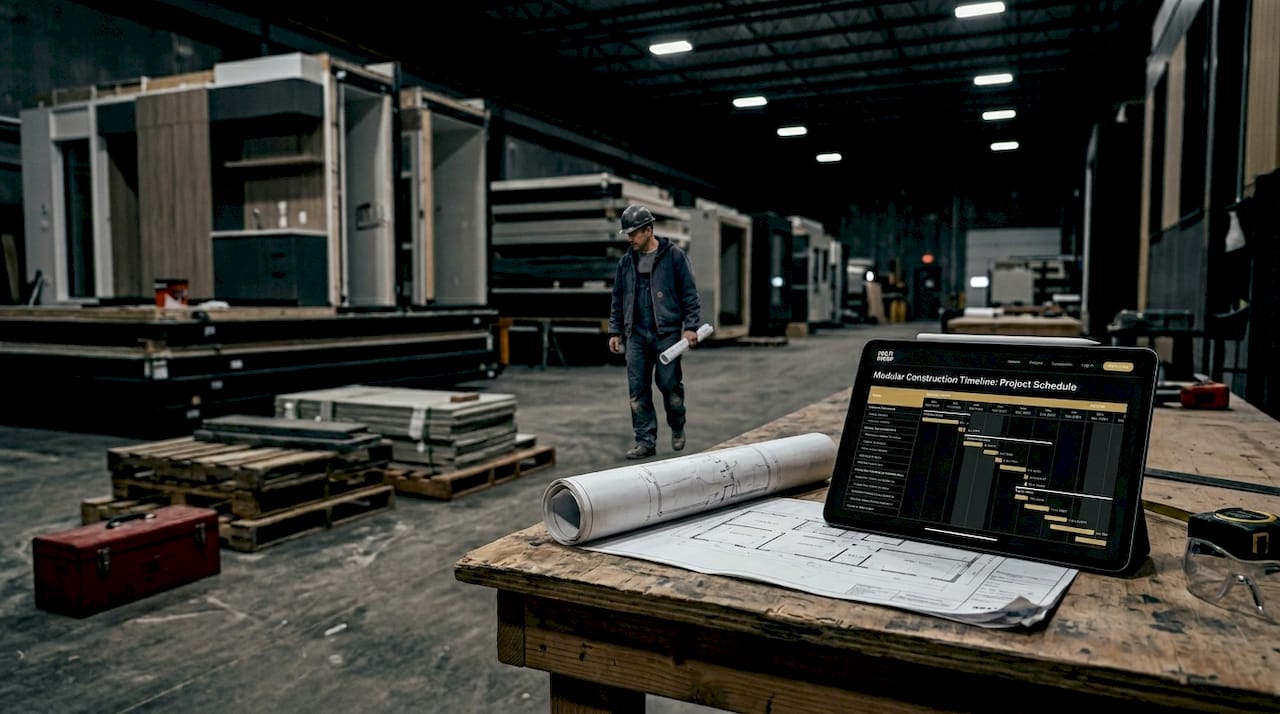
Pro Tip: Request a detailed construction schedule in Gantt chart format from your contractor before work starts. This gives you a clear visual of every trade's timeline and flags where delays in one area will affect others downstream.
Smart strategies: Cutting costs, boosting value and sustainability
Once the process is understood, the quality of your decisions determines whether the renovation delivers strong returns or burns through the budget. Three main approaches shape how Vancouver businesses tackle commercial renovations:
| Approach | Typical cost reduction | Speed advantage | Environmental impact |
|---|---|---|---|
| Adaptive reuse | Up to 46% lower | Moderate | 77% less embodied carbon |
| Modular construction | 10 to 20% lower | 30 to 50% faster | Reduced site waste |
| Traditional renovation | Baseline | Baseline | Standard |
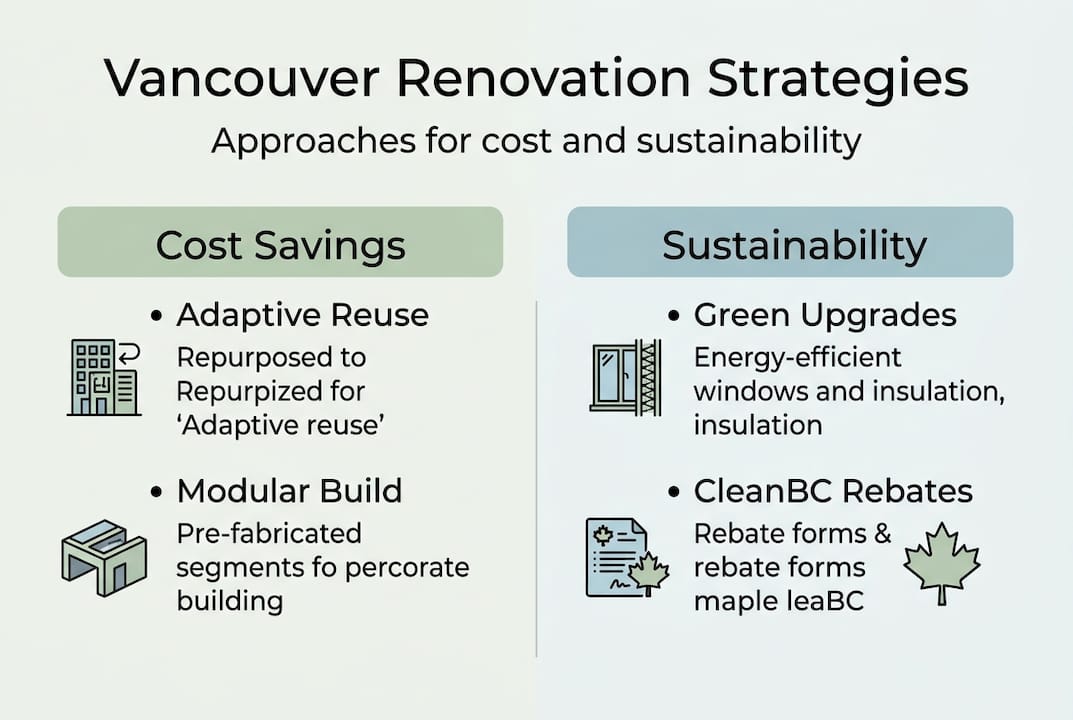
Adaptive reuse is particularly powerful in Metro Vancouver, where older industrial and commercial stock sits in high-value neighborhoods. Retaining the existing structure rather than demolishing it removes a major cost and carbon burden from the project.
Low-carbon materials, such as mass timber (engineered wood used as a structural material), recycled steel, and low-VOC (volatile organic compound) finishes, are increasingly available through local suppliers and often qualify for incentive programs.
Available CleanBC incentives for commercial projects include:
- Rebates for high-efficiency HVAC and heat pump systems
- Incentives for LED lighting upgrades and lighting controls
- Support for building envelope improvements including insulation and glazing
- Funding for energy audits and retrofit planning
These programs are updated regularly, so confirm current eligibility with the CleanBC program or a local contractor familiar with the application process. Sustainable construction tips provide a practical overview of how to integrate these strategies into your project scope.
Beyond sustainability incentives, the best ROI comes from spending on the right things. Front-of-house finishes in retail spaces drive customer experience and sales. Efficient back-of-house layouts reduce operational costs over time. Prioritizing structural and systems upgrades over purely cosmetic changes also protects long-term asset value. For current market direction, Vancouver renovation trends outline where leading businesses are investing in 2026.
Our perspective: The overlooked advantage of local expertise in Vancouver renovations
Most renovation guides focus on process and cost. What they understate is how much regional knowledge shapes whether a project succeeds or stalls.
Vancouver's construction environment is specific in ways that matter at every stage. Permit reviewers in different municipalities have different interpretations of the same code sections. Certain subcontractors are reliable partners; others consistently create delays. Material lead times shift with port activity at the Port of Metro Vancouver. These are not details you find in a generic guide.
National firms entering the Vancouver market often underestimate these variables. They apply standard schedules and cost models that do not account for local labor rates, subcontractor availability, or the pace of municipal plan checking. The result is projects that run late and over budget, not because of negligence, but because of a genuine gap in local knowledge.
We have seen firsthand that working with contractors who have deep roots in Metro Vancouver consistently produces better outcomes. They know which inspectors prioritize which issues, which suppliers have reliable stock, and which permit strategies move applications through faster. That hyperlocal experience is not a soft advantage. It is a direct cost and time benefit. Learn more about what distinguishes local general contractors from out-of-market alternatives.
Next steps: Unlock expert renovation support for your Vancouver space
Understanding the Vancouver renovation landscape is the first step. Acting on that knowledge with the right partner is what delivers results.

At Multigroup Contracting, we specialize in commercial renovations across Metro Vancouver, from tenant improvements and retail buildouts to full warehouse conversions. Our team manages every phase, including permits, scheduling, trades coordination, and final inspections, so you stay focused on your business. We bring local expertise, transparent budgeting, and a track record of on-time project delivery. If you're planning a renovation and want a realistic assessment of scope, timeline, and cost, reach out for a consultation. We're ready to help you move from planning to completion efficiently.
Frequently asked questions
How does adaptive reuse save money in Vancouver commercial renovations?
Adaptive reuse retains the existing structure instead of demolishing and rebuilding, which can cut renovation costs by up to 46% and lower embodied carbon by 77% compared to new construction.
What makes commercial renovation more expensive in Metro Vancouver?
Labor shortages and elevated material costs push Vancouver renovation prices 20 to 30% higher than the national average, making local budgeting expertise essential from day one.
What are CleanBC rebates and who qualifies?
CleanBC rebates are provincial incentives available to Vancouver businesses investing in energy-saving upgrades such as heat pumps, LED lighting, and improved insulation. Eligibility depends on the specific upgrade type and current program guidelines.
How long does a typical commercial renovation take with modular construction?
Modular construction methods can accelerate project completion by 30 to 50% compared to traditional site-built approaches, making them especially useful for businesses with tight opening deadlines.