
TL;DR:
- Proactive planning and early coordination are essential to avoid costly delays and budget overruns.
- Construction management software improves communication, reduces errors, and speeds up decision-making.
- Material choices like mass timber can be cost-effective and accelerate construction when properly engineered.
Launching a commercial construction project in Metro Vancouver is one of the most complex undertakings a property owner or developer can face. Costs in the region rank among the highest in Canada, regulatory requirements are layered and precise, and timelines can unravel quickly when early decisions are rushed or poorly coordinated. The difference between a project that delivers on time and on budget and one that stalls mid-build often comes down to strategy, not luck. This guide covers the evidence-based best practices that experienced contractors use to navigate planning, technology, materials, and quality control so your next project runs smoothly from groundbreaking to handover.
Table of Contents
- Set the stage: Planning and early coordination
- Leverage technology: Construction management software
- Smart material choices: Mass timber vs. concrete for cost and speed
- Consistent execution: Monitoring, quality control, and adapting to change
- Perspective: Why strategy trumps shortcuts in Metro Vancouver commercial construction
- Get expert support for your Metro Vancouver project
- Frequently asked questions
Key Takeaways
| Point | Details |
|---|---|
| Prioritize early planning | Proactive scheduling and regulatory review prevent costly delays. |
| Adopt digital tools | Construction management software provides real-time updates that help avoid overruns. |
| Choose materials strategically | Evaluate cost and sustainability options like mass timber vs. concrete for local projects. |
| Monitor and adapt | Frequent check-ins and flexible processes keep projects on track and within budget. |
Set the stage: Planning and early coordination
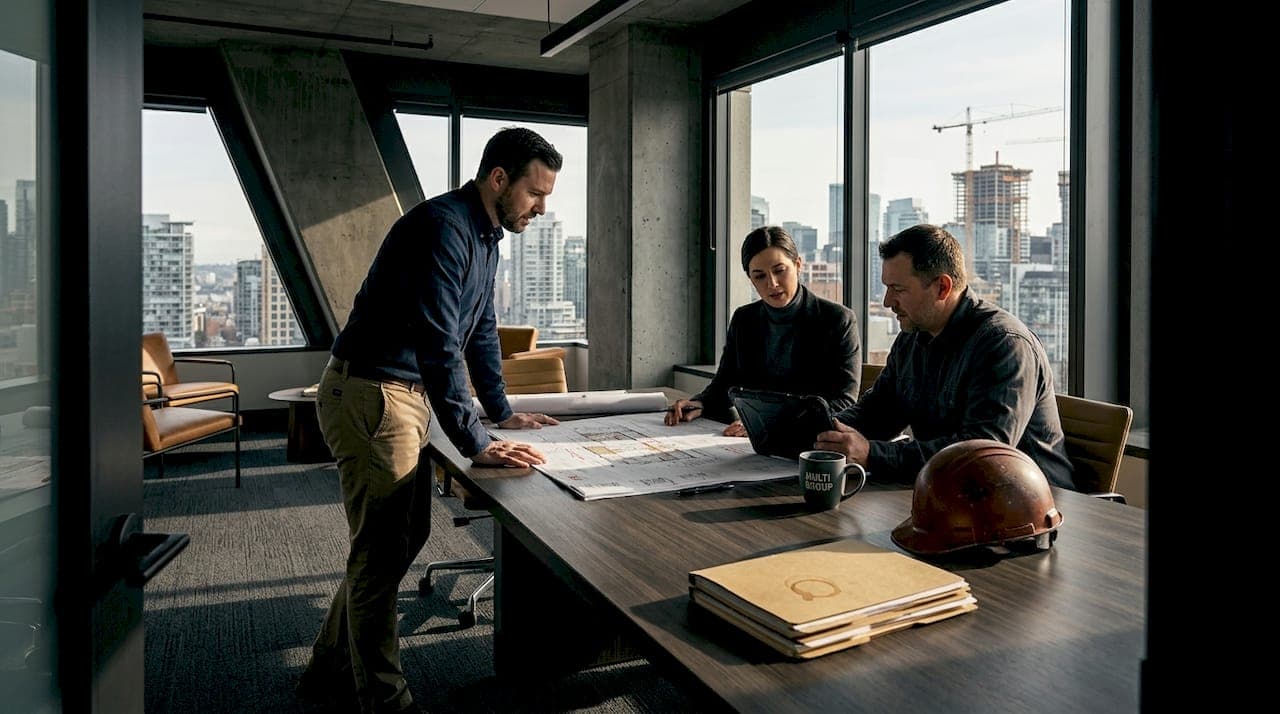
The most expensive problems in commercial construction are almost always the ones that could have been prevented in the first place. A missed permit condition, an unresolved design conflict, or a subcontractor brought in too late can each add weeks and significant costs to a project. Proactive planning is not just good practice. It is the single most reliable way to protect your timeline and budget before work even begins.
Build the right team before design begins. This means bringing together your general contractor, architect or designer, and key specialty trades at the preconstruction stage. When these parties collaborate early, conflicts between structural systems, mechanical layouts, and design intent are caught on paper rather than on site. Decisions made during design cost a fraction of what those same decisions cost during construction.
Early consultation with local authorities is non-negotiable. Vancouver's Building By-law Office and the Authority Having Jurisdiction (AHJ, meaning the agency responsible for enforcing building codes in a specific area) have specific requirements that differ from other municipalities in Metro Vancouver. Burnaby, Surrey, and Richmond each operate under their own permitting processes. Scheduling a pre-application meeting early allows your team to flag potential code issues, understand review timelines, and avoid resubmissions that can delay a project by months.
A strong preconstruction phase should cover the following areas:
- Permit strategy and target submission dates
- Site conditions review, including geotechnical and environmental factors
- Subcontractor procurement and early trade coordination
- Design milestone schedule with owner review periods built in
- Budget validation with allowances clearly identified
- Communication protocols: who approves what, and by when
Metro Vancouver project management tips offer additional context on how to structure your preconstruction phase for local conditions. Getting these fundamentals right early also connects directly to staying on time and budget throughout every subsequent phase.
Proactive planning is not a luxury reserved for large projects. Even a mid-size tenant improvement or retail buildout benefits enormously from a structured preconstruction process. The cost of an extra planning week is always less than the cost of a site delay.
Prioritizing communication, coordination, and construction management software consistently reduces delays and errors in commercial projects. This finding reflects what experienced teams across Metro Vancouver observe on a regular basis: structure prevents chaos.
Pro Tip: Schedule formal milestone check-ins at key project stages, such as design completion, permit submission, structural frame completion, and mechanical rough-in. Document who attended, what was decided, and what action items were assigned. This simple practice creates accountability and prevents misunderstandings from compounding over time.
With the value of a clear project launch in mind, next examine what role technology and management software plays in keeping projects on schedule.
Leverage technology: Construction management software
Digital tools have fundamentally changed how commercial construction projects are managed. Not long ago, project communication relied heavily on paper logs, phone calls, and email chains that were difficult to search and easy to misplace. Today, purpose-built construction management platforms give owners, contractors, and consultants a shared, real-time view of everything happening on a project.
Digital construction management platforms offer benefits that go well beyond basic scheduling. Real-time data sharing reduces delays and errors by ensuring every stakeholder works from the same current set of information rather than relying on outdated drawings or verbal updates. This is especially valuable in Metro Vancouver, where projects often involve multiple consultants across different municipalities.
The core functions that matter most for commercial builds include:
- Schedule management: Visual timelines that show task dependencies, critical path items, and delay impacts across all trades.
- Budget tracking: Real-time cost reports that flag variances before they become overruns.
- Change order management: Formal documentation of every scope change, with pricing and approvals tracked in one place.
- Drawing and document control: Version-controlled drawings so no one is building from an outdated sheet.
- Submittal and RFI tracking: Clear records of requests for information (RFIs, meaning formal written requests for clarification on design intent or specifications) and material submittal reviews.
- Inspection and punch list management: Digital checklists that track deficiency items through to resolution.
Here is a quick comparison of how software-managed projects typically perform versus traditionally managed ones:
| Project element | Traditional management | Software-assisted management |
|---|---|---|
| Change order resolution | Days to weeks | Hours to days |
| Drawing version control | High risk of error | Automatically version-controlled |
| Budget variance detection | End of month | Real-time alerts |
| Stakeholder communication | Email chains | Centralized, searchable log |
| Inspection tracking | Paper forms | Digital, timestamped records |
| Permit document access | Physical binders | Cloud-accessible by all parties |
Common mistakes when rolling out software include choosing a platform with too steep a learning curve, failing to train all team members before the project starts, and not enforcing consistent use across all parties. A platform is only as effective as the data entered into it. If subcontractors submit change requests by email while the general contractor tracks them in the software, the audit trail breaks down immediately.
Pro Tip: Designate a "tech champion" on your project team. This person is responsible for onboarding all parties to the platform, troubleshooting issues, and enforcing consistent data entry standards. On larger projects, this role often falls to the project coordinator. On smaller builds, it can be handled by the project manager directly.
Building on solid coordination and digital platforms, material choices and value engineering become the next critical decision points.
Smart material choices: Mass timber vs. concrete for cost and speed
Material selection is one of the most consequential decisions in any commercial build. In Metro Vancouver, property owners are increasingly weighing three primary structural systems: mass timber, cast-in-place concrete, and light wood framing. Each comes with distinct cost profiles, construction timelines, sustainability credentials, and regulatory considerations.
Mass timber refers to engineered wood products such as cross-laminated timber (CLT) and glulam beams used as primary structural elements. Vancouver has become a leading market for mass timber construction, supported by provincial building code updates that now allow mass timber in taller buildings. Mass timber can reach cost parity with concrete at approximately $390 per square foot in Vancouver projects, though it can run roughly 22% higher than light wood framing in comparable low-rise applications.
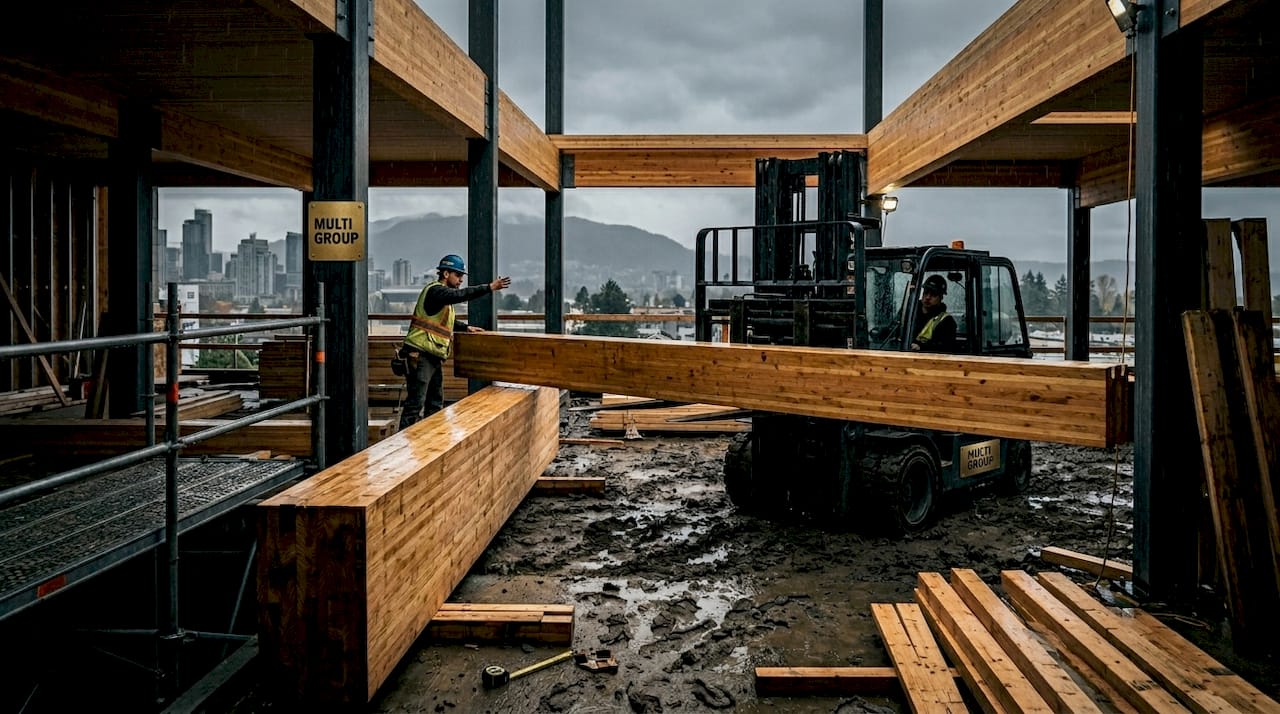
This cost picture is important context for Vancouver construction trends that are shaping how developers evaluate structural systems. The choice is rarely straightforward.
Here is a practical comparison across the three main systems:
| Factor | Mass timber | Concrete | Light wood frame |
|---|---|---|---|
| Cost per SF (Vancouver) | ~$390 | ~$385 to $395 | ~$315 to $330 |
| Construction speed | Moderate to fast | Slower | Fast |
| Sustainability profile | High (carbon storage) | Lower | Moderate |
| Design flexibility | High | Very high | Moderate |
| Regulatory approval | Requires early planning | Standard | Standard |
| Fire resistance | Requires engineering review | Excellent | Requires code compliance |
Key considerations when evaluating materials:
- Design intent: Mass timber creates distinctive exposed-wood aesthetics that appeal to many commercial tenants, which can support leasing and branding goals.
- Sustainability commitments: For owners targeting green building certifications such as LEED or Passive House, mass timber's sustainability advantages over concrete are meaningful, though value engineering is essential to keep costs competitive.
- Schedule sensitivity: Prefabricated mass timber components can accelerate on-site erection compared to poured concrete, but the manufacturing lead time requires early procurement decisions.
- Regulatory pathways: Mass timber projects require close coordination with the AHJ early in design, as fire and structural engineering reviews are more involved than for light wood framing.
Value engineering (the process of evaluating alternative design or material choices to achieve the same function at lower cost or better performance) is what makes alternative materials viable on most commercial projects. The advantages of design-build delivery align well here, because integrated teams can evaluate material trade-offs during design rather than after construction documents are complete.
After evaluating material options, the focus shifts to practices that consistently keep projects on track and under control.
Consistent execution: Monitoring, quality control, and adapting to change
Even the most carefully planned project will face unexpected conditions. A subcontractor misses a deadline. An inspection reveals a deficiency. A change in tenant requirements triggers a scope revision. What separates high-performing construction teams from struggling ones is how quickly and systematically they respond to these situations.
Frequent progress meetings and clear data-sharing are among the most reliable tools for reducing errors and delays across all project phases. Effective execution requires discipline, not heroics. The following steps form the backbone of a strong quality control routine:
- Weekly schedule review: Compare planned versus actual progress on all active tasks. Identify any items trending behind and assign corrective actions before delays compound.
- Budget variance check: Review committed costs against the approved budget. Flag any line items where actual or projected spend exceeds the allowance by more than 5%.
- Inspection log review: Confirm that all required inspections are scheduled and that outstanding deficiencies from previous inspections are closed.
- Subcontractor coordination meeting: Review upcoming work sequences with all active trades to prevent conflicts in working areas or material delivery timing.
- Change order status review: Confirm all pending change orders are formally documented, priced, and approved before related work proceeds.
The benefits of professional contractors become especially clear during the monitoring phase. Experienced contractors recognize warning signs early and have established processes to respond. Owners working with less experienced teams often discover problems only after they have escalated.
Key warning signs that a project is at risk include:
- Scope creep: work expanding beyond the original contract without formal change orders
- Delayed submittals: material or shop drawing approvals falling behind schedule
- Unclear roles: team members unsure who has authority to approve decisions
- Inspection backlogs: multiple open deficiencies from past inspections
- Communication gaps: decisions being made verbally without documentation
The five commercial buildout phases each carry their own quality control priorities. Understanding what to monitor at each phase allows owners and project managers to focus their attention where it matters most rather than reacting to problems after they surface.
A "lessons learned" session after each major project milestone is a practice that pays dividends. It takes no more than one hour and surfaces recurring issues early enough to correct them before they repeat in the next phase. Documenting these insights creates a project record that strengthens future bids and builds institutional knowledge across your team.
With all major best practices detailed, a critical perspective helps distinguish what truly makes the biggest difference for Metro Vancouver projects.
Perspective: Why strategy trumps shortcuts in Metro Vancouver commercial construction
After working through dozens of commercial projects across Metro Vancouver, a clear pattern emerges. The owners and developers who consistently deliver projects on time and on budget are not the ones who spend the least in preconstruction. They are the ones who invest the most in it.
Shortcuts in planning almost always cost more to fix than they saved upfront. Skipping an early AHJ consultation to accelerate design might recover two weeks on the front end, only to lose six weeks during permit review when a code conflict surfaces. Selecting the lowest-bid subcontractor without verifying their schedule availability might appear to reduce costs until delays from an overstretched trade ripple across the entire schedule.
The future of commercial construction in Metro Vancouver will reward owners who build systems, not just buildings. That means aligning people, processes, and materials from the outset, and treating documentation and communication as core project deliverables, not administrative burdens. Planning and adapting are always cheaper than fixing mistakes. That principle holds across every project type, from a small tenant improvement to a multi-story mass timber office building.
Get expert support for your Metro Vancouver project
Navigating the full spectrum of planning, technology, materials, and quality control for a Metro Vancouver commercial project requires more than general knowledge. It requires local expertise, established trade relationships, and a management process built for the region's regulatory environment.
Whether you are planning a new retail buildout, a warehouse renovation, or a large-scale tenant improvement, working with the right contractor from day one makes every phase more predictable. Metro Vancouver commercial construction experts at Multigroup Contracting bring hands-on experience across all project types, managing permits, scheduling, subcontractor coordination, and quality control under one roof. Reach out to discuss your project, and get a clear plan for delivering it on time and within budget.
Frequently asked questions
What is the most common reason for commercial construction delays in Vancouver?
Delays are most often caused by poor communication and late regulatory approvals, both of which can be prevented with early planning and real-time project management software. Prioritizing communication and coordination from the preconstruction stage is the most effective preventive measure.
Is mass timber a cost-effective building option in Metro Vancouver?
Yes, mass timber can be cost-competitive with concrete, especially in Vancouver, though it may still cost more than light wood framing in some situations. Mass timber reaches cost parity with concrete at approximately $390 per square foot in local market conditions.
How can construction management software help avoid budget overruns?
These tools track costs and changes in real time, so issues are caught early and decision-makers stay informed. Real-time data sharing through dedicated platforms prevents the communication gaps that most often lead to untracked expenditures.
What role does value engineering play in Metro Vancouver construction?
Value engineering evaluates alternatives like mass timber or concrete to balance project objectives, sustainability, and cost. It is most effective when applied during the design phase before construction documents are finalized, as mass timber's upfront cost premium can often be offset through structural optimization or revised finish specifications.