
TL;DR:
- Vancouver commercial buildouts often face unforeseen costs due to site conditions and vague lease terms.
- Early planning, detailed scopes, and strong contractor collaboration are key to staying on budget and schedule.
- Navigating permitting, code compliance, and hidden hazards like asbestos is crucial for project success.
Commercial buildouts catch many Vancouver business owners off guard. The most common mistake isn't picking the wrong finishes or hiring too late. It's misjudging who pays for what and how complex the process actually is. A tenant might assume the landlord's contribution covers everything, only to discover mid-construction that asbestos removal, electrical upgrades, and permit fees fall entirely on them. This guide breaks down every stage of a commercial buildout clearly, from lease negotiation to occupancy, so you can plan with confidence, protect your budget, and make decisions that actually serve your business.
Table of Contents
- Defining commercial buildout: The basics and why it matters
- The commercial buildout process, step by step
- Financing your buildout: Tenant Improvement Allowance and budget realities
- Navigating code compliance and permitting in Vancouver
- Making smart choices: Delivery models and avoiding common pitfalls
- Our perspective: The hidden buildout realities most guides ignore
- Transform your commercial space with local expertise
- Frequently asked questions
Key Takeaways
| Point | Details |
|---|---|
| Understand all buildout phases | Knowing each step helps avoid delays and surprises in your commercial renovation. |
| Negotiate your TIA wisely | Maximize landlord contributions and be prepared for costs that exceed the allowance. |
| Prioritize code compliance | Factoring in Vancouver’s regulations early prevents costly setbacks and project holds. |
| Plan for contingencies | Hidden site issues and regulatory surprises are common—always budget for the unexpected. |
| Choose the right buildout model | Weigh turnkey versus tenant-controlled buildouts to suit your expertise and risk tolerance. |
Defining commercial buildout: The basics and why it matters
A commercial buildout is the process of customizing a leased or owned commercial space to meet a specific business's operational, aesthetic, and regulatory requirements. This might mean installing a full commercial kitchen, building out private offices, or simply reconfiguring an open floor plan into a functional retail environment. The process follows structured phases: lease negotiation, space planning, permitting, construction, and inspection. Each phase has its own stakeholders, costs, and risks.
Buildouts matter far beyond cosmetics. A well-executed space supports your brand identity, improves staff workflow, ensures regulatory compliance, and shapes how customers experience your business. A poorly planned one can stall your opening, drain your reserves, and create friction for years.
The key stakeholders in any buildout include:
- Tenant (business owner): Drives requirements, approves design, manages budget.
- Landlord: Contributes the Tenant Improvement Allowance (TIA), which is a per-square-foot dollar amount toward buildout costs, and may impose restrictions.
- Architect or designer: Translates business needs into permitted drawings.
- General contractor: Executes construction, manages trades, and handles scheduling.
Several terms come up constantly. The certificate of occupancy is the official document confirming your space is safe and legally usable. Value engineering means finding cost-effective alternatives that preserve function without sacrificing quality. Understanding the benefits of renovation early helps you set realistic expectations for what a buildout can and cannot achieve.
Never assume what's included in your lease. Clarify in writing whether the landlord is responsible for HVAC, electrical panels, or base building upgrades before you sign.
Pro Tip: Review your lease with a contractor present before signing. They can flag technical gaps that a lawyer or real estate agent might miss.
With the basics clear, let's map out exactly how a commercial buildout unfolds, step by step.
The commercial buildout process, step by step
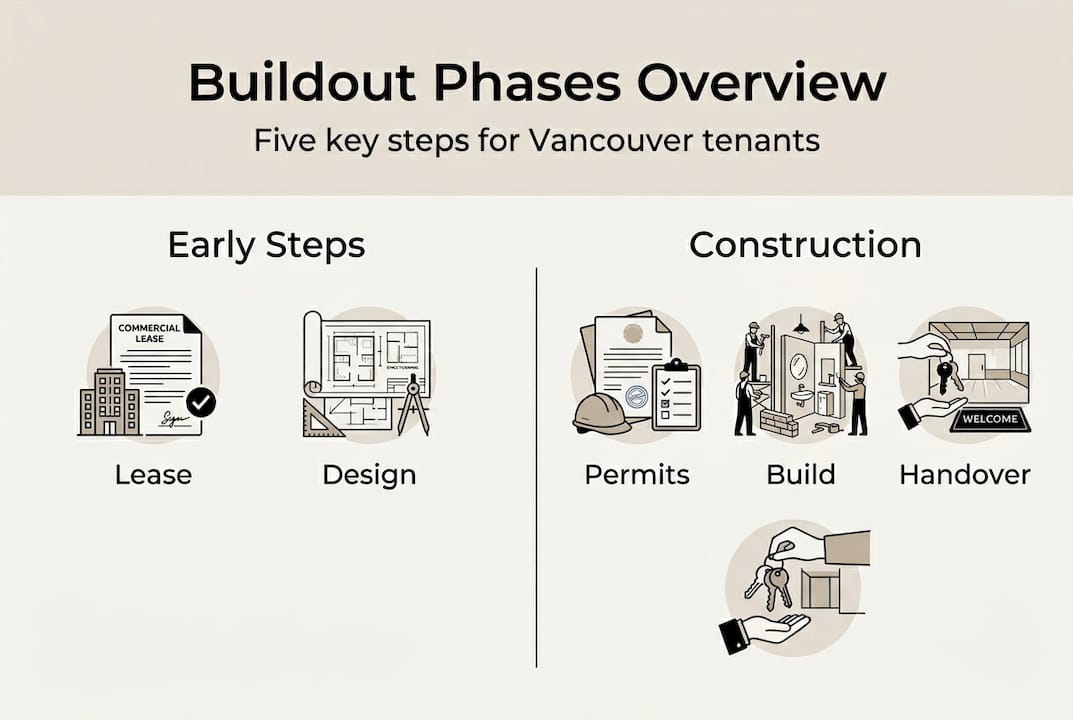
Understanding the full sequence of a buildout prevents surprises. The structured buildout phases are: lease negotiation and TIA agreement, space planning and design, permitting, construction, and inspections leading to occupancy. Each phase feeds the next, and skipping steps creates expensive problems downstream.
Here's how each phase typically unfolds:
- Lease negotiation and TIA agreement: Define the landlord's financial contribution, permitted uses, and construction obligations.
- Space planning and design: An architect or designer creates drawings based on your operational needs and the building's existing conditions.
- Permitting: Drawings are submitted to the City of Vancouver for approval. This phase often takes 4 to 10 weeks depending on project complexity.
- Construction: Demolition, framing, MEP (mechanical, electrical, plumbing) rough-in, and finishes are completed in sequence.
- Inspections and occupancy: City inspectors sign off on each trade, and a certificate of occupancy is issued.
Here's a general timeline reference for each phase:
| Phase | Typical duration |
|---|---|
| Lease negotiation | 2 to 6 weeks |
| Space planning and design | 3 to 8 weeks |
| Permitting | 4 to 10 weeks |
| Construction | 6 to 16 weeks |
| Inspections and closeout | 1 to 3 weeks |
Good buildout project management keeps these phases overlapping where possible, reducing total project duration. For example, a contractor can begin procurement while permits are still in review.
Pro Tip: Start space planning before you sign the lease. Knowing what the space can realistically support helps you negotiate better TIA terms and avoid committing to a layout that won't work.
Now that the buildout phases are mapped out, it's important to consider the financial implications and cost-sharing arrangements unique to Vancouver.
Financing your buildout: Tenant Improvement Allowance and budget realities
The Tenant Improvement Allowance (TIA) is one of the most negotiated elements in a commercial lease. Landlords typically offer a set dollar amount per square foot, often ranging from $40 to $100+ per square foot in Metro Vancouver depending on market conditions, lease length, and building class. This contribution is meant to offset your buildout costs, but it rarely covers everything.
When your buildout costs exceed the TIA, you have three options: pay the difference out of pocket, negotiate cost amortization into the lease (spreading repayment over time), or apply value engineering to reduce scope without compromising function.
Common hidden costs that push projects over TIA include:
- Asbestos abatement: Older Vancouver buildings frequently contain asbestos in ceiling tiles, flooring, and insulation.
- MEP upgrades: Existing mechanical, electrical, and plumbing systems may not support your intended use.
- Code compliance upgrades: Triggered by occupancy changes or building age.
- Unforeseen site conditions: Structural issues, water damage, or inadequate load capacity.
Here's how the two main buildout models compare financially:
| Factor | Turnkey buildout | Tenant-controlled buildout |
|---|---|---|
| Cost certainty | High | Lower |
| Customization | Limited | High |
| Risk exposure | Landlord bears more | Tenant bears more |
| Oversight required | Minimal | Significant |
A design-build approach can help bridge both models, giving tenants more control while keeping costs predictable. Always build a 10 to 15 percent contingency into your budget and commission a pre-construction site assessment before finalizing your scope.
With finances in mind, it's time to tackle code compliance and regulatory hurdles unique to Vancouver's commercial landscape.
Navigating code compliance and permitting in Vancouver
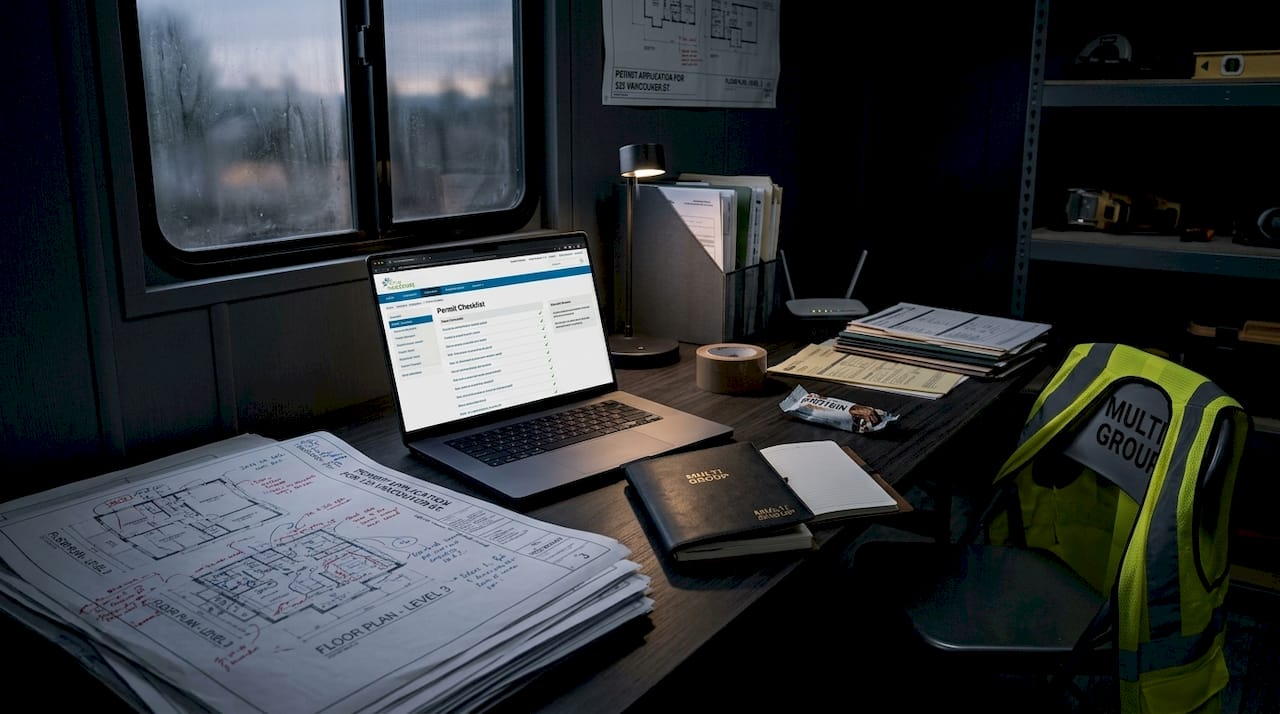
Permitting is where many Vancouver buildouts stall. The City of Vancouver requires building permits for most commercial construction work, including tenant improvements that alter layout, structure, or building systems. Depending on the scope, you may also need mechanical, electrical, and plumbing permits pulled separately by licensed trades.
Certain changes automatically trigger additional regulatory requirements. Occupancy changes trigger IBC-equivalent Level 2 or Level 3 alterations, accessible path upgrades, and in some cases seismic improvements. Converting a retail space to a restaurant, for example, can require a full NFPA 96 commercial hood and exhaust system, grease interceptors, and upgraded electrical service.
Vancouver-specific code hurdles to expect include:
- Accessibility compliance: BC Building Code requires accessible washrooms, entrances, and paths of travel when occupancy changes.
- Energy code requirements: Upgrades to lighting, HVAC controls, and insulation may be required.
- Heritage building restrictions: Some Vancouver buildings have design controls that limit exterior and interior modifications.
- Seismic upgrades: Triggered in older buildings undergoing significant structural changes.
Review your permit requirements early and stay informed about current building codes that apply to your project type.
Engaging a code consultant or experienced contractor before finalizing your design can save weeks of permit revision cycles and thousands of dollars in redesign costs.
Discovering asbestos or deficient MEP systems during demolition is the most common cause of cost overruns in older Vancouver commercial buildings. A pre-demolition hazardous materials survey is not optional. It's one of the most cost-effective steps you can take.
After covering regulations, let's examine decision-making frameworks to help you select the right buildout delivery method.
Making smart choices: Delivery models and avoiding common pitfalls
Choosing the right delivery model shapes your entire buildout experience. Turnkey buildouts suit risk-averse tenants but limit customization. Tenant-controlled buildouts offer full control but expose you to overruns if you lack construction oversight experience. In Vancouver's current high-vacancy commercial market, tenants have real negotiating leverage to push for better TIA terms, longer rent-free periods, and turnkey options.
Here's how to avoid the most common pitfalls:
- Start planning before lease signing. Most tenants wait too long. Early contractor involvement reveals what the space can support and what it can't.
- Define your scope in detail. Vague scopes lead to change orders. Every change order costs money and time.
- Budget a real contingency. Ten to fifteen percent is the minimum. Older buildings may need more.
- Don't skip the pre-construction survey. Existing conditions are the number one source of budget surprises.
- Prioritize code review early. Discovering a required accessibility upgrade mid-construction is far more expensive than planning for it upfront.
The design-build advantages of combining design and construction under one team are especially relevant here. It reduces gaps in communication and keeps accountability clear throughout the project.
Pro Tip: In Vancouver's current market, high office and retail vacancy rates give tenants real negotiating power. Use it. Push for a higher TIA, a longer rent-free construction period, or landlord-funded base building improvements before you commit.
Now you understand your options. Let's explore what seasoned Vancouver pros know about the real challenges of buildout projects.
Our perspective: The hidden buildout realities most guides ignore
Most buildout guides focus on process. What they skip is where projects actually fail.
In our experience, the majority of overruns don't come from bad contractors or unexpected market prices. They come from vague lease terms and wishful thinking about existing site conditions. Tenants assume the space is ready for their vision. It rarely is.
The lowest bid is almost never the best choice. What matters more is preconstruction collaboration: a contractor who asks hard questions early, flags hidden risks before they become change orders, and communicates clearly when conditions don't match drawings. That kind of partnership is worth more than a 5 percent cost reduction on paper.
The single most overlooked move is aligning your operational goals with your design before construction starts. Not just aesthetics. How your staff moves through the space, where your storage goes, how customers flow from entry to transaction. Tenants who treat this as a cosmetic exercise often end up renovating again within three years.
The future of commercial buildouts in Vancouver is moving toward faster delivery and tighter budgets. That makes early, honest planning more valuable than ever.
Transform your commercial space with local expertise
Every phase of a commercial buildout carries real financial and operational stakes. From TIA negotiation to permit approvals and construction management, the decisions you make early determine whether your project finishes on time and on budget.

Multigroup Contracting has guided Vancouver business owners and tenants through every type of commercial buildout, from retail and restaurant fit-outs to office renovations and warehouse improvements. We handle permits, scheduling, and trade coordination so you don't have to manage it alone. If you're planning a buildout or evaluating a space, explore our Vancouver commercial buildout services or read more about choosing your general contractor to make a confident, informed decision.
Frequently asked questions
What costs are typically included in a commercial buildout?
A commercial buildout generally includes demolition, framing, MEP installation, and finishes, along with all necessary permitting fees and inspection costs.
How long does a commercial buildout take in Vancouver?
Buildouts in Vancouver commonly take 3 to 6 months, depending on project size, permitting durations, and existing site conditions.
How does the Tenant Improvement Allowance (TIA) work?
The TIA is a per-square-foot landlord contribution toward buildout costs, but exceeding TIA requires the tenant to cover the difference through direct payment, amortization, or value engineering.
What are common regulatory challenges during a buildout?
Changes in occupancy, accessibility upgrades, and seismic upgrades in BC are common regulatory triggers that require additional permits or structural work.
How can I avoid budget overruns during my buildout?
Early site assessments, detailed scopes, and a contingency fund of 10 to 15 percent are the most effective tools, since asbestos and MEP issues in older buildings are a leading cause of cost overruns.
Recommended
- Top residential construction trends in Greater Vancouver for 2026
- Multigroup Contracting | Vancouver General Contractor – Commercial & Residential Construction
- Multigroup Contracting | Vancouver General Contractor – Commercial & Residential Construction
- Multigroup Contracting | Vancouver General Contractor – Commercial & Residential Construction