
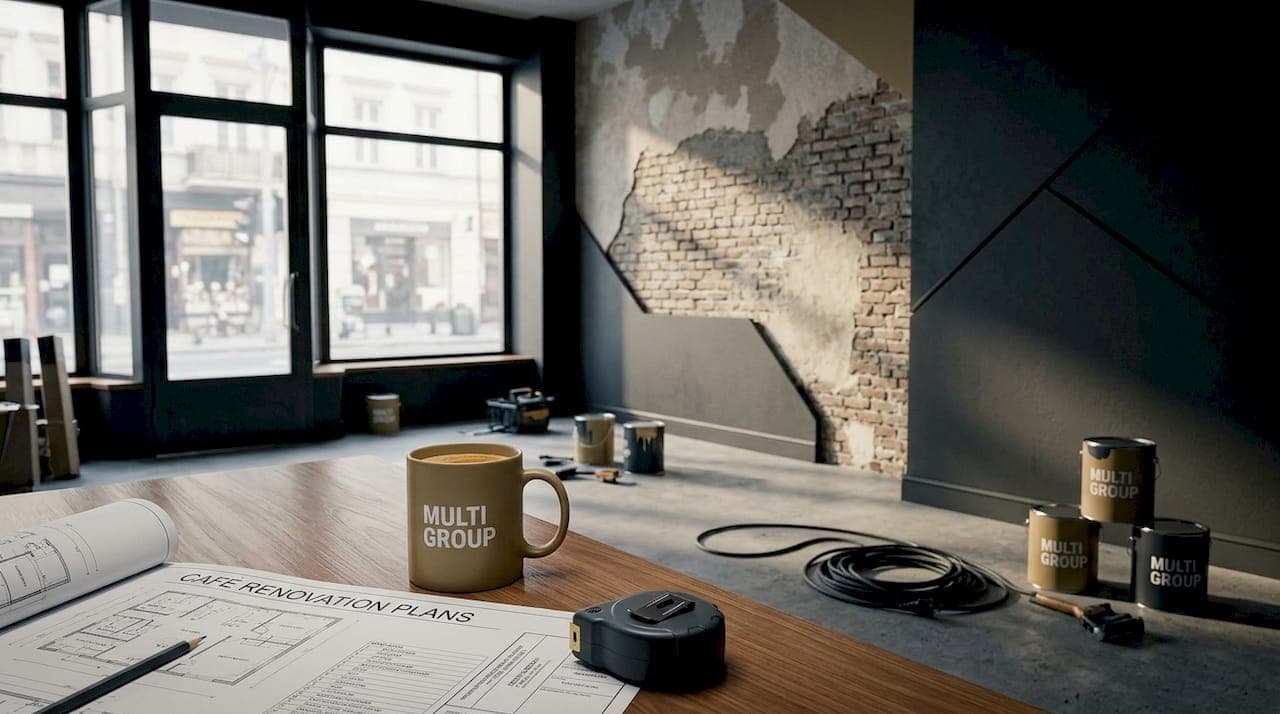
TL;DR:
- Renovating a coffee shop in Metro Vancouver involves structural, layout, and compliance changes that impact daily operations and customer comfort. Many owners underestimate the scope, risking budget overruns and regulatory delays, especially when dealing with local codes and permits. A successful renovation balances aesthetics, functionality, and regulatory adherence, supported by experienced contractors and thorough planning.
Renovating a coffee shop in Metro Vancouver is rarely as simple as swapping out furniture or repainting the walls. The decisions you make during renovation directly affect your daily operations, your ability to pass health inspections, and how comfortable customers feel every time they walk through your door. From layout reconfiguration to permit handling and accessibility compliance, a well-executed renovation covers far more ground than most owners initially expect. This guide walks you through what renovation actually involves, why it matters, and how to approach the process with confidence and clarity.
Table of Contents
- What coffee shop renovation really means
- Why invest in coffee shop renovation?
- Step-by-step coffee shop renovation process
- Navigating compliance and health requirements
- What most coffee shop owners miss about renovation
- Expert help for your coffee shop renovation
- Frequently asked questions
Key Takeaways
| Point | Details |
|---|---|
| Renovation drives business value | Strategic renovation impacts comfort, customer experience, and regulatory compliance. |
| Compliance is crucial | Local health and accessibility rules in Vancouver can mandate major layout changes, even for small cafés. |
| Step-by-step process essential | A clear renovation plan reduces disruption and helps avoid surprises. |
| Expert advice pays off | Working with professionals ensures efficient delivery, legal compliance, and maximized return on investment. |
What coffee shop renovation really means
Many owners use the word "renovation" loosely, applying it to anything from hanging new shelves to gutting a back-of-house kitchen. But in a commercial context, a renovation means structural, layout, compliance, or functional changes that alter how a space is used, accessed, or regulated. It goes well beyond cosmetic updates.
The most impactful renovation strategies Vancouver owners rely on typically involve a combination of the following:
- Layout changes that improve customer flow, sightlines, and seating arrangements
- Mechanical and electrical upgrades to support new equipment or code compliance
- Millwork and fixture modifications to the service counter, display areas, or storage
- Washroom, ventilation, and accessibility improvements to meet regulatory standards
- Structural alterations such as opening up walls or adding partition systems
These changes are fundamentally different from applying a fresh coat of paint or updating your menu board. They require planning, budgeting, professional oversight, and often permits. The distinction matters because underestimating the scope of a renovation is one of the most common reasons projects go over budget and over schedule.
One area that catches many operators off guard involves local jurisdiction-specific constraints. A small café in Vancouver may discover that expanding its seating area, for example, suddenly triggers a requirement to provide customer washroom access that wasn't previously enforced. As reported by Vancouver Awesome, very small cafés can run into these edge cases, where health and access constraints force design changes even when the original intent was cosmetic or layout-focused.
"Even renovations that seem minor on the surface can cross regulatory thresholds that require full compliance reviews. The key is knowing where those thresholds are before you start."
Effective project communication throughout this process is also critical. Using a communication workflow software during renovation has been shown to reduce rework by 52%, a meaningful figure when your timeline and budget are already stretched.
Why invest in coffee shop renovation?
The core motivation behind any renovation should be rooted in measurable outcomes, not trends. Renovation projects directly influence value, functionality, and the comfort of both customers and staff. Owners who approach renovation with that lens make smarter decisions about where to spend their budget.
There are several strong business reasons to renovate your coffee shop:
- Improved customer experience. Layout and lighting are two of the most powerful tools in any café environment. Poor lighting makes a space feel uninviting. Cramped seating drives customers out faster. Thoughtful design keeps people comfortable and encourages longer visits, which typically translates to higher average spend.
- Operational efficiency. A well-designed service counter with proper workflow zones reduces wasted movement for staff. Smarter storage placement, better access to equipment, and clear separation between customer and staff areas can meaningfully improve daily productivity.
- Regulatory compliance. Sometimes renovation isn't optional. A lease renewal, a change in business classification, or a health inspection failure can require immediate upgrades to ventilation, plumbing, or accessible design.
- Market positioning. A visually appealing, functional space signals quality to customers. For cafés in competitive areas like downtown Vancouver, Burnaby, or Richmond, a well-renovated interior is part of the brand experience.
| Renovation motivation | Expected outcome |
|---|---|
| Improve seating layout | Increased dwell time and customer satisfaction |
| Upgrade lighting and finishes | Stronger brand perception and social media visibility |
| Redesign service counter | Faster service and reduced staff error |
| Add accessible washroom | Regulatory compliance and broader customer access |
| Upgrade ventilation | Health code compliance and improved air quality |
| Expand storage or prep area | Improved workflow and food safety standards |
For real-world examples of how interior design decisions translate into business results, the Vancouver store design examples from completed buildouts offer a clear picture of what's possible across different budgets and formats.
Pro Tip: Focus your renovation budget on changes that reduce friction for both customers and staff. A service counter that flows better or seating that fills more efficiently will generate returns far faster than purely decorative upgrades.
It's also worth tracking how real-time updates for renovation projects improve decision-making during construction. When owners stay informed throughout the build, they're better positioned to manage timelines and avoid costly last-minute changes.
Step-by-step coffee shop renovation process
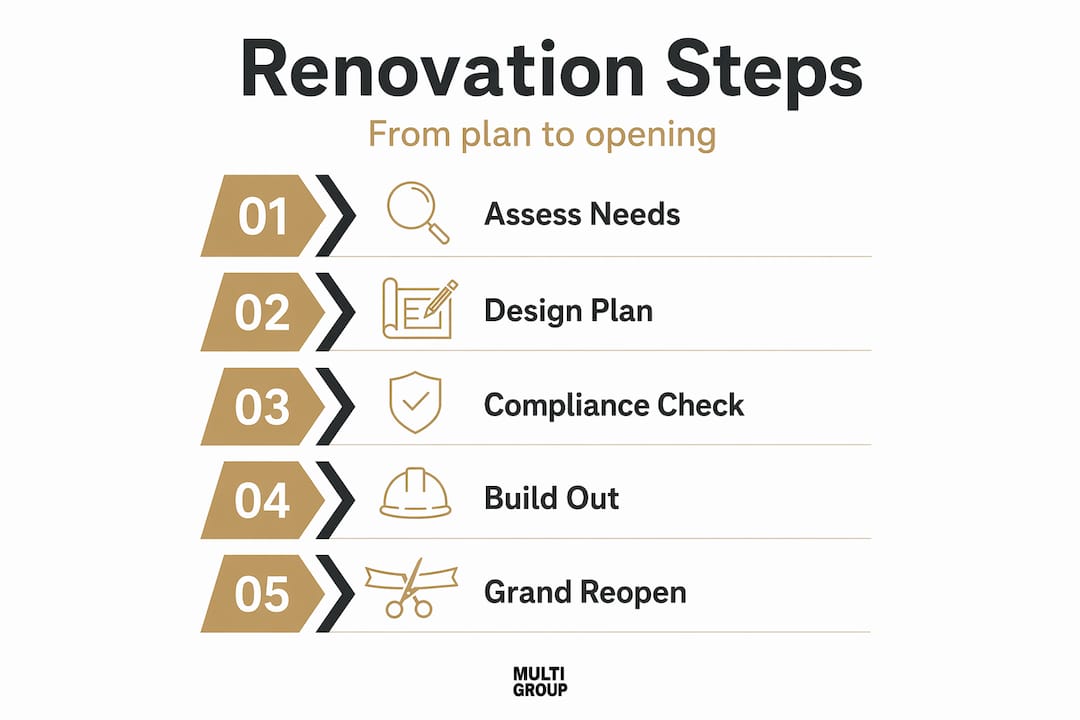
A successful renovation follows a clear sequence. Skipping steps, particularly around planning and permitting, creates significant risk for cost overruns and regulatory delays. Commercial renovation typically involves a step-by-step process including assessment, planning, permitting, construction, and completion.
Here is how that process looks in practice for a Metro Vancouver coffee shop:
- Initial assessment. Walk through your space with a critical eye. Identify what is underperforming: where do lineups bottleneck, where do staff lose time, which areas make customers uncomfortable? Document everything before talking to a contractor.
- Define your goals and budget. Clarify whether you're renovating for compliance, experience, expansion, or all three. Set a realistic budget with a 10 to 15 percent contingency built in for unexpected costs.
- Hire a qualified contractor. Look for a general contractor with direct experience in commercial tenant improvements and food service spaces in Metro Vancouver. Familiarity with local codes is non-negotiable.
- Design and permit phase. Work with your contractor and, if needed, an architect or designer to produce construction drawings. Submit for applicable building permits through your municipality. In Vancouver, this step can take several weeks depending on project scope.
- Pre-construction preparation. Plan your operational continuity strategy. Will you stay open during construction? If so, how will you separate the work zone from customer areas? Scheduling phased construction is common for operating cafés.
- Construction phase. This is where the actual work happens, including demolition, framing, mechanical and electrical rough-in, millwork installation, and finishing work. Coordinated scheduling among trades is essential for staying on timeline.
- Final inspections and approvals. Before reopening, your project will require inspections from the relevant authorities, including building and potentially health inspection sign-off.
- Reopening. Plan your reopening with intention. A refreshed space is a marketing moment. Use photos, social media, and local outreach to generate attention.
For a deeper look at how each of these buildout phases Vancouver owners navigate unfolds, especially when working within occupied commercial spaces, review the detailed guidance available for local operators.
"Design for safety is not a checkbox at the end of a project. It is a discipline that starts on day one and affects every decision made throughout construction." Source: Mosaic Safety
Pro Tip: Permit timelines in Metro Vancouver vary by municipality. Burnaby, Surrey, and the City of Vancouver each have their own processing speeds and requirements. When planning renovation Richmond or in nearby areas, always confirm permit lead times before finalizing your construction schedule.
Navigating compliance and health requirements
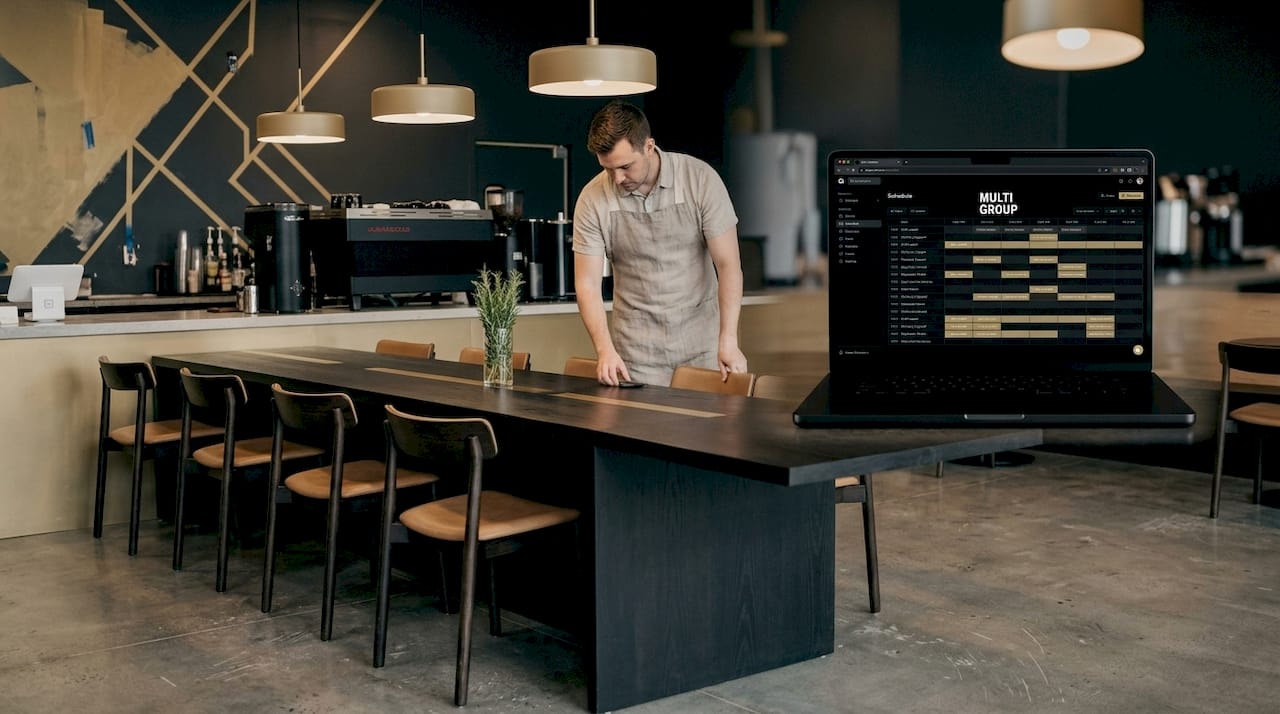
Compliance is often where café renovations get complicated. Owners planning what they expect to be a simple refresh frequently discover that proposed changes cross regulatory thresholds that require full reviews and upgrades.
Vancouver's regulatory environment for food service spaces is layered. It involves building codes, Vancouver Coastal Health requirements, BC Building Code accessibility standards, and local municipal bylaws. Understanding which rules apply to your specific renovation is critical before any work begins.
As noted in reporting on a Vancouver matcha café opening a second, larger location, very small cafés may face jurisdiction-specific health and access constraints, including customer washroom requirements, that force design changes even when the original renovation scope was cosmetic or layout-focused.
Here is a comparison of how cosmetic and compliance-driven renovations differ:
| Renovation type | Typical scope | Permit required | Compliance review |
|---|---|---|---|
| Cosmetic (paint, signage, décor) | Surface-level only | Usually no | Minimal |
| Layout change (seating, counter) | Moderate structural changes | Often yes | Possible |
| Washroom addition or upgrade | Plumbing, fixtures, access | Yes | Health and building |
| Ventilation or mechanical upgrade | HVAC, exhaust systems | Yes | Health code required |
| Accessibility improvement | Ramp, door width, fixtures | Yes | BC Building Code applies |
The most common compliance issues that surface during coffee shop renovations include:
- Washroom requirements triggered by increased seating capacity or a change in occupancy classification
- Accessible route requirements including door widths, counter heights, and ramp grades
- Ventilation and exhaust standards for commercial cooking or espresso equipment
- Fire code requirements including exit signage, sprinkler systems, and occupancy load limits
- Grease trap and plumbing upgrades when food service equipment is added or relocated
For perspective on how similar compliance challenges apply in other regulated environments, the approach used in health compliance for clinics provides a useful parallel. The principle is the same: understand your regulatory requirements before design begins, not after.
A thorough safety audit conducted before or during the planning phase can help identify these gaps early, before they turn into expensive mid-construction changes.
What most coffee shop owners miss about renovation
After working on commercial renovation projects across Metro Vancouver, a pattern becomes clear: most owners focus almost entirely on what the space will look like when it's finished. The aesthetic outcome drives the conversation. But the owners who end up with the most functional, profitable spaces are the ones who spend equal time thinking about how the space will operate.
There are hidden regulatory triggers that can fundamentally reshape a renovation. Adding even a few additional seats can change your occupancy classification. Moving your service counter can create an accessible route problem. Installing a new commercial espresso machine without upgrading ventilation can fail a health inspection. These are not rare edge cases. They happen regularly, and they almost always result in rework, delays, and additional cost.
The other mistake is letting aesthetic trends drive budget decisions. Exposed brick, pendant lighting, and raw wood counters look great in photos. But if the investment doesn't also address workflow, compliance, or customer comfort, it won't generate the return you're expecting. A café that looks great but runs inefficiently, or worse, fails an inspection, has not been renovated successfully.
For deeper context on how commercial construction works and what to expect when engaging a contractor, that resource is a useful starting point for owners who are new to the process.
The most successful renovations are the ones that treat compliance and experience as equally important to aesthetics. Smart owners build their scope of work around those three pillars, then find a contractor who can deliver all three without requiring constant owner intervention. That is what working with experienced professionals actually provides: fewer surprises, faster decisions, and a finished space that works the way it's supposed to from day one.
Expert help for your coffee shop renovation
Planning a coffee shop renovation in Metro Vancouver requires more than good design ideas. It requires a contractor who understands local building codes, health regulations, tenant improvement requirements, and how to keep your project on schedule without disrupting your business longer than necessary.

Multigroup Contracting specializes in commercial buildouts and tenant improvements throughout Metro Vancouver, including full coffee shop renovations. From permit handling and construction management to millwork, mechanical coordination, and final inspections, our team manages the entire process so you don't have to. If you're ready to move forward or simply want to understand what your renovation will actually involve, reach out to our team for a consultation. We'll give you a clear picture of scope, timeline, and cost before any work begins.
Frequently asked questions
How long does a typical coffee shop renovation take in Metro Vancouver?
Most coffee shop renovations in Metro Vancouver take between 6 and 10 weeks from construction start to completion, though permit processing, project scope, and café size can extend the timeline.
Do small cosmetic renovations require permits?
Even minor renovations can trigger permit requirements in Metro Vancouver, particularly when changes affect seating capacity, plumbing, or accessibility. Very small cafés may face jurisdiction-specific health and access constraints that require design changes even for seemingly cosmetic work.
What is the average cost for renovating a coffee shop?
Most coffee shop owners in Metro Vancouver can expect renovation costs to range from $15,000 to $100,000 depending on scope, since renovation projects directly influence value, functionality, and the comfort of customers and staff across many different budget levels.
Which areas are most commonly renovated in coffee shops?
The seating area, customer washroom, service counter, and lighting are the most frequently renovated elements, and these improvements are often paired with compliance upgrades to meet current health and accessibility standards.